In our latest test kitchen series, we focused on the specific structural mechanics of the iconic dense, chilled cookie. We analyzed how different fat-to-flour ratios affect the final loft and crumb density of Crumbl sugar cookies. After testing fourteen different variations, we found that a precise combination of cold-creamed butter and specific protein levels in the flour creates that signature cake-like texture without the cookie becoming fragile.

This recipe is a study in precision and temperature control. By balancing the almond extract against a high-weight sugar foundation, we achieve a flavor profile that is both nostalgic and chemically stable. These cookies are designed to be served chilled, which alters the molecular behavior of the fats and provides a unique mouthfeel that sets this recipe apart from standard room-temperature bakes.
The Science of the Perfect Chilled Crumb
This recipe succeeds because it prioritizes the physics of the cookie’s structure. Most sugar cookies rely on heavy aeration to create a light snap, but Crumbl sugar cookies require a controlled rise. We use two teaspoons of baking powder to create vertical lift while the high flour-to-butter ratio maintains a sturdy base. This prevents the cookie from spreading too thin, a common failure in amateur baking.
You will appreciate the way the sweet almond icing interacts with the cold cookie base. The cooling process allows the sugar crystals in the frosting to set firmly, creating a smooth finish that doesn’t melt upon contact. Because we use exactly one cup (222g) of salted butter, the salinity provides a necessary chemical counter-balance to the 230 grams of granulated sugar, preventing the flavor from becoming one-dimensional. This is a breakthrough for bakers who want a reliable, repeatable result every time they preheat the oven.
Print
Crumbl Sugar Cookies
- Total Time: 1 hour 5 mins
- Yield: 12 cookies
- Diet: Vegetarian
Description
Recreate the iconic bakery experience with these thick, dense sugar cookies featuring a signature almond-infused pink icing. This scientifically-balanced recipe ensures a cake-like crumb and a stable, pipeable frosting that is best enjoyed chilled for the ultimate texture.
Ingredients
- 1 cup (222g) salted butter, cool
- 1 cup (230g) granulated sugar
- 2 large eggs
- 1 teaspoon vanilla extract
- 1/2 teaspoon almond extract
- 3 cups (456g) all-purpose flour
- 2 teaspoons baking powder
- 1/2 cup (111g) softened salted butter
- 3 cups (321g) powdered sugar
- 1 teaspoon almond extract
- 1–3 tablespoons milk
- 2–4 drops neon pink food coloring
Instructions
- Preheat oven to 350°F (177°C).
- Cream 1 cup salted butter and 1 cup granulated sugar in a stand mixer for 3-5 minutes until light and fluffy.
- Add eggs, vanilla, and 1/2 teaspoon almond extract, beating until fully emulsified.
- Reduce mixer speed to low and gradually mix in 3 cups flour and 2 teaspoons baking powder until white streaks disappear.
- Portion dough into 12 mounds using a #12 scoop and flatten gently to 1-inch thickness.
- Bake for 11-13 minutes until puffed and matte; do not let the edges brown.
- Allow cookies to cool completely on the baking sheet.
- Make the icing by creaming 1/2 cup softened butter, then adding powdered sugar, 1 teaspoon almond extract, milk, and pink food coloring.
- Frost each cooled cookie generously and refrigerate for at least 30 minutes before serving.
Notes
For the most accurate results, use a kitchen scale to measure the flour and butter by weight. Ensure your cookies are completely cold before frosting to prevent the icing from losing its structure, and always store them in the refrigerator to maintain that classic chilled mouthfeel.
- Prep Time: 20 mins
- Cook Time: 12 mins
- Category: Dessert
- Method: Baking
- Cuisine: American
The Formula for Success
Achieving the perfect replication of Crumbl sugar cookies depends on the quality and ratio of your raw materials. Each component serves a specific structural purpose in the chemistry of the dough.
- Salted Butter (222g / 1 cup): We use salted butter to provide a baseline of flavor control. The fat content must be consistent; avoid brands with high water content, as this will lead to excessive spreading.
- Granulated Sugar (230g / 1 cup): Sugar does more than sweeten; it interferes with gluten development. This ratio helps maintain the soft, tender bite characteristic of the original.
- All-Purpose Flour (456g / 3 cups): This is the skeleton of your cookie. Measuring by weight (456g) is critical here because even a 10-gram variance can make the cookie too dry or too soft.
- Baking Powder (2 tsp): Unlike baking soda, which requires an acid to react, baking powder provides a reliable lift that helps these large cookies stay thick and plush.
- Almond and Vanilla Extracts: The combination of 1/2 teaspoon of almond and 1 teaspoon of vanilla creates a complex aromatic profile that defines the classic pink-frosted sugar cookie experience.
- Sweet Almond Icing Components: The icing uses softened butter and powdered sugar (321g) to create a pipeable, stable topping. The addition of milk (1-3 tbsp) allows you to adjust the viscosity without losing the structural integrity needed for that thick layer of frosting.
The Methodical Process
Step 1: Initialize the Creaming Reaction
Preheat your oven to 350°F (177°C). In your stand mixer fitted with a flex edge beater, combine 1 cup (222g) of salted butter with 1 cup (230g) of granulated sugar. Beat these on medium-high for approximately 3-5 minutes. You are looking for a light, fluffy texture which indicates that air has been successfully incorporated into the fat matrix.
Step 2: Emulsify the Liquids
Scrape the sides of the bowl to make sure all ingredients are being processed. Add 2 large eggs, 1 teaspoon of vanilla extract, and 1/2 teaspoon of almond extract. Continue to beat until the mixture is uniform. This step emulsifies the fats and liquids, which is vital for a smooth crumb structure in your Crumbl sugar cookies.
Step 3: Incorporate the Structural Dry Base
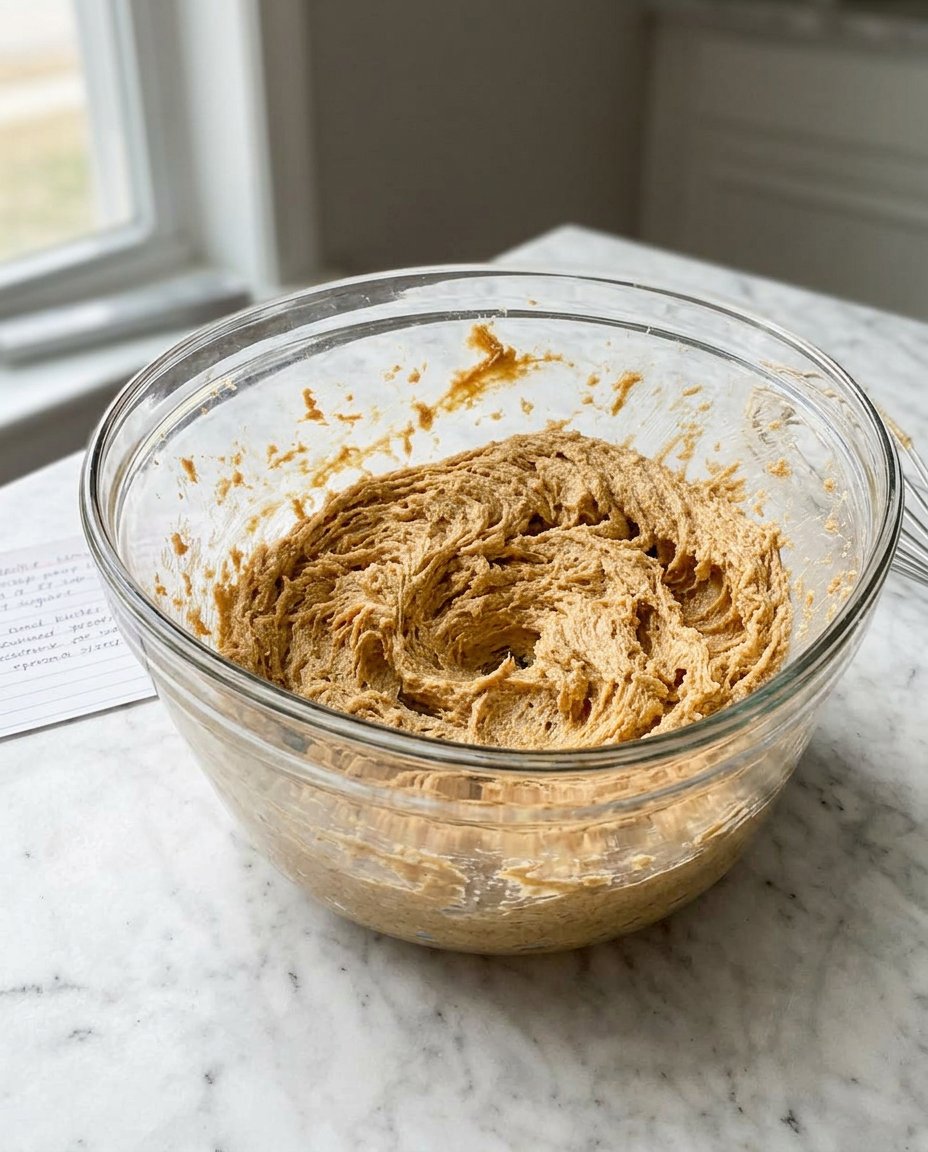
Reduce the mixer speed to low. Slowly add the 3 cups (456g) of all-purpose flour and 2 teaspoons of baking powder. Mix only until the white streaks of flour disappear. Over-mixing at this stage will develop the gluten, making the cookie tough rather than tender.
Step 4: Portioning and Aeration Management
Use a #12 cookie scoop (approximately 3.25 oz or 1/3 cup) to portion the dough into 12 equal mounds. Place 6 mounds on a cookie sheet to allow for thermal airflow. Gently flatten each portion with the palm of your hand until they are roughly 1-inch thick. This step helps the heat penetrate the center of the dense dough quickly.
Step 5: The Precision Bake
Bake at 350°F for 11-13 minutes. The technical cue for completion is when the centers have puffed up and the surface is no longer glossy. Do not wait for the edges to brown; if they brown, the cookie will lose its signature soft texture. Allow them to cool completely on the sheet to finalize the carry-over cooking process.
Step 6: Formulating the Almond Icing
While the bases cool, cream 1/2 cup (111g) of softened salted butter until smooth. Gradually add 3 cups (321g) of powdered sugar, 1 teaspoon of almond extract, and 1 tablespoon of milk. Add more milk one teaspoon at a time until the icing is thick but spreadable. Add 2-4 drops of neon pink food coloring for the classic aesthetic.
Step 7: Final Assembly and Chilling
Spread a generous layer of icing onto each cooled cookie using an icing spatula. Place the finished cookies in the refrigerator for at least 30 minutes. This chilling stage is mandatory as it stabilizes the fats in both the cookie and the frosting, delivering the specific chilled texture required for this style of bake.
Lauren’s Lab Notes
To achieve the most consistent results, always weigh your ingredients in grams. Volume measurements for flour can vary by up to 20% depending on how the flour is packed, which will compromise the structural balance of your dough. If your cookies spread too much, check your butter temperature; it should be cool to the touch (around 65°F or 18°C) before you begin the creaming process. For more detailed guides on maintaining cookie height, refer to our Artisan Cookie Collection. Make sure to use a #12 scoop for the exact mass required to hold the heat during the 11-minute bake time.
Tested Flavor Variations
You can modify the flavor profile without destroying the chemical foundation of the cookie. To create a lemon version, replace the almond extract with 1 tablespoon of fresh lemon zest and 1 teaspoon of lemon juice. Because citrus zest adds moisture, you should add an extra tablespoon of flour to maintain the moisture balance. If you are interested in seasonal adaptations, see our Seasonal Cookie Design resources. We also tested a version using vanilla bean paste in the frosting which adds a sophisticated visual element to the pink finish.
Pairing and Temperature Science
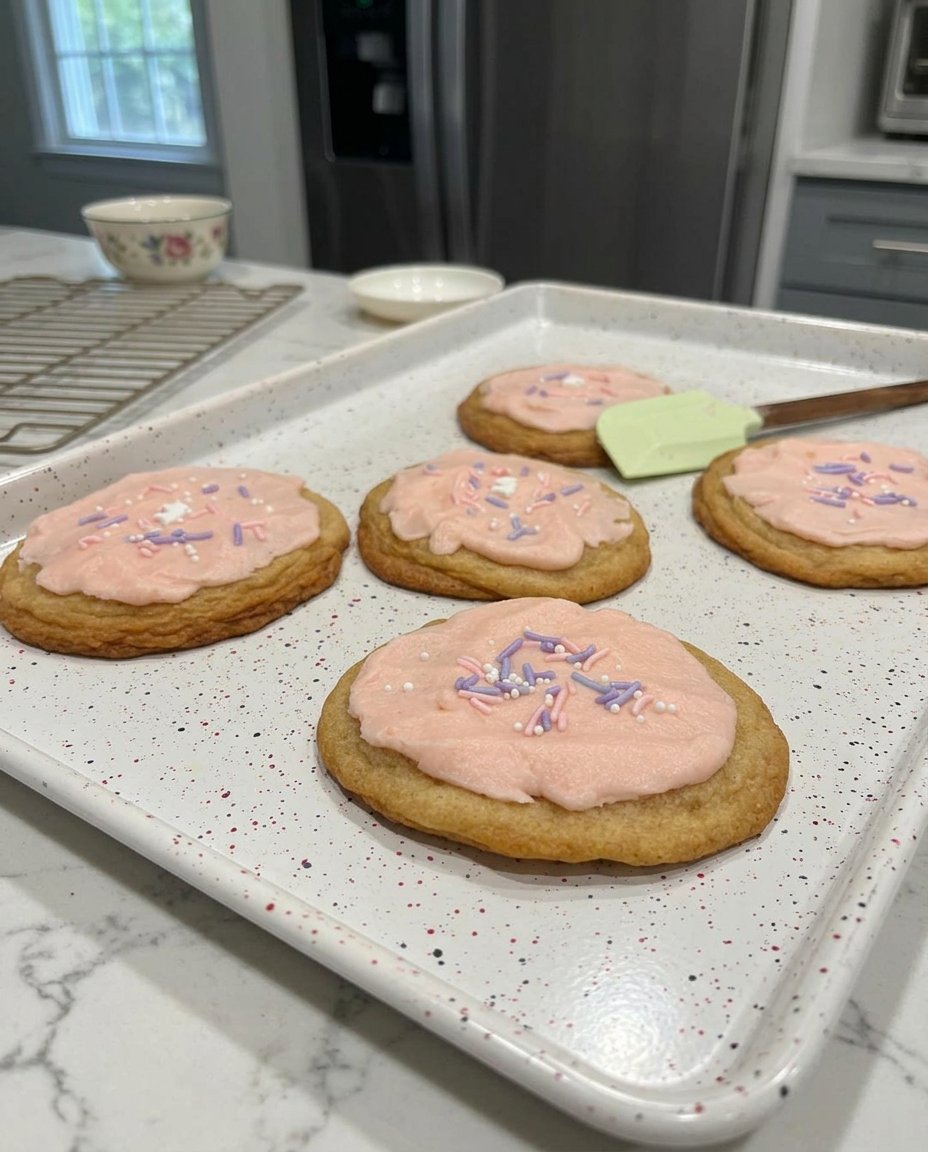
Temperature is a key ingredient in this recipe. Serve these Crumbl sugar cookies directly from the refrigerator at approximately 40°F (4°C). The cold temperature masks some of the intensity of the sugar, allowing the floral notes of the almond extract to become more prominent. For presentation ideas that maintain the professional look of these bakes, visit our Cookie Decorating Studio. These cookies pair remarkably well with cold milk or a sharp espresso, as the bitterness of the coffee provides a scientific contrast to the sweet almond frosting.
Precision Baking Success
Success with these cookies is a victory of chemistry over guesswork. By maintaining the correct ratios of fat to flour and strictly adhering to the chilling requirements, you have created a bakery-quality treat in your own kitchen. Keep testing your oven calibration to make sure your results stay consistent batch after batch. For more insights into modern baking trends, visit our Trending Cookie Creations section or check out this detailed analysis of the cookie’s history. Share your baking results with our community on Facebook, Instagram, and Pinterest. Happy baking!