In the Cookies Sweet test kitchen, we spent weeks analyzing how fresh cranberries impact the internal structure of a twice-baked cookie. We found that whole berries created large steam pockets that caused the logs to collapse or become soggy during the second bake. By pulsing the fruit into fine crumbs, we distributed the moisture evenly, achieving a consistent crumb that supports the weight of the roasted pistachios.

This Cranberry Pistachio Biscotti 2 recipe relies on a precise balance of hydration and fat to achieve its signature snap. Unlike traditional Italian recipes that often omit fat entirely, our formula uses a controlled amount of butter to make the texture crisp rather than brittle. This small structural adjustment makes the baking process more reliable for home kitchens while preserving the classic crunch.
The Chemistry of the Crunch
You will appreciate this Cranberry Pistachio Biscotti 2 recipe because it solves the common problem of tooth-breakingly hard biscotti. By using a scientific approach to ingredient ratios, we have created a cookie that is firm enough for dipping but tender enough to enjoy on its own. The addition of fresh cranberries introduces a bright acidity that cuts through the rich, earthy fats of the roasted pistachios. This balance of flavors is not accidental; it is a calculated result of testing different fruit-to-nut ratios until the crumb structure remained stable. Furthermore, the twice-baking process facilitates complete moisture evaporation, which leads to a shelf-stable treat that maintains its quality for weeks. This is a breakthrough for holiday baking where durability and flavor are equally important. We focused on the Maillard reaction during the second bake to ensure a deep, toasted flavor profile that complements a warm cup of coffee or tea.
Print
Cranberry Pistachio Biscotti 2
- Total Time: 1 hour 15 mins
- Yield: 24 cookies
- Diet: Vegetarian
Description
A scientifically developed twice-baked cookie that balances the tartness of pulsed fresh cranberries with the rich crunch of roasted pistachios. This recipe uses a precise butter-to-flour ratio to ensure a crisp texture that is perfect for dipping without being overly hard.
Ingredients
- 2 cups (250 g) All-Purpose Flour
- 1 cup (100 g) Fresh Cranberries, pulsed into crumbs
- 1/2 cup (60 g) Roasted Pistachios, coarsely chopped
- 1/4 cup (55 g) Unsalted Butter, softened
- 2/3 cup (130 g) Granulated Sugar
- 2 Large Eggs
- 1 teaspoon Baking Soda
- 1 teaspoon Pure Vanilla Extract
- 1/2 teaspoon Salt
- 1/2 cup (85 g) White Chocolate Chips (optional)
Instructions
- Preheat your oven to 350°F (175°C) and line a heavy-duty rimmed baking sheet with parchment paper or a silicone mat.
- Pulse the fresh cranberries in a food processor until they reach a fine crumb consistency and coarsely chop the roasted pistachios.
- In a stand mixer fitted with a paddle attachment, cream the softened butter and granulated sugar on medium speed for 2 minutes until pale and fluffy.
- Add the eggs and vanilla extract to the mixture and beat for another 2 minutes to create a stable emulsion.
- Reduce the mixer speed to low and add the flour, baking soda, and salt, mixing only until the white streaks of flour disappear.
- Using a silicone spatula, gently fold in the pulsed cranberries, chopped pistachios, and optional white chocolate chips.
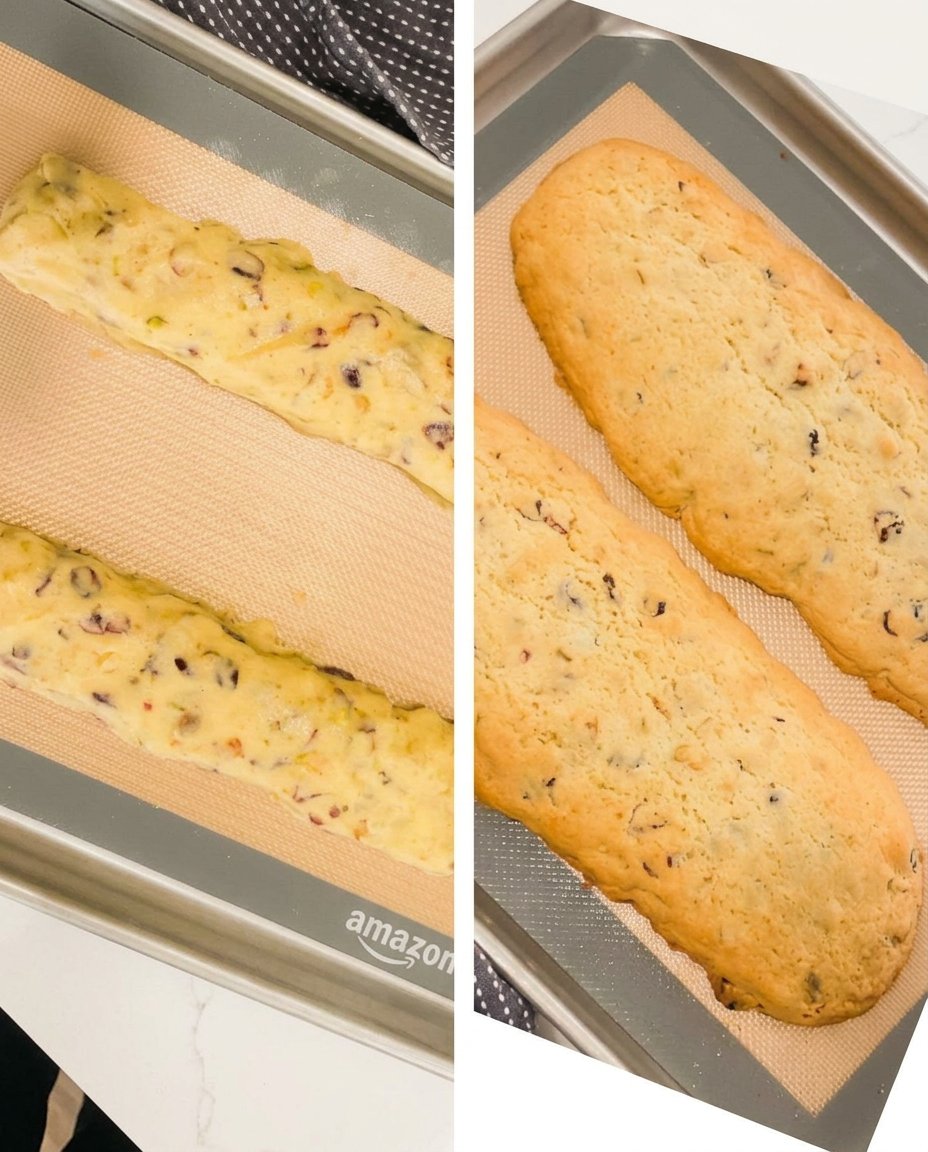
- Form the dough into a log approximately 11 by 3.5 inches on the prepared baking sheet and bake for 30 to 35 minutes until firm.
- Cool the log on the sheet for 5 to 10 minutes, then use a sharp serrated knife to cut into 3/4-inch wide diagonal slices.
- Place the slices cut-side down back on the baking sheet and bake for 10 minutes, then flip and bake for an additional 10 minutes.
- Transfer the biscotti to a wire rack to cool completely and drizzle with melted white chocolate if desired.
Notes
For the best structural results, ensure you pulse the cranberries into fine crumbs rather than leaving them whole to prevent steam pockets from forming. If the dough feels particularly sticky during shaping, lightly flouring your hands will make it easier to form the log without compromising the crumb.
- Prep Time: 20 mins
- Cook Time: 55 mins
- Category: Dessert
- Method: Baking
- Cuisine: Italian-American
The Formula for Structural Success
Success in biscotti baking comes down to the ratio of dry solids to liquid binders. Each ingredient in this list serves a specific chemical purpose in the final structure.
- 2 cups (250 g) All-Purpose Flour: This provides the protein structure. A protein content of around 10-11% is ideal for maintaining the shape of the log without making the cookie overly tough.
- 1 cup (100 g) Fresh Cranberries: Pulsed into crumbs, these provide controlled acidity and moisture. The acid reacts with the leavening agent to create a finer crumb.
- 1/2 cup (60 g) Roasted Pistachios: These add complex fats and a distinct crunch. Using roasted nuts is vital as the oils are already active, providing more flavor depth.
- 1/4 cup (55 g) Unsalted Butter: This small amount of fat coats the flour proteins, shortening the gluten strands and resulting in a crisp rather than hard texture.
- 2/3 cup (130 g) Granulated Sugar: Beyond sweetness, sugar is a humectant that helps stabilize the egg foam and contributes to the golden-brown color through caramelization.
- 2 Large Eggs: The primary binder. The proteins in the eggs set the structure during the first bake, while the water content provides the steam for the initial rise.
- 1 teaspoon Baking Soda: This alkaline leavener reacts with the natural acids in the fruit to provide a uniform lift.
- 1/2 cup (85 g) White Chocolate Chips: An optional inclusion that adds creamy fat to balance the tart berries.
The Twice-Baked Scientific Process
Step 1: Thermal Calibration and Sheet Preparation
Start by heating your oven to 350°F (175°C). In the test kitchen, we use an independent thermometer to verify that the internal atmosphere has reached a steady state. Precision here is vital because a cool oven will result in a doughy center, while an over-hot oven will set the exterior too quickly, leading to structural cracks. Prepare a heavy-duty rimmed baking sheet with parchment paper or a silicone mat. This layer of insulation prevents the bottom of the biscotti log from over-browning while the interior cooks through.
Step 2: Mechanical Processing of Fresh Cranberries
Use a food processor to pulse 1 cup (100 g) of fresh cranberries until they reach the consistency of fine crumbs. This mechanical breakdown is a core component of this Cranberry Pistachio Biscotti 2 recipe. Whole cranberries contain significant water reserves; if left intact, they would release steam in localized pockets, creating voids in your cookie. By finely mincing them, we integrate that moisture into the flour matrix, contributing to a more uniform crumb. Coarsely chop the roasted pistachios by hand or with a quick pulse to maintain their distinct texture and green hue.
Step 3: Aeration through Creaming
In the bowl of a stand mixer fitted with the paddle attachment, combine 1/4 cup (55 g) of softened unsalted butter with 2/3 cup (130 g) of granulated sugar. Beat on medium speed for exactly 2 minutes until the mixture looks pale and fluffy. This step isn’t just about mixing; it is about physical leavening. The sugar crystals cut through the butter fat, creating millions of tiny air pockets. During baking, the baking soda will release carbon dioxide into these pre-existing pockets, allowing the dense dough to rise without becoming heavy.
Step 4: Emulsifying the Liquid Ingredients
Add 2 large eggs and 1 teaspoon of pure vanilla extract to the butter-sugar mixture. Beat for another 2 minutes. We want a stable emulsion where the water from the egg whites is fully suspended in the fats from the yolks and butter. If the mixture looks curdled, continue beating for 30 more seconds. A proper emulsion creates a smooth, cohesive dough that holds its shape during the first bake.
Step 5: Integrating the Dry Matrix
Reduce the mixer speed to low and add 2 cups (250 g) of all-purpose flour, 1 teaspoon of baking soda, and 1/2 teaspoon of salt. Mix only until the white streaks of flour disappear. Over-mixing at this stage triggers excessive gluten development, which would make the biscotti tough rather than crisp. The dough will feel sticky to the touch; this is expected because the hydration level is calibrated to support the addition of the fruit and nuts.
Step 6: Final Fold-In
Using a sturdy silicone spatula, fold in the pulsed cranberries and the chopped pistachios. If you choose to use 1/2 cup (85 g) of white chocolate chips, add them now. The goal is to distribute the inclusions evenly without deflating the air we worked so hard to incorporate. The vibrant red of the fruit and green of the nuts create a beautiful contrast against the pale dough.
Step 7: Structural Shaping and First Bake
Lightly dust your baking sheet and your hands with extra flour. Transfer the dough to the sheet and form it into a log approximately 11 by 3.5 inches (28×9 cm). If you prefer smaller, bite-sized treats, divide the dough into two narrower logs. The height of the log dictates the final shape of the biscotti; a flatter log results in longer, thinner slices, while a taller log yields shorter, thicker cookies. Place the sheet in the center of the oven and bake for 30 to 35 minutes until the top feels firm and the edges show a slight golden hue.
Step 8: The Slicing Technique
Remove the log from the oven and let it cool on the sheet for about 5 to 10 minutes. Timing is critical here. If the log is too hot, it will crumble; if it is too cold, it will be too hard to cut. Use a sharp serrated knife to cut the log into 3/4-inch wide strips on a slight diagonal. The serrated blade acts like a saw, moving through the hard nuts and soft fruit without crushing the delicate warm crumb.
Step 9: The Second Bake for Dehydration
Arrange the slices back on the baking sheet, cut-side down. Return them to the oven for 10 minutes. For a superior crunch, flip each piece over and bake for an additional 10 minutes. This second bake is a dehydration phase. We are removing the remaining moisture to create a shelf-stable cookie with a high-frequency snap. The internal temperature of the biscotti should reach roughly 190°F to 200°F (88°C-93°C) to guarantee they are fully dried.
Step 10: Cooling and Optional Decoration
Allow the biscotti to cool completely on a wire rack. As they cool, the sugar structures set, making them even crispier. If you desire a finished look, melt white chocolate in a double boiler until smooth. Drizzle it over the cooled cookies using a pastry bag or a zip-lock bag with a tiny corner snipped off. Let the chocolate set at room temperature before storing.
Lauren’s Lab Notes
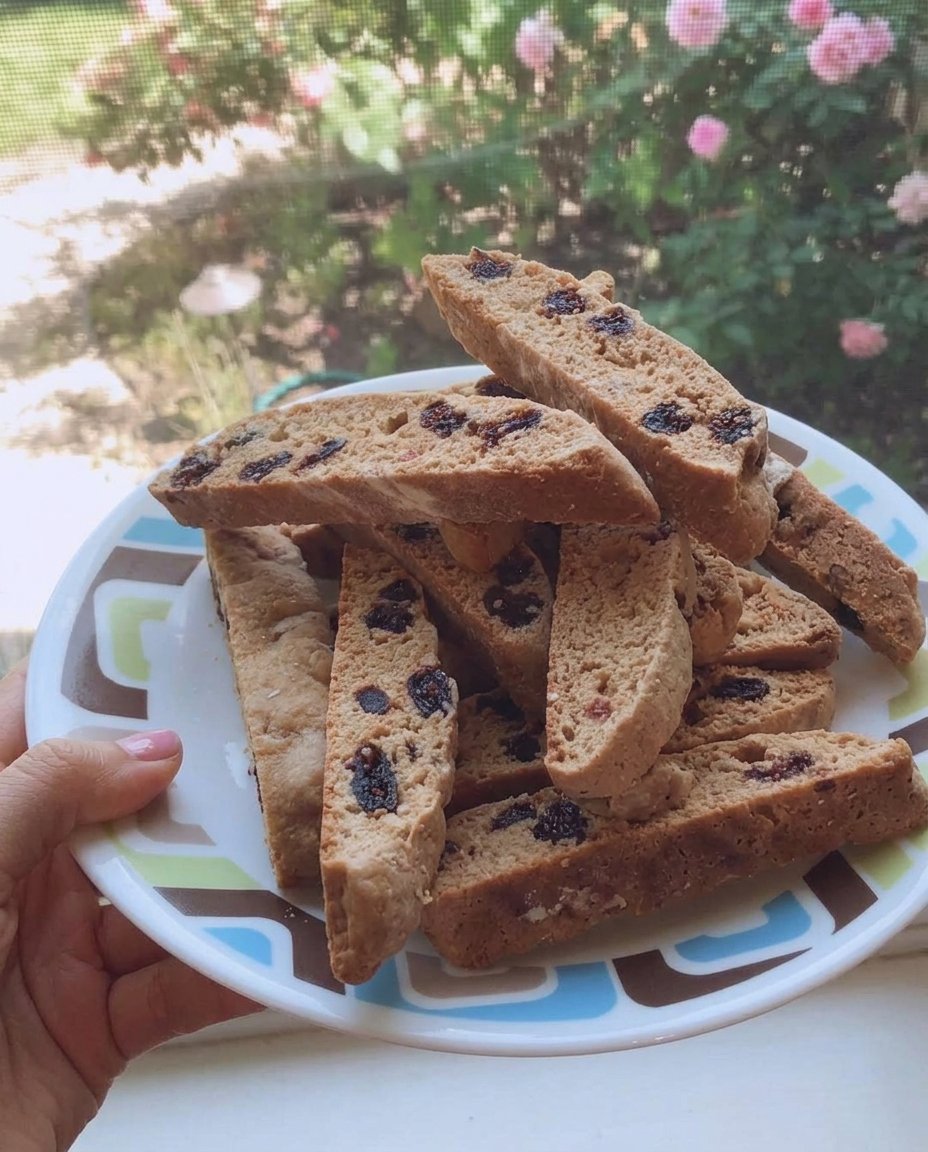
To achieve professional results, you must pay attention to the moisture content of your fresh cranberries. If they are particularly juicy after pulsing, you can pat them with a paper towel to remove excess liquid before adding them to the dough. This prevents the dough from becoming overly slack. For more advanced techniques on maintaining cookie integrity, see our Artisan Cookie Collection. When it comes to slicing, always use a long serrated knife and a gentle sawing motion. Pressing straight down will cause the log to fracture. If you find your biscotti are still a bit soft in the center after the second bake, you can leave them in the turned-off oven with the door propped open for 15 minutes to finish the dehydration process. For those looking to compare these ratios with other traditional methods, this cranberry pistachio biscotti guide offers a great baseline for comparison.
Tested Flavor Variations
Our test kitchen has verified several structural modifications for this recipe. If you prefer a more citrus-forward profile, you can add 1 tablespoon of orange zest to the sugar before creaming. The citrus oils provide a powerful aromatic boost without adding significant liquid that would disrupt the dough. For a nut-free version, you can substitute the pistachios with toasted pepitas, which offer a similar crunch and color profile. If you are interested in how seasonal changes affect dough hydration, check out our Seasonal Cookie Design resources. Another successful variation is substituting white chocolate with dark chocolate; the higher cocoa butter content in dark chocolate will result in a slightly firmer drizzle. Always make sure to adjust your baking time by 2-3 minutes if you increase the volume of inclusions.
Flavor Science and Pairing Notes
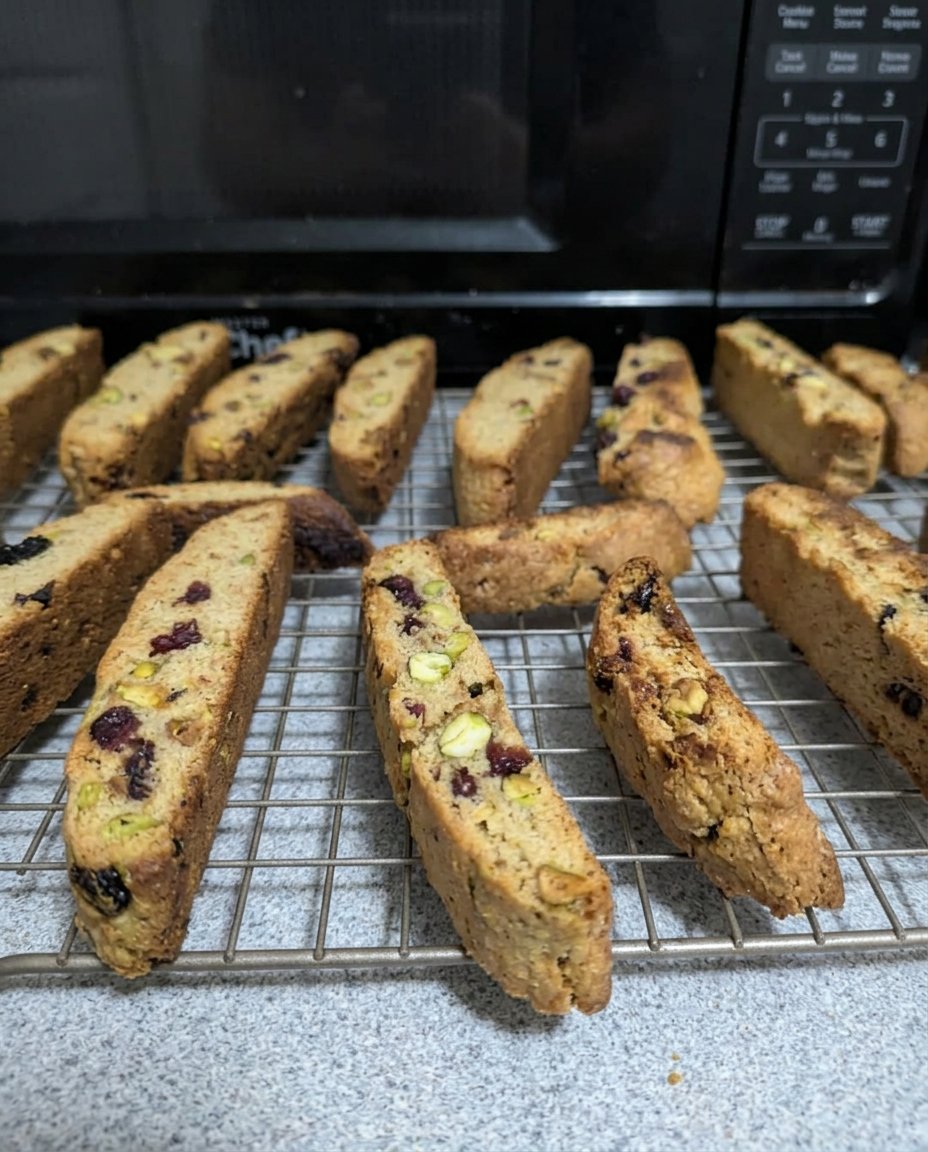
Biscotti are designed to be served with a beverage that can participate in capillary action. The porous structure of the twice-baked crumb draws in liquid, softening the cookie and releasing the aromatic compounds in the vanilla and pistachios. We recommend serving these with a medium-roast coffee or a floral black tea. If you are hosting a holiday gathering, these look stunning displayed on a tiered stand. You can find more presentation ideas in our Cookie Decorating Studio. For an evening pairing, a glass of Vin Santo or another fortified wine provides a beautiful contrast to the tart cranberries. Serve them at room temperature for the best texture, as cold biscotti can feel too dense.
The Scientific Truth
Mastering the Cranberry Pistachio Biscotti 2 recipe is a victory for any home baker who values precision. By understanding the interaction between the fruit’s moisture and the flour’s protein structure, you can create a holiday treat that is both beautiful and structurally sound. We encourage you to keep testing these ratios in your own kitchen to see how different environments affect your results. For more innovative recipes that have passed our rigorous testing, view our Trending Cookie Creations. We would love to see your successful bakes! Share your results with our community on Pinterest, Instagram, Facebook, and X.