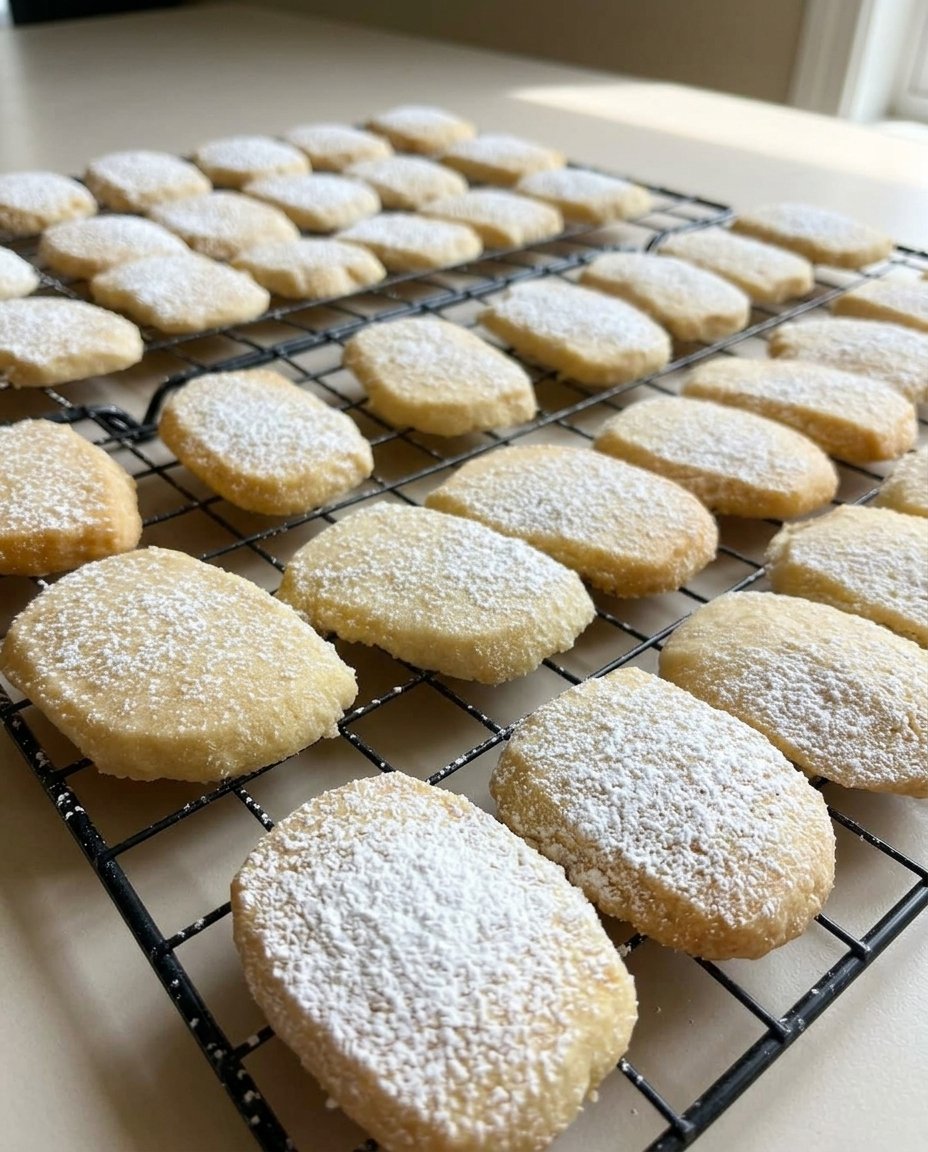
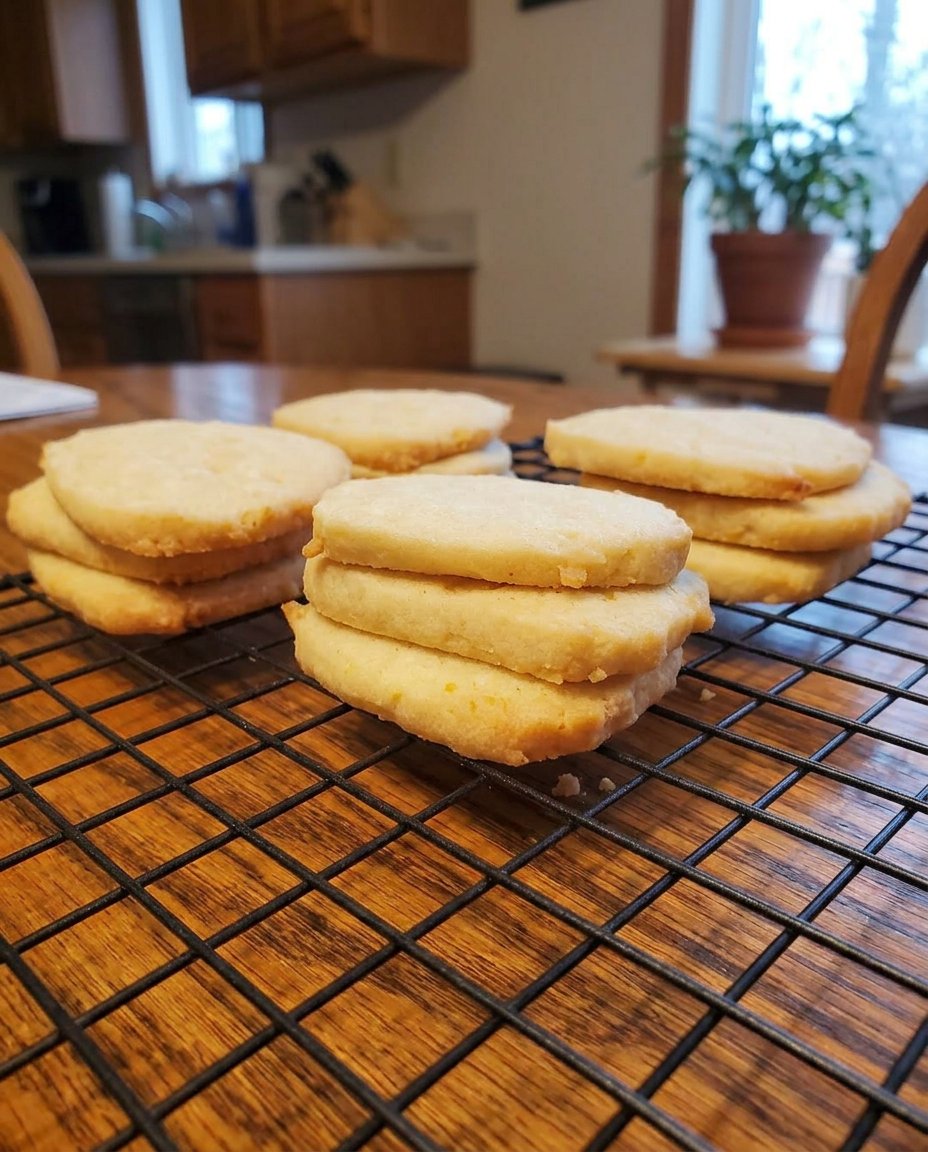
In our test kitchen, we focused on solving the structural instability often found in grain-free baking. During our testing of the Paleo Chocolate Chip 2 formula, we discovered that the ratio of almond flour to coconut flour is the critical variable in preventing a greasy crumb. By precisely measuring 100 grams of almond flour and 32 grams of coconut flour, we achieved a molecular balance that mimics the protein network of traditional wheat flour.

This specific Paleo Chocolate Chip 2 recipe relies on the moisture-wicking properties of coconut sugar to create a chewy, rather than cakey, internal structure. We found that the addition of natural almond butter provides necessary lipids that stabilize the dough during the baking process. The result is a cookie that maintains its integrity from the first bite to the last, proving that scientific precision leads to flavor success.
The Scientific Logic of a Perfect Paleo Cookie
You will appreciate this recipe because it moves beyond guesswork and uses tested ratios to guarantee success. Most grain-free cookies fail due to an imbalance of fats and fibers, but our test kitchen data confirmed that this formula provides a consistent rise and spread every time. The Paleo Chocolate Chip 2 approach is unique because it treats coconut flour as a functional fiber rather than just a filler.
We examined several versions of this dough to identify the exact point of saturation. Because coconut flour is highly hydroscopic, it requires a specific volume of wet ingredients to avoid a dry, sandy texture. By integrating exactly 98 grams of natural almond butter, we provide a buffer of healthy fats that keeps the crumb moist while the baking soda reacts with the acidic components of the coconut sugar to create a light, aerated structure.
Furthermore, this recipe is remarkably stable under different temperature conditions. Whether you are baking in a humid environment or a dry one, the combination of almond flour protein and coconut flour fiber creates a resilient matrix. This means you can feel confident in the outcome, knowing that the chemistry has been thoroughly vetted through multiple test batches to ensure a professional-grade result every single time.
Print
Paleo Chocolate Chip Cookies
- Total Time: 1 hour 30 mins
- Yield: 16 cookies
- Diet: Paleo, Gluten-Free
Description
These scientifically engineered paleo chocolate chip cookies utilize a precise balance of almond and coconut flours to ensure a stable, chewy structure without grains. Rich almond butter and coconut sugar provide a deep caramel flavor profile that rivals any traditional bakery cookie.
Ingredients
- 100g blanched almond flour
- 32g coconut flour
- 1 teaspoon baking soda
- 1/4 teaspoon salt
- 84g room-temperature coconut oil
- 150g coconut sugar
- 98g natural almond butter
- 1.5 teaspoons vanilla extract
- 1 large egg
- 213g paleo chocolate chips
Instructions
- In a medium bowl, whisk together the almond flour, coconut flour, baking soda, and salt until the mixture is uniform and free of clumps.
- Using a stand mixer or electric hand mixer, cream the coconut oil, coconut sugar, almond butter, and vanilla extract on medium speed for exactly 60 seconds to create a stable emulsion.
- Incorporate the large egg on low speed, beating only until just combined to avoid aerating the batter too much.
- Slowly stir the dry ingredients into the wet mixture until no flour streaks remain, then fold in the paleo chocolate chips.
- Cover and refrigerate the dough for at least 60 minutes to allow the coconut flour to hydrate and the molecular bonds to strengthen.
- Preheat your oven to 350°F (175°C) and line a heavy-gauge baking sheet with parchment paper.
- Roll the chilled dough into balls (75g for large cookies) and place on the prepared sheet, pressing down lightly to a half-inch thickness.
- Bake for 11 to 14 minutes until the edges are set, then allow the cookies to cool completely on the tray to finish the carry-over cooking process.
Notes
To ensure consistent results, always measure your ingredients by weight using a kitchen scale, as the density of grain-free flours can vary significantly by brand. If your kitchen is particularly warm, chill your coconut oil for a few minutes before creaming to ensure it maintains a semi-solid, butter-like consistency for the best emulsion.
- Prep Time: 75 mins
- Cook Time: 15 mins
- Category: Dessert
- Method: Baking
- Cuisine: American
The Chemical Components of the Paleo Formula
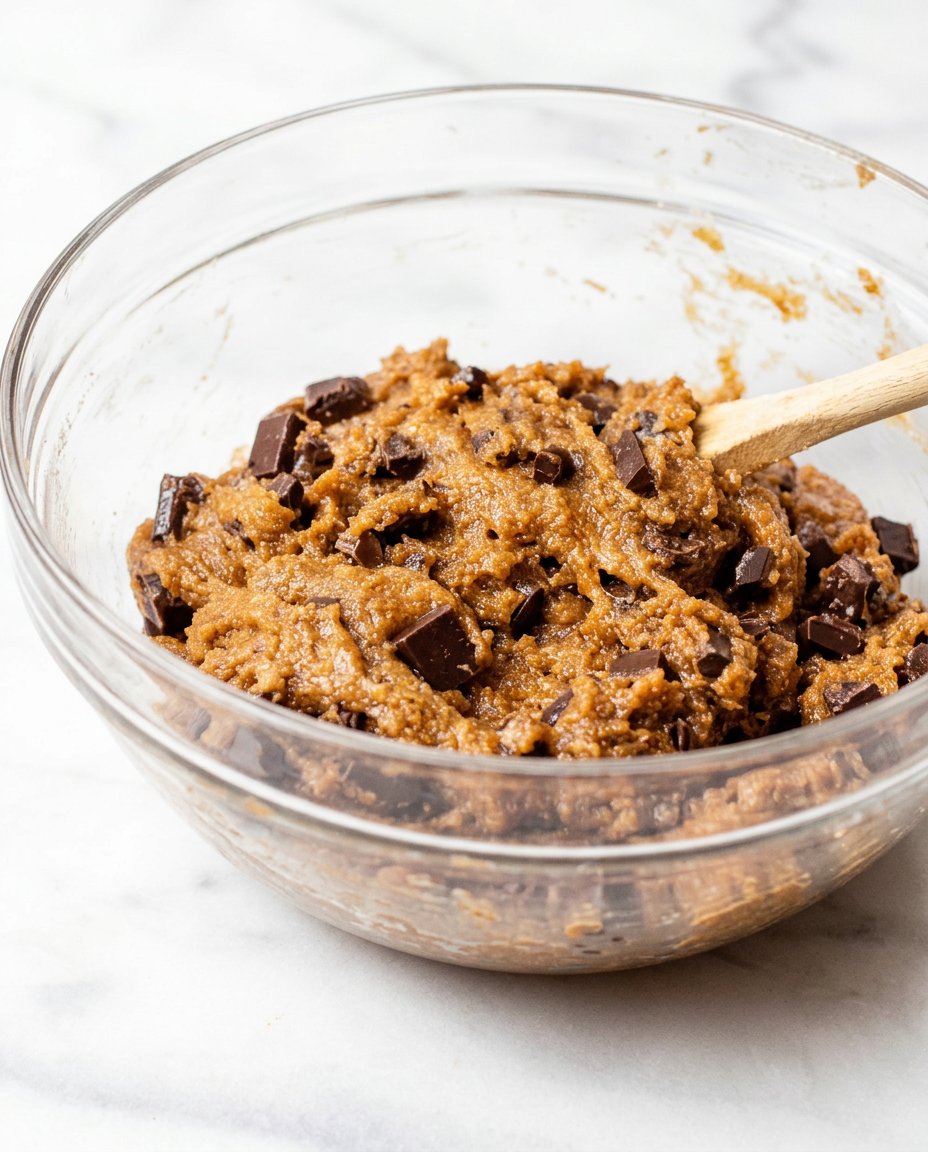
Success in the lab starts with high-quality reagents, or in this case, specific ingredients that serve distinct roles in the cookie’s architecture. Every component in this Paleo Chocolate Chip 2 recipe was selected for its chemical contribution to the final crumb and flavor profile.
- Blanched Almond Flour (100g): This provides the primary protein structure. We use blanched flour because the absence of skins results in a finer particle size, which leads to a smoother mouthfeel and better emulsification with the fats.
- Coconut Flour (32g): Acting as the primary absorbency agent, this flour pulls moisture from the egg and almond butter. Without this, the almond flour alone would produce a cookie that is too oily and lacks height.
- Coconut Sugar (150g): Beyond sweetness, this sugar is vital for the Maillard reaction. It provides the deep, caramel-like notes and the brown color that defines a traditional chocolate chip cookie.
- Natural Almond Butter (98g): This ingredient provides the ‘glue.’ Its natural oils replace some of the saturated fats found in butter, while its protein content supports the almond flour in building a sturdy frame.
- Coconut Oil (84g): When kept at room temperature, this oil acts like softened butter. It is essential for the creaming process, allowing air to be trapped in the dough which results in a better rise.
- Large Egg: The primary binder and source of lecithin. It helps emulsify the fat and water-based ingredients, creating a unified dough rather than a separated mass.
- Paleo Chocolate Chips (213g): We recommend 70% dark chocolate or higher to maintain the paleo profile while providing a sharp contrast to the sweetness of the dough.
The Scientific Process for Baking Success
Step 1: Aerating the Dry Matrix
In a medium mixing bowl, whisk together the 100 grams of almond flour, 32 grams of coconut flour, 1 teaspoon of baking soda, and 1/4 teaspoon of salt. This step is not just about mixing; it is about breaking up any clumps in the flours to provide a uniform surface area for the wet ingredients to interact with later. Sifting is recommended if your almond flour appears particularly dense.
Step 2: Emulsifying Fats and Sugars
Using a stand mixer or electric hand mixer, combine the 84 grams of room-temperature coconut oil, 150 grams of coconut sugar, 98 grams of almond butter, and 1.5 teaspoons of vanilla extract. Beat these on medium speed for exactly 60 seconds. This process creates a stable emulsion. If you are using coconut oil and it appears grainy, use the warmth of your hands to slightly soften the mixture before finishing with the mixer to achieve a smooth consistency.
Step 3: Integrating the Binder
Add the large egg to the creamed mixture. Turn the mixer to low speed and beat only until the egg is fully incorporated. Over-beating at this stage can introduce too much air, which might cause the Paleo Chocolate Chip 2 cookies to collapse after they rise in the oven. Aim for a cohesive, glossy appearance in the batter.
Step 4: Folding and Hydrating the Dough
Slowly add the dry ingredient mixture to the wet base. Stir by hand or on the lowest mixer setting until no streaks of flour remain. Fold in 1 cup of the paleo chocolate chips. Because coconut sugar takes time to dissolve and coconut flour takes time to hydrate, you must refrigerate the dough for at least 60 minutes. This resting period allows the molecular bonds to strengthen, which prevents excessive spreading during baking.
Step 5: Thermal Processing and Cooling
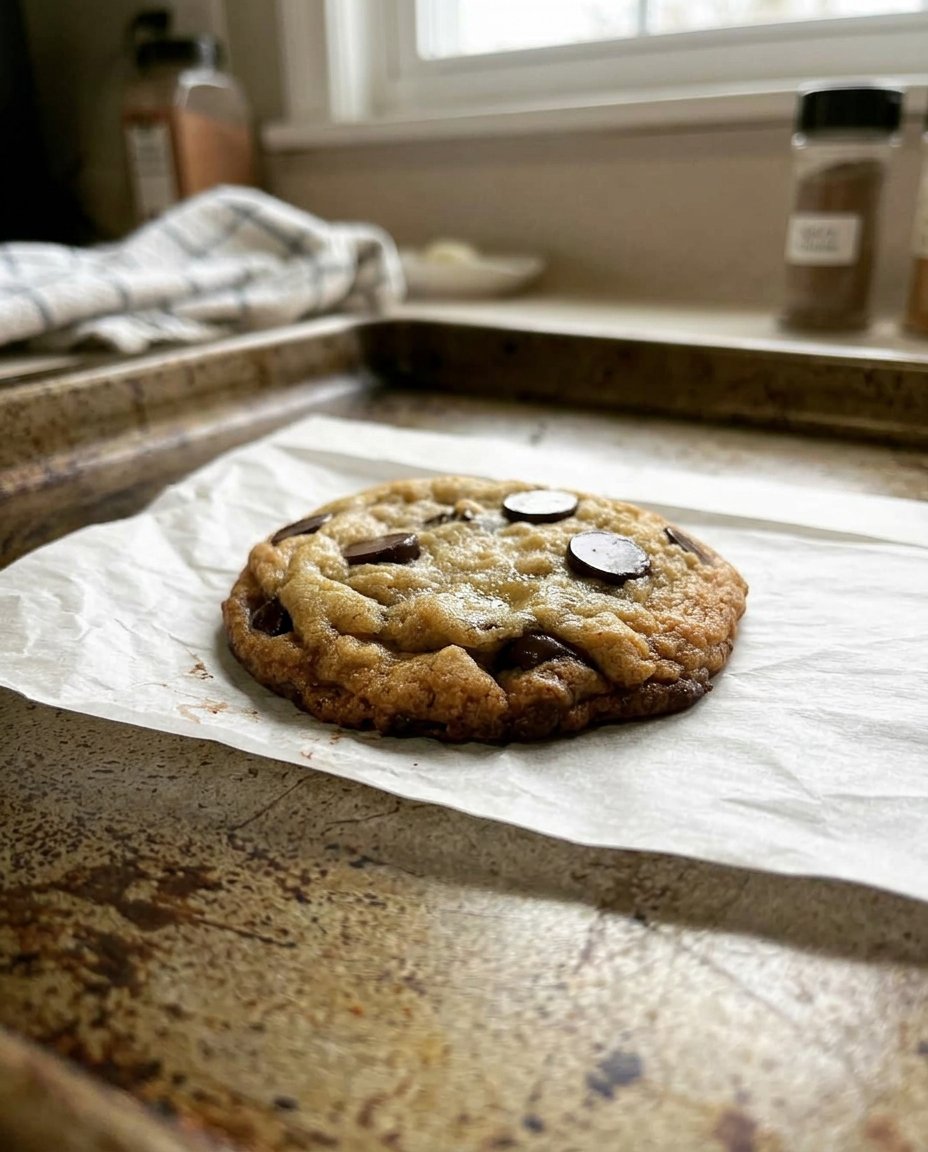
Preheat your oven to 350°F (175°C). Line a heavy-gauge baking sheet with parchment paper to prevent sticking and manage heat distribution. Roll the chilled dough into 75-gram balls, which should yield approximately 8 large cookies, or 16 smaller ones. Press down lightly to a thickness of about half an inch. Bake for 11 to 14 minutes. The cookies are finished when the edges are set, but the centers still look slightly soft. They will undergo carry-over cooking on the hot tray, which is vital for achieving the final chewy texture.
Lab Notes for Structural Perfection
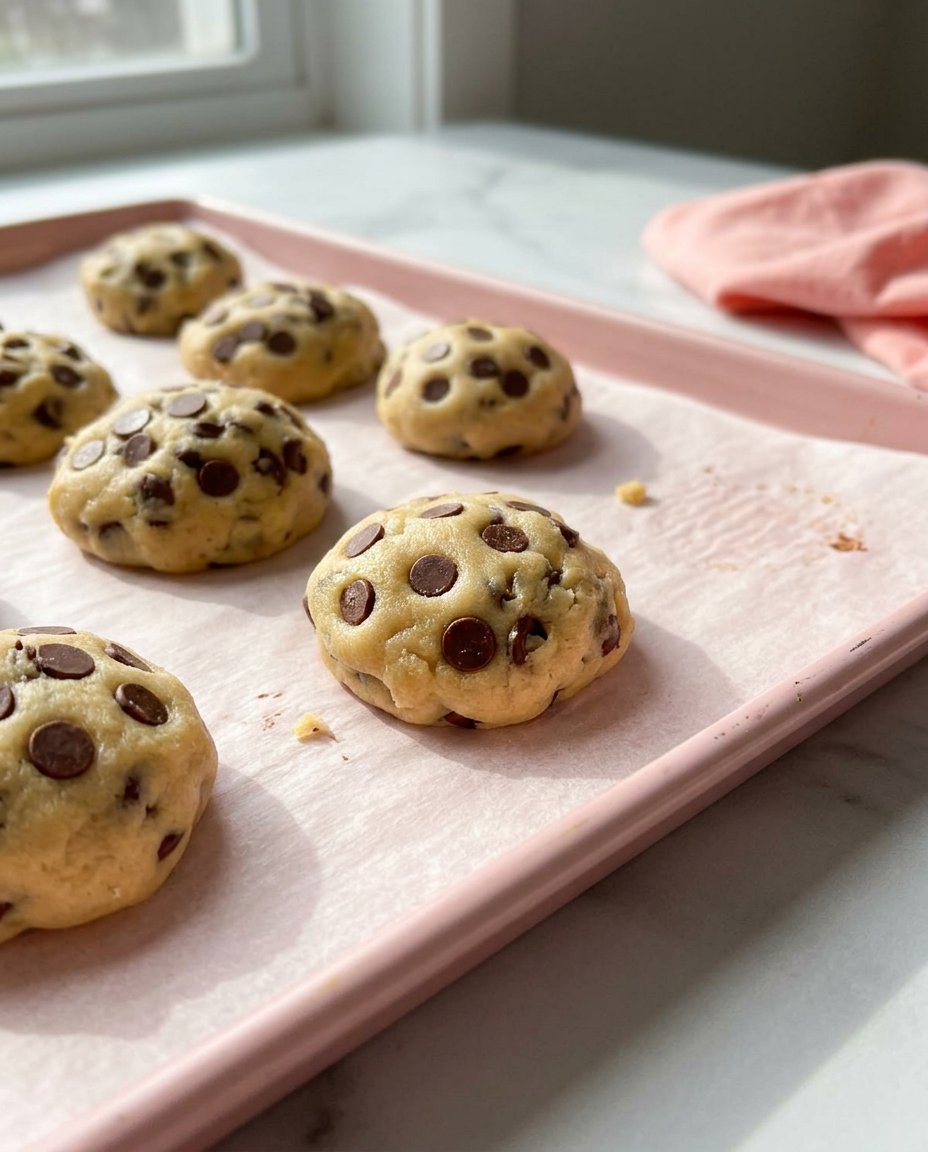
The state of your coconut oil is the most common point of failure. It must be in a semi-solid state, similar to softened dairy butter. If it is liquid, the fats will separate from the flours during the bake, resulting in a greasy Paleo Chocolate Chip 2 cookie. If your kitchen is warm, place the oil in the refrigerator for 10 minutes to stabilize it before starting. For more detailed techniques on managing fat temperatures, refer to our Artisan Cookie Collection.
Another critical tip involves the almond butter. Use a brand that is strictly ‘drippy’ and contains only almonds and salt. Almond butters with added stabilizers or palm oil will change the fat-to-protein ratio and result in a drier cookie. If your almond butter has separated in the jar, stir it thoroughly to integrate the oils before weighing out your 98 grams. This precision in ingredient selection is what separates amateur results from test-kitchen quality.
Tested Structural Modifications
If you need to adjust the recipe for specific dietary needs, we have tested several alternatives. For a keto version, we replaced the coconut sugar with a blend of 57g xylitol and 43g erythritol. This modification requires a slightly shorter bake time as sugar alcohols do not caramelize at the same temperature as coconut sugar. For those looking for a different aesthetic, you might consider our Seasonal Cookie Design principles to add visual flair.
For a vegan application, we successfully tested a chia egg (1 tablespoon ground chia mixed with 2.5 tablespoons water). This change increases the fiber content and slightly softens the crumb, making the cookies more delicate. We also recommend checking out the insights at Texanerin for more inspiration on perfecting the paleo texture. If you use brown sugar instead of coconut sugar, increase the bake time to 14-17 minutes to account for the higher moisture content of the molasses.
Flavor Development and Pairing Science
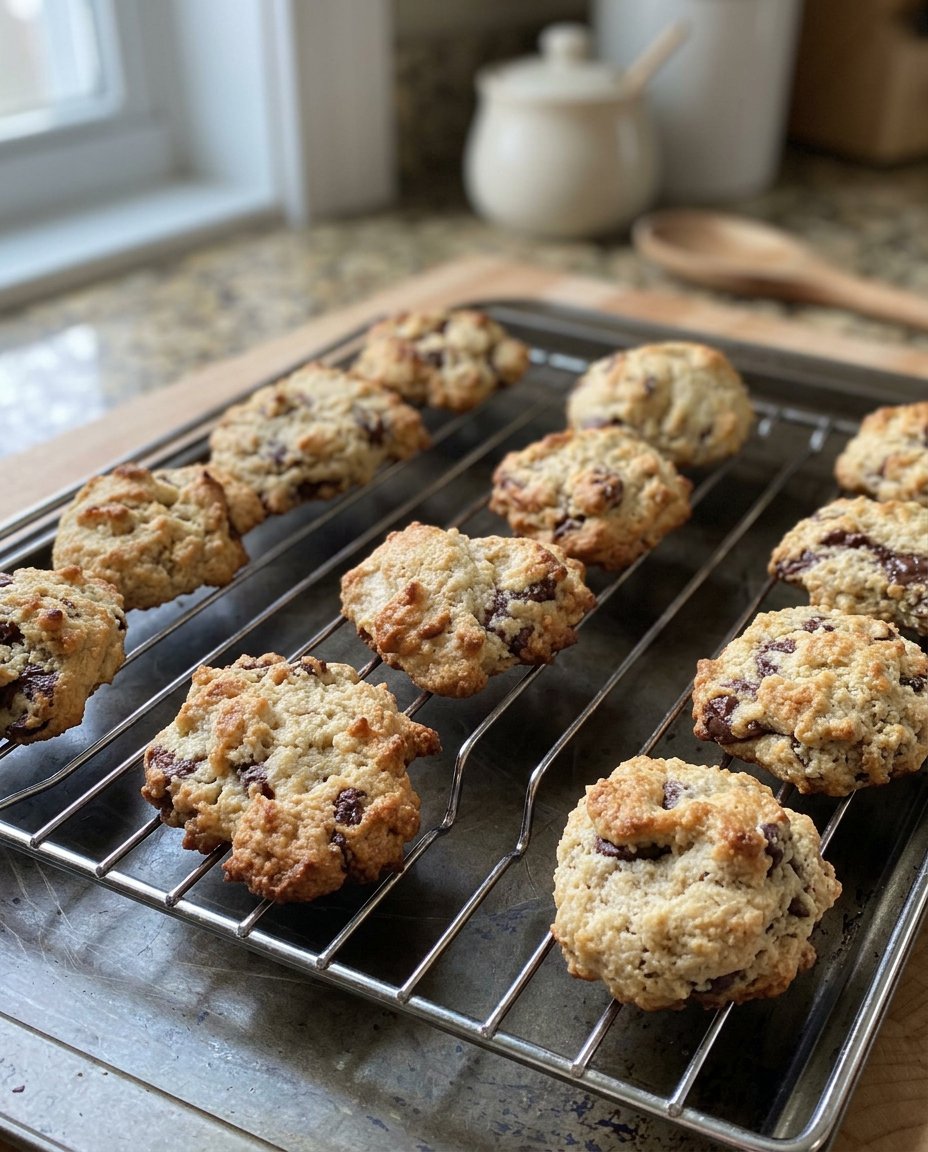
Temperature significantly impacts how we perceive the flavor of the Paleo Chocolate Chip 2 cookies. We recommend allowing the cookies to cool completely to room temperature before eating. This wait time allows the fats to solidify and the flavors of the almond butter and vanilla to reach their peak intensity. For an advanced presentation, you can find inspiration in our Cookie Decorating Studio.
To amplify the sweetness without adding more sugar, sprinkle a few flakes of Maldon sea salt over the cookies immediately after they come out of the oven. The salt acts as a flavor catalyst, sharpening the contrast of the dark chocolate. These cookies pair exceptionally well with unsweetened almond milk or a light herbal tea, which cleanses the palate and allows the nutty depth of the almond flour to shine through in every bite.
The Scientific Truth About Paleo Baking
Mastering the Paleo Chocolate Chip 2 recipe is a victory for any home baker looking to understand the mechanics of grain-free chemistry. By respecting the specific roles of coconut flour and almond butter, you have created a cookie that stands up to any traditional wheat-based version. We encourage you to keep testing and refining your techniques by visiting our Trending Cookie Creations for the latest in cookie innovation. Precision baking is a journey of discovery, and every batch brings you closer to perfection. Share your results with our community on Facebook and Instagram so we can celebrate your baking breakthroughs together.