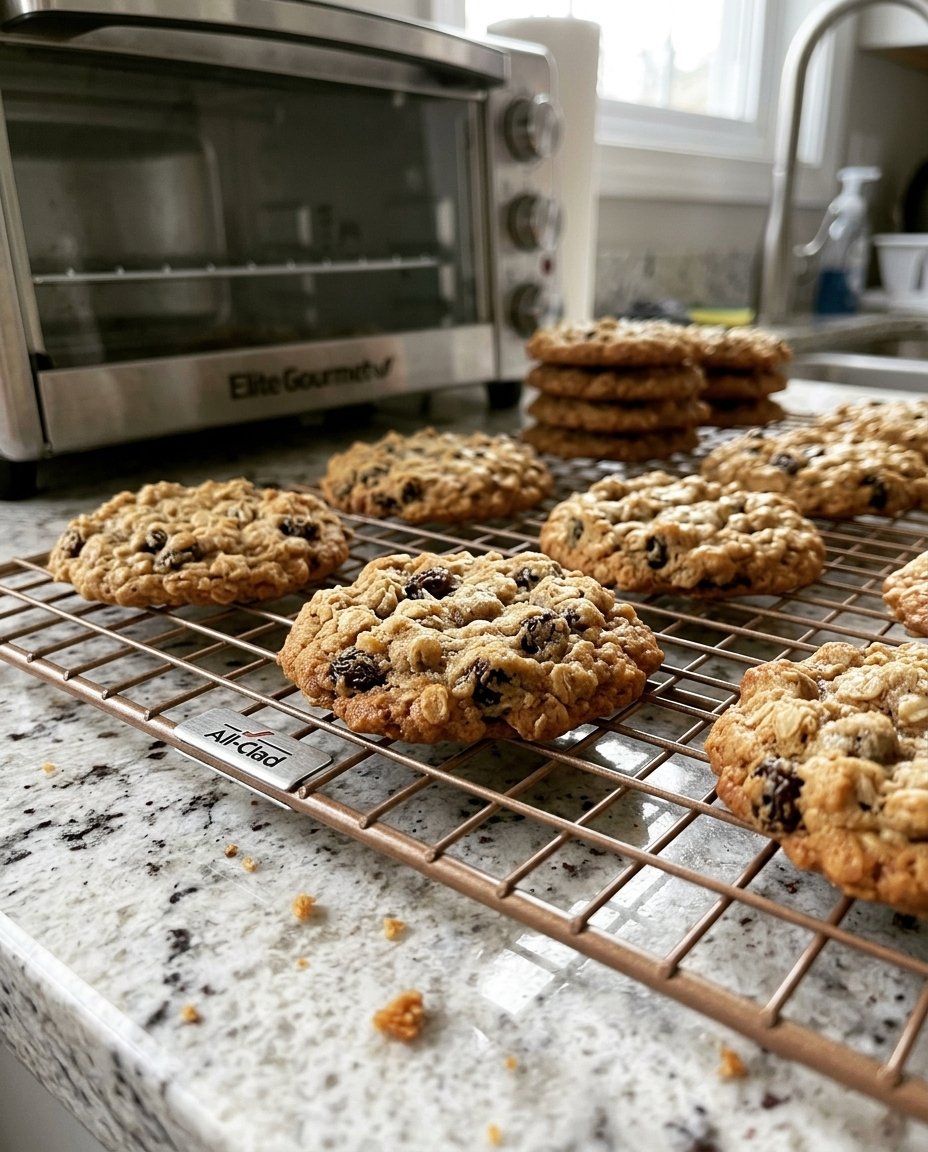
In our test kitchen, we focused on the specific hydration needs of dried fruits to ensure the Oatmeal Raisin Cranberry 2 recipe maintains a perfect structural balance. We discovered that combining the high moisture of raisins with the tart acidity of cranberries requires a precise ratio of rolled oats to provide enough surface area for absorption. This testing process resulted in a cookie that stays chewy for days without becoming soggy.

Achieving the ideal crumb in an oatmeal cookie depends entirely on the ratio of fats to complex carbohydrates. By using exactly 2 cups (180g) of rolled oats against 3/4 cup (95g) of all-purpose flour, we create a reinforced matrix that prevents the fruit from sinking to the bottom. This scientific approach ensures every bite contains a balanced distribution of fiber, sugar, and spice.
The Science of Texture and Flavor
Precision in the test kitchen allows us to understand why this Oatmeal Raisin Cranberry 2 formula succeeds where others fail. The primary reason you will appreciate this recipe is the structural integrity provided by the rolled oats. Unlike quick oats, which break down and lose their identity, rolled oats maintain a distinct chew that stands up to the heavy additions of raisins and cranberries. This creates a fascinating interplay of textures between the soft crumb and the firm oat flakes.
From a chemical standpoint, the use of both dark brown sugar and granulated sugar serves two distinct purposes. The dark brown sugar provides hygroscopic properties, meaning it attracts and holds onto moisture, which keeps the interior soft. Meanwhile, the granulated sugar facilitates the Maillard reaction on the edges, giving you a slight crispness that balances the chew. This dual-sugar system is a proven method for creating the perfect cookie profile.
The addition of cinnamon isn’t just for aroma; the volatile oils in high-quality cinnamon interact with the heat to provide a warming sensation that cuts through the richness of the butter. When you combine this with the tartness of the cranberries, you achieve a flavor profile that is scientifically balanced across the sweet and sour spectrum. This recipe is a victory for home bakers who value predictable, professional results every time they bake.
Print
Oatmeal Raisin Cranberry Cookies
- Total Time: 28 mins
- Yield: 18 cookies
- Diet: Vegetarian
Description
These chewy oatmeal cookies are scientifically formulated to balance the moisture of raisins and tart cranberries with the structural integrity of old-fashioned rolled oats. A dual-sugar system ensures a soft interior with perfectly crisp edges for a professional bakery-style result.
Ingredients
- 6 tablespoons (85g) unsalted butter, softened
- 1/4 cup (50g) dark brown sugar
- 1/2 cup (100g) granulated sugar
- 2 large eggs
- 1 teaspoon vanilla extract
- 1 teaspoon ground cinnamon
- 1/2 teaspoon baking powder
- 1/2 teaspoon baking soda
- 1/2 teaspoon salt
- 3/4 cup (95g) all-purpose flour
- 2 cups (180g) old-fashioned rolled oats
- 1/2 cup raisins
- 1/2 cup dried cranberries
Instructions
- Preheat your oven to 350°F (175°C) and prepare a heavy-duty baking sheet with parchment paper.
- In a large mixing bowl, beat the softened butter, dark brown sugar, and granulated sugar together until the mixture is light and aerated.
- Add the eggs one at a time, followed by the cinnamon, vanilla extract, baking powder, baking soda, and salt, mixing until evenly distributed.
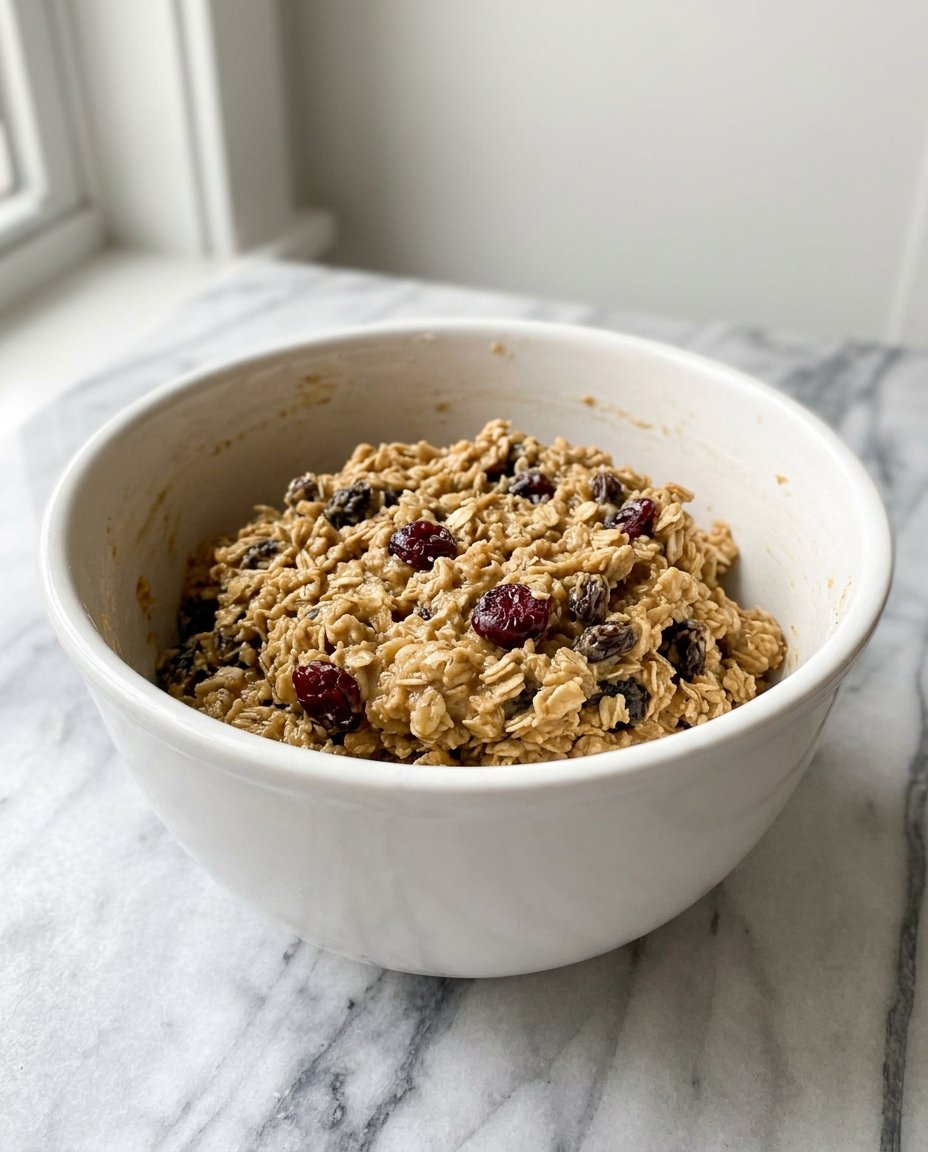
- Fold in the flour, rolled oats, raisins, and dried cranberries by hand using a large spoon until no streaks of flour remain.
- Roll the dough into balls (about 2 tablespoons or 30g each), place them 2 inches apart on the baking sheet, and flatten slightly with your fingers.
- Bake for 12 to 13 minutes until the edges are light golden brown, then allow to cool on the sheet for 5 minutes before transferring to a wire rack.
Notes
For the most consistent texture, allow the prepared dough to rest for 15 minutes before scooping; this allows the rolled oats to hydrate and prevents excessive spreading. If your dried fruit appears overly dry, soak them in warm water for five minutes and pat thoroughly dry before adding them to the dough to maintain a plump, chewy bite.
- Prep Time: 15 mins
- Cook Time: 13 mins
- Category: Dessert
- Method: Baking
- Cuisine: American
The Formula for Structural Success
To achieve the perfect Oatmeal Raisin Cranberry 2 cookie, you must understand the role each ingredient plays in the chemical matrix of the dough. We recommend measuring by weight whenever possible for maximum precision.
- Unsalted Butter (6 tablespoons / 85g): We use softened butter to ensure proper aeration during the creaming process. The fat coats the flour particles, inhibiting excessive gluten development and keeping the cookie tender.
- Dark Brown Sugar (1/4 cup / 50g) and Granulated Sugar (1/2 cup / 100g): This ratio provides the necessary moisture and sweetness while allowing for a controlled spread in the oven.
- Large Eggs (2): These act as the primary emulsifier, binding the fats and liquids together while providing protein for structure.
- Rolled Oats (2 cups / 180g): These are the backbone of the cookie. We specifically tested with old-fashioned rolled oats because their thicker structure provides the necessary resistance to the moisture of the dried fruits.
- Dried Cranberries and Raisins (1/2 cup each): The combination of these two fruits provides a complex flavor profile. The raisins offer deep, caramel-like sweetness, while the cranberries provide a bright, acidic contrast.
- All-Purpose Flour (3/4 cup / 95g): This provides just enough gluten to hold the oats and fruit together without making the cookie tough.
- Cinnamon, Vanilla, and Salt: These are your flavor catalysts. Salt is particularly important as it suppresses bitterness and highlights the sweetness of the fruit.
- Baking Powder and Baking Soda: Using both leaveners ensures the cookies rise properly while also achieving a beautiful golden-brown color through pH adjustment.
The Methodical Process
Step 1: Establish Thermal Equilibrium
Preheat your oven to 350°F (175°C). It is vital to allow your oven to reach this temperature fully before baking to ensure the leavening agents activate at the correct moment. Prepare a heavy-duty baking sheet with parchment paper to prevent sticking and ensure even heat distribution.
Step 2: Creaming the Lipids and Sugars
In a large mixing bowl, combine the softened butter, dark brown sugar, and granulated sugar. Using a sturdy spoon or a hand mixer, beat these ingredients until the mixture is light and aerated. This process incorporates tiny air pockets into the fat, which will expand in the oven to create a light texture.
Step 3: Emulsifying the Wet Ingredients
Add the two eggs one at a time, followed by the cinnamon, vanilla extract, baking powder, baking soda, and salt. Mixing these components into the butter-sugar base before adding the dry ingredients ensures that the leavening agents and spices are evenly distributed throughout the entire batch of dough.
Step 4: Integrating the Matrix
Add the flour, rolled oats, raisins, and dried cranberries to the bowl. Use a large spoon to fold these in by hand. Over-mixing at this stage can lead to tough cookies, so stir only until no streaks of flour remain. The goal is to coat the oats and fruit in the wet base without developing too much gluten.
Step 5: Shaping and Mechanical Compression
Roll the dough into balls, approximately 2 tablespoons (30g) each. Place them on the baking sheet, spacing them at least 2 inches apart. Use the back of a spoon or your fingers to flatten the balls slightly. This increase in surface area ensures the cookies bake evenly and achieve the desired chewy-to-crisp ratio.
Step 6: Thermal Transformation
Bake for 12 to 13 minutes. The edges should be a light golden brown, while the centers may still appear slightly soft. The cookies will continue to set on the hot baking sheet for 5 minutes after removal from the oven, a process known as carry-over cooking. Move them to a wire rack to cool completely.
Precision Lab Notes for Perfect Results
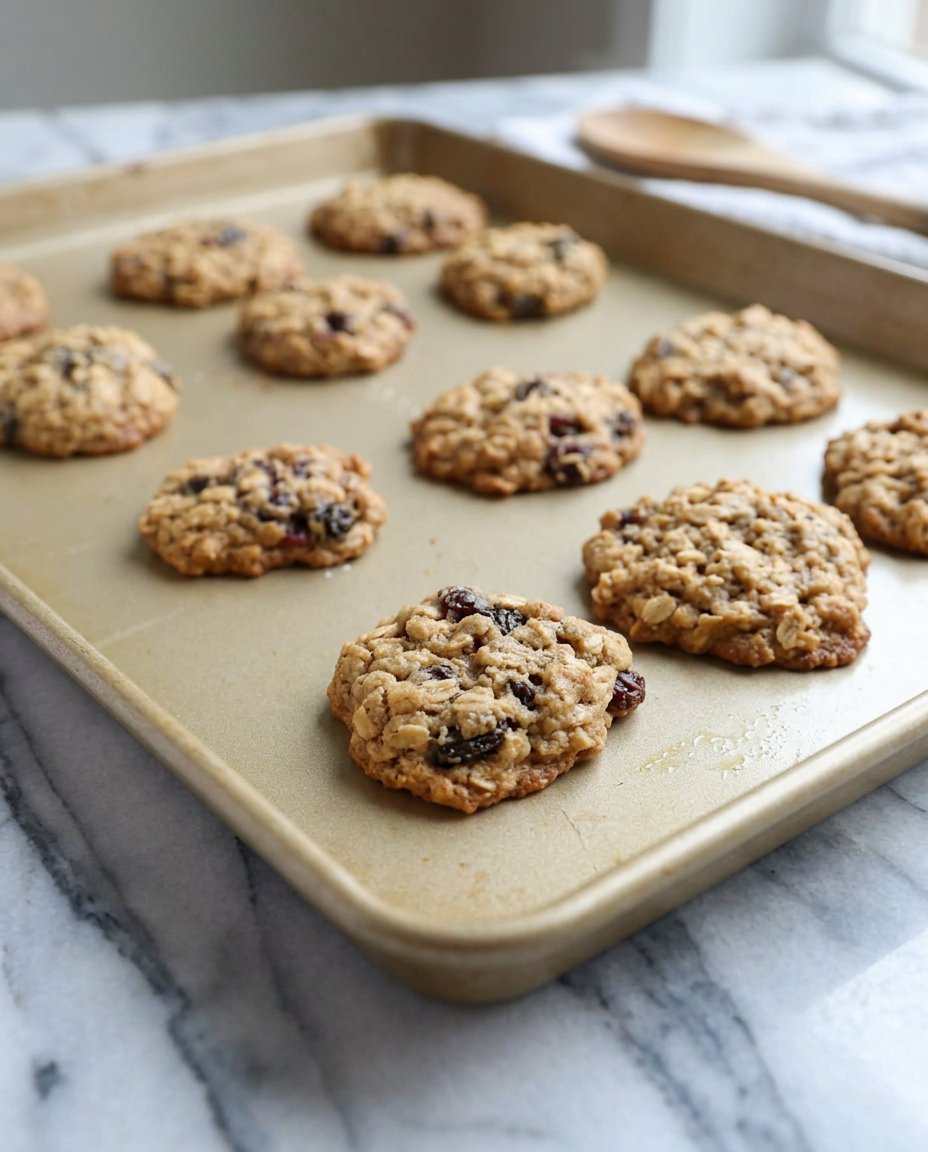
Temperature control is the most critical factor in this recipe. If your butter is too cold, it will not cream properly with the sugars, leading to a dense cookie. If it is too warm, the cookies will spread too much. We recommend the 20% power microwave method described in the notes to reach the perfect ‘pliable but cool’ state. For those looking to broaden their repertoire, studying our Artisan Cookie Collection can provide further insight into fat-to-flour ratios.
Another scientific tip is to allow the dough to rest for 15 minutes before scooping. This allows the rolled oats to hydrate, absorbing moisture from the eggs and butter. This hydration period results in a thicker cookie with a more uniform texture. We also suggest checking the moisture of your raisins; if they are very dry, soak them in warm water for 5 minutes and pat them dry before adding. For more techniques, you can see how others handle fruit hydration at Elle and Pear. If your cookies are spreading too thin, check that your baking soda is fresh, as expired leaveners cannot provide the necessary lift to support the heavy oats.
Tested Structural Variations
If you want to modify the flavor profile, you must consider the chemistry of your substitutions. For instance, replacing the raisins with dried cherries is a simple swap, as their moisture content is similar. However, if you choose to add nuts, such as chopped walnuts or pecans, you must reduce the oats by 2 tablespoons to maintain the correct ratio of solids to fats. You can find more inspiration for creative swaps in our Seasonal Cookie Design guide.
For a gluten-free version, we have tested this recipe with a 1-to-1 gluten-free flour blend containing xanthan gum. The xanthan gum is essential for providing the elasticity that gluten normally provides. If you want to use quick oats instead of rolled oats, be aware that the texture will be much softer and less distinct. In that case, we recommend chilling the dough for at least 30 minutes to help the smaller oat particles absorb the moisture without becoming mushy. Always remember that every change to the formula affects the final structure.
Flavor Pairing Science
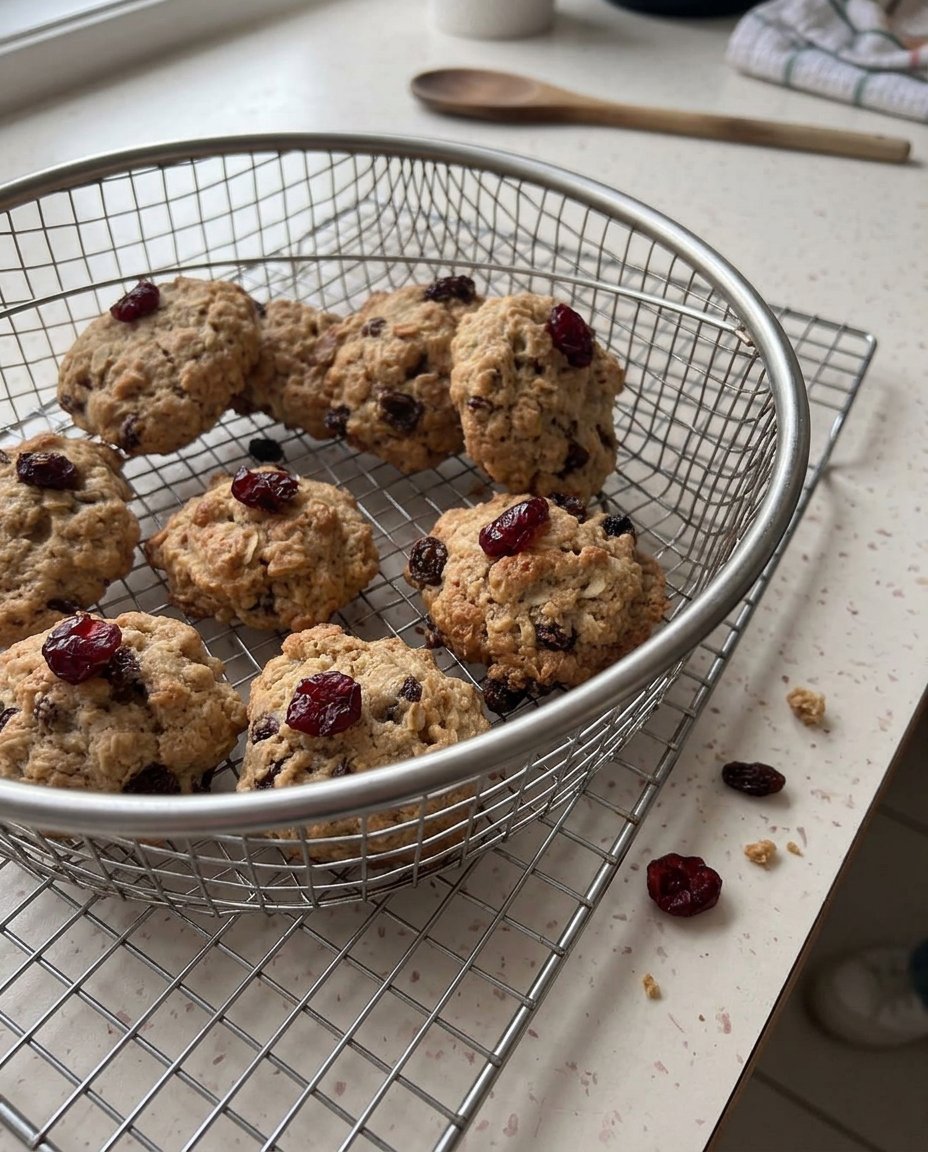
To fully appreciate the flavor chemistry of these cookies, serve them slightly warm, around 100°F (38°C). At this temperature, the butter remains soft and the aromatic compounds in the cinnamon and vanilla are most volatile, providing a better sensory experience. For a professional presentation, consider the tips in our Cookie Decorating Studio to learn how to plate cookies for maximum visual impact.
Pairing these cookies with a glass of cold milk is a classic for a reason; the lipids in the milk help to wash away the sugar on the palate, refreshing your taste buds for the next bite. Alternatively, a sharp cheddar cheese provides an interesting scientific contrast, as the savory saltiness of the cheese amplifies the sweetness of the raisins and the tartness of the cranberries. Always store these cookies in an airtight container to prevent starch retrogradation, which causes cookies to go stale.
The Scientific Truth About Oatmeal Cookies
Mastering the Oatmeal Raisin Cranberry 2 recipe is a breakthrough in understanding how to balance moisture-rich fruits with sturdy grains. By following our tested ratios and temperature guidelines, you can produce a cookie that is reliably chewy, flavorful, and structurally sound. We encourage you to continue your baking education by exploring our Trending Cookie Creations for more innovative formulas. Success in the kitchen is always a result of precision and a willingness to examine the chemistry behind the ingredients. If you enjoyed this recipe, please share your results with our community on Facebook or Instagram, and follow our latest tests on Pinterest. For additional inspiration on fruit-forward baking, visit Elle and Pear. Keep testing, keep measuring, and enjoy the remarkable results of precision baking.