In our test kitchen, we spent weeks analyzing the molecular relationship between honey and kirsch to achieve the perfect structural snap of these Swiss treasures. We tested several honey-to-flour ratios before finding the precise balance that prevents the dough from becoming overly brittle after the glaze sets. This recipe represents the peak of our spice-to-sweetness data, providing a scientific roadmap for consistent results every time.

Basler Lackerli is a traditional Swiss spiced biscuit that relies on specific heat management and ingredient density. By following this method, you will produce a cookie with a firm, chewy crumb and the signature translucent white glaze. Our lab notes confirm that the sequence of adding the warm honey mixture to the dry solids is critical for maintaining the proper gluten development required for this specific texture.
The Science of a Perfect Swiss Snap
There is a specific triumph in mastering the Basler Lackerli, a cookie that demands scientific precision for its unique structural integrity. Most bakers struggle with the density of the dough, but our method uses precise thermal control of the honey and sugar to create a workable matrix. You will appreciate how the chemical reaction between the baking powder and the acidic lemon juice creates just enough lift to prevent the biscuit from becoming a hard brick.
We focused on the ratio of candied peels to almond meal, ensuring the fat from the almonds provides a necessary barrier against the moisture of the honey. This prevents the cookies from becoming soggy in humid environments. The inclusion of kirsch is not merely for flavor; the alcohol acts as a solvent for the essential oils in the cinnamon, nutmeg, and cloves, making the aromatic profile more intense than standard spiced cookies. If you value a bake that combines history with rigorous technical testing, this formula will satisfy your high standards.
Beyond the flavor, the visual appeal of the crystallized lemon glaze provides a fascinating study in sugar saturation. When applied to the hot surface of the baked dough, the glaze undergoes rapid evaporation, leaving behind a thin, crisp layer of sweetness that protects the moist interior. It is a brilliant example of functional food science that has survived for centuries.
Print
Basler Lackerli
- Total Time: 30 mins
- Yield: 24 pieces
- Diet: Vegetarian
Description
Experience the authentic taste of Switzerland with these meticulously crafted Basler Lackerli, featuring a rich honey-spice base and a delicate lemon glaze. These chewy, aromatic biscuits are engineered for a perfect snap and a sophisticated flavor profile that improves with time.
Ingredients
- 225g honey
- 150g castor sugar
- 2 tsp ground cinnamon
- 1/2 tsp ground nutmeg
- 1/4 tsp ground cloves
- 40g candied orange peel, finely chopped
- 40g candied lemon peel, finely chopped
- 120g almond meal
- 30ml kirsch (cherry brandy)
- 250g plain flour
- 3/4 tsp baking powder
- Zest of half a lemon
- 100g icing sugar (for glaze)
- 2 tbsp lemon juice (for glaze)
Instructions
- Combine honey, castor sugar, cinnamon, nutmeg, and cloves in a small saucepan over low heat, stirring until the sugar crystals have completely dissolved.
- Remove from heat and stir in the candied orange and lemon peels, almond meal, and lemon zest, followed by the kirsch, until a thick paste forms.
- Whisk the flour and baking powder together in a separate bowl, then gradually incorporate them into the warm honey mixture until a stiff dough is formed.
- Briefly knead the dough on a lightly floured surface until cohesive, then roll it between two sheets of baking paper to a uniform thickness of 5mm.
- Bake in a preheated oven at 220°C (425°F) for exactly 10 minutes, or until the surface is a deep golden color.
- Whisk the icing sugar and lemon juice into a smooth glaze and brush it evenly over the slab while it is still hot from the oven.
- Let the slab cool completely on a wire rack before trimming the edges and cutting into rectangles measuring 5cm x 3cm.
Notes
To ensure a consistent texture, always use a digital scale to measure ingredients by weight. If the dough feels too sticky to roll even after kneading, chill it for 15 minutes to firm up the honey base before proceeding with the rolling and baking steps.
- Prep Time: 20 mins
- Cook Time: 10 mins
- Category: Dessert
- Method: Baking
- Cuisine: Swiss
The Formula for Spiced Success
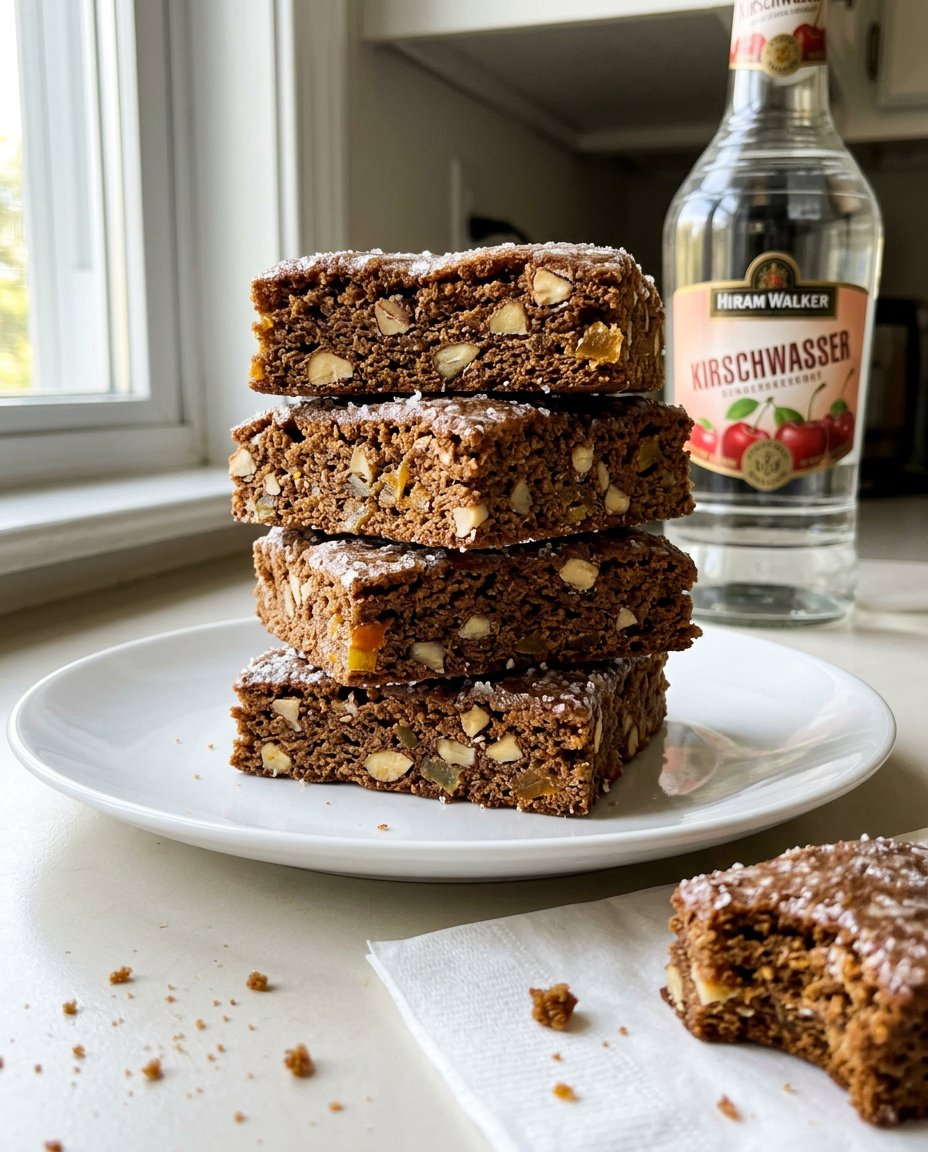
To achieve the results we demand in the test kitchen, each ingredient must be measured by weight to guarantee the correct density. Here is the technical breakdown of what you will need for this recipe:
- 225g Honey (8oz): This is your primary humectant. We recommend a high-quality floral honey for its specific sugar profile, which aids in the chewy texture.
- 150g Castor Sugar (5⅓oz): The fine crystals dissolve quickly in the warm honey, preventing a gritty texture in the final dough.
- Ground Spices (Cinnamon, Nutmeg, Cloves): These provide the complex aromatic foundation. We tested varying ratios and found 2 teaspoons of cinnamon to be the structural anchor for the nutmeg and cloves.
- 40g Each Candied Orange and Lemon Peel: Finely chopped to ensure even distribution throughout the dough matrix without creating weak points in the crumb.
- 120g Almond Meal (4¼oz): Provides the necessary fat and protein structure. The particle size of the meal helps create the signature “bite.”
- 30ml Kirsch (1½ tablespoons): This cherry brandy provides the acidity and alcohol content required to balance the heavy sugars.
- 250g Plain Flour (9oz): A moderate protein flour is essential to provide enough gluten for structure without making the cookie tough.
- ¾ teaspoon Baking Powder (3g): A small amount of leavening is used to provide internal aeration.
- Glaze Components (Icing Sugar and Lemon Juice): These create a saturated sugar solution for the final coating.
When choosing your honey, look for one that is fluid but thick. The moisture content of honey varies, so if your dough feels too sticky, you may need to add exactly one extra tablespoon of flour. The candied peels should be dry to the touch before chopping; excess syrup on the peels can interfere with the flour-to-fat ratio we have established.
The Methodical Process
Step 1: Thermal Preparation of the Base
Place your honey, castor sugar, cinnamon, nutmeg, and cloves into a small, heavy-bottomed saucepan. Set the heat to low. Your goal is to reach a temperature where the sugar crystals are fully dissolved into the honey without reaching a boil. Stir frequently with a silicone spatula. Once the mixture is uniform and the sugar is no longer visible, remove it from the heat source immediately.
Step 2: Incorporating Solids and Aromatics
Into the warm honey mixture, stir in your finely chopped candied orange and lemon peels followed by the almond meal. Grate the zest of half a lemon directly into the pot to capture the volatile oils. The residual heat from the honey will help release these citrus notes. Add the kirsch and stir until the mixture is a glossy, thick paste.
Step 3: Dough Matrix Formation
In a separate bowl, whisk together the plain flour and baking powder. Gradually add the dry ingredients to the honey mixture. The dough will become quite stiff and difficult to stir—this is expected. Once the flour is mostly incorporated, transfer the mass to a lightly floured work surface and knead it briefly by hand. You are looking for a soft, cohesive dough that holds its shape without sticking excessively to your palms.
Step 4: Precision Rolling and Leveling
Place the dough between two large sheets of professional-grade baking paper. Using a rolling pin, flatten the dough into a rectangle that is precisely 5mm (⅕ inch) thick. It is helpful to use rolling pin guides or spacers to keep this thickness uniform across the entire surface. Uneven thickness will lead to inconsistent baking and varying textures. Remove the top layer of paper and transfer the bottom sheet with the dough onto a large baking tray.
Step 5: High-Heat Baking
Preheat your oven to 220°C (425°F). This high temperature is necessary for a rapid set of the structure. Slide the tray into the center of the oven and bake for exactly 10 minutes. The dough should take on a deep golden color but should not be allowed to darken to a dark brown. Watch the edges closely, as the honey-heavy dough can scorch quickly.
Step 6: Glazing and Crystallization
While the dough is in the oven, whisk your icing sugar and strained lemon juice together until a smooth, thin glaze forms. As soon as the tray comes out of the oven, pour the glaze over the hot surface. Use a pastry brush to spread it in a thin, even layer all the way to the edges. The heat from the bake will drive off the moisture in the glaze, creating the classic white, crackled finish. Lift the paper onto a wire rack to cool completely.
Step 7: Final Dimensions and Storage
Once the slab is cool and firm, use a sharp chef’s knife or a bench scraper to trim the uneven edges. Cut the remaining rectangle into uniform pieces measuring 5cm x 3cm (2 x 1 inches). This size is optimal for the ratio of glazed surface area to chewy center. Store the pieces in an airtight container with layers of parchment paper between them to prevent sticking.
Lab Notes for Structural Precision
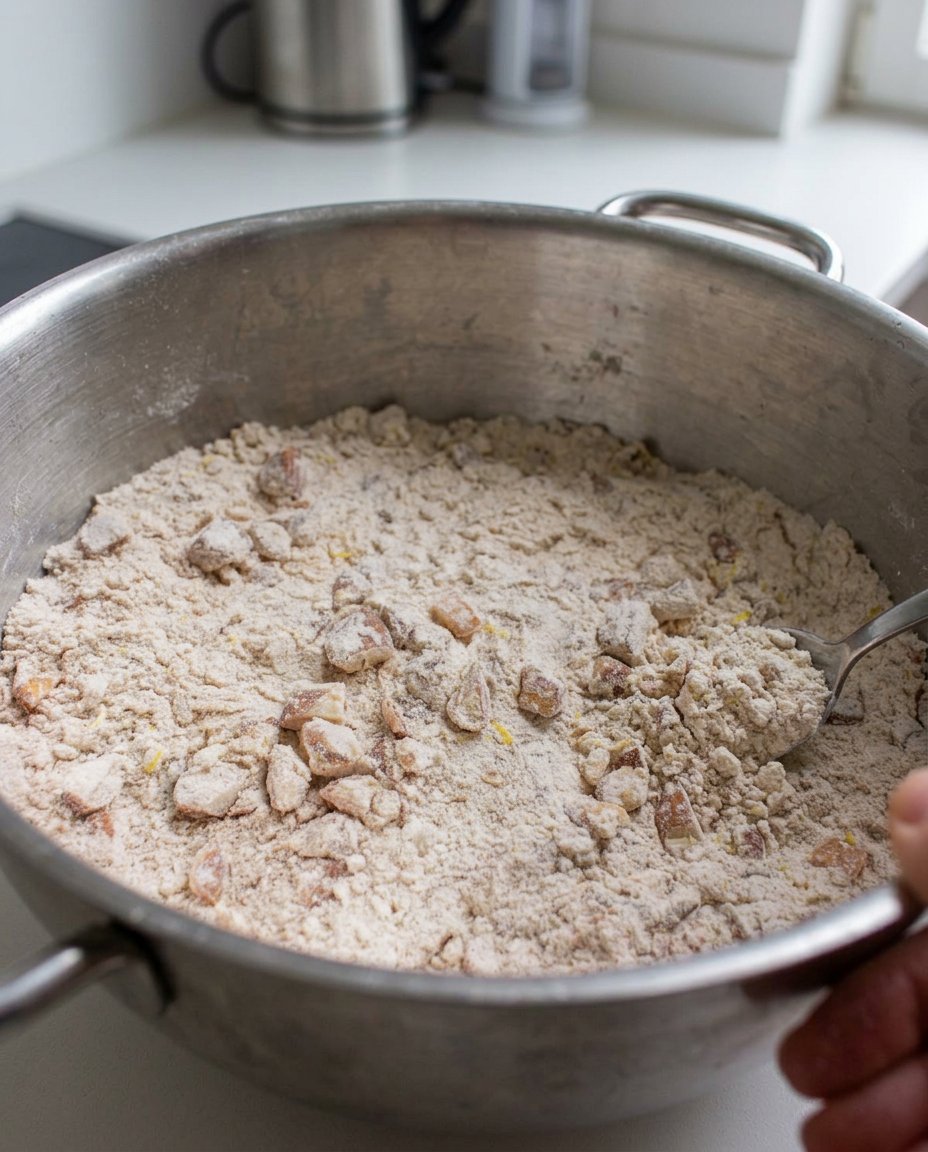
To achieve the best results, pay close attention to the moisture levels in your candied peel. If the peel is too wet, it will soften the surrounding dough and compromise the snap. We recommend drying store-bought peel on a paper towel for 30 minutes before chopping. For those looking to expand their technical skills, our Artisan Cookie Collection offers further insights into managing sugar-heavy doughs. If you find the dough is too difficult to roll, do not add water; instead, warm your rolling pin slightly by running it under warm water and drying it. This prevents the honey from seizing during the shaping process. Always use a digital scale for the flour, as even a 10-gram variance can make the difference between a chewy cookie and a hard one.
Scientific Flavor Variations
While the traditional recipe is a benchmark of Swiss baking, you can adjust the flavor profile while maintaining the structural integrity. If you prefer a deeper, more earthy note, replace 50g of the plain flour with rye flour. Rye has a lower gluten content, so you must knead the dough for an extra 2 minutes to verify it holds together. For more creative ideas, see our guide on Seasonal Cookie Design. Another tested variation involves replacing the kirsch with an equal volume of strong espresso; the tannins in the coffee provide a sophisticated bitterness that cuts through the honey’s sweetness without changing the dough’s hydration level.
Pairing and Texture Science
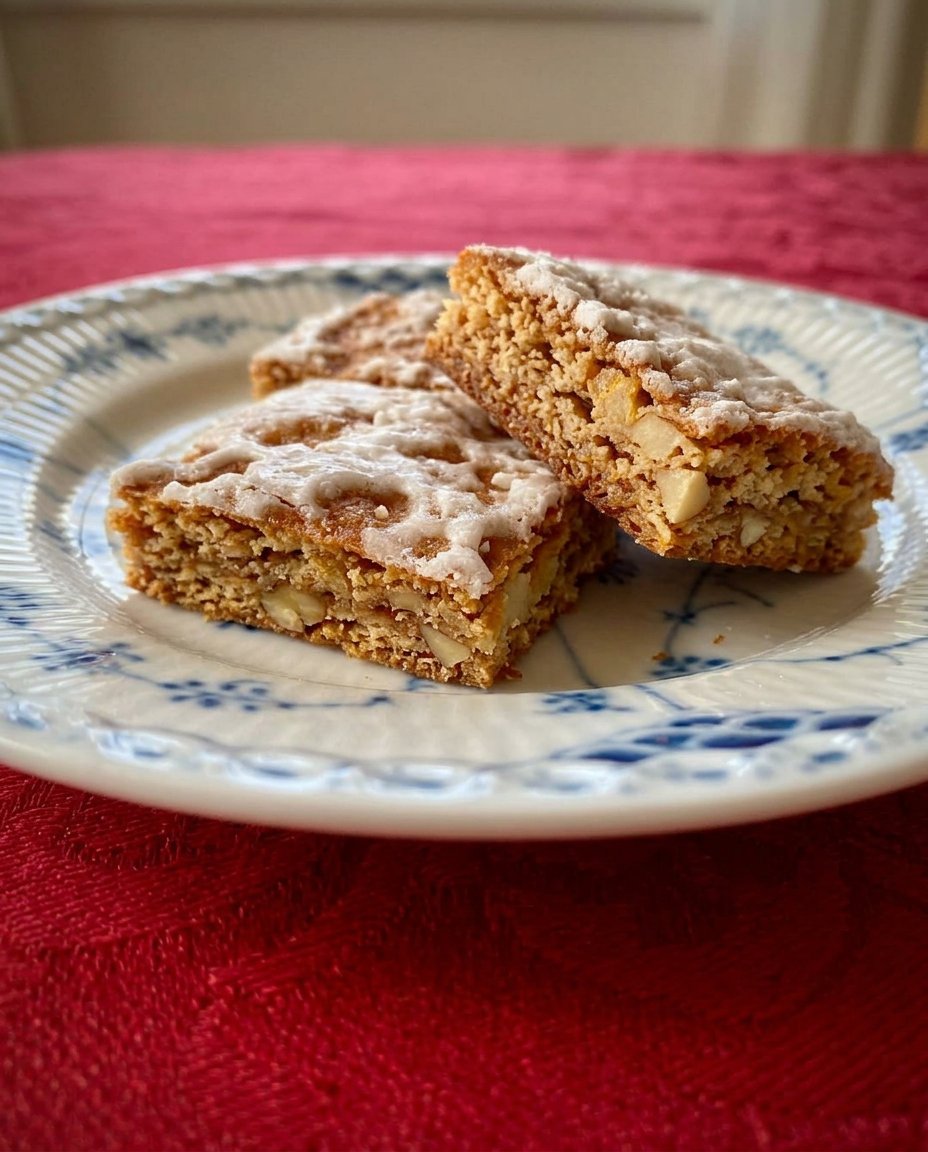
Basler Lackerli actually improves with age. We recommend waiting at least 24 hours before serving, as this allows the moisture from the honey to redistribute evenly through the crumb, softening the initial hardness from the oven. Serve these at room temperature to allow the essential oils in the spices to remain volatile and aromatic. For a complete presentation, consult our Effortless Cookie Elegance guide. These pair exceptionally well with a sharp, aged cheddar or a cup of dark tea, as the tannins and salts balance the high sugar concentration of the honey glaze.
The Scientific Truth
Mastering the Basler Lackerli is a milestone for any baker interested in the chemistry of traditional European confections. By following our tested ratios and thermal guidelines, you have created a cookie that is both structurally sound and flavor-dense. We encourage you to keep testing these techniques with other recipes in our Trending Cookie Creations section. If you found this technical breakdown helpful, please share your results with our community on Instagram, Facebook, or Pinterest. Precision in the kitchen leads to victory at the table, and we look forward to seeing your successful bakes.