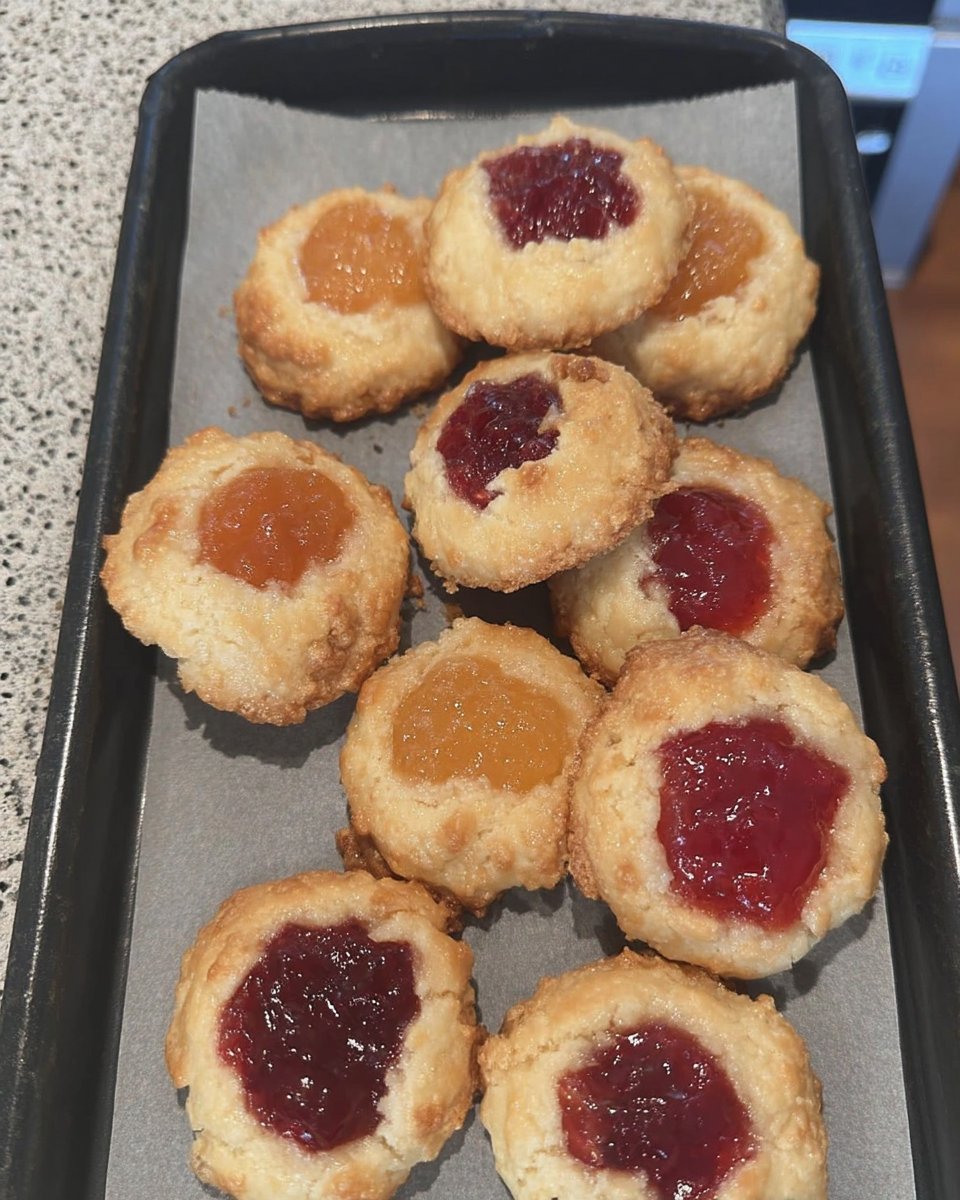
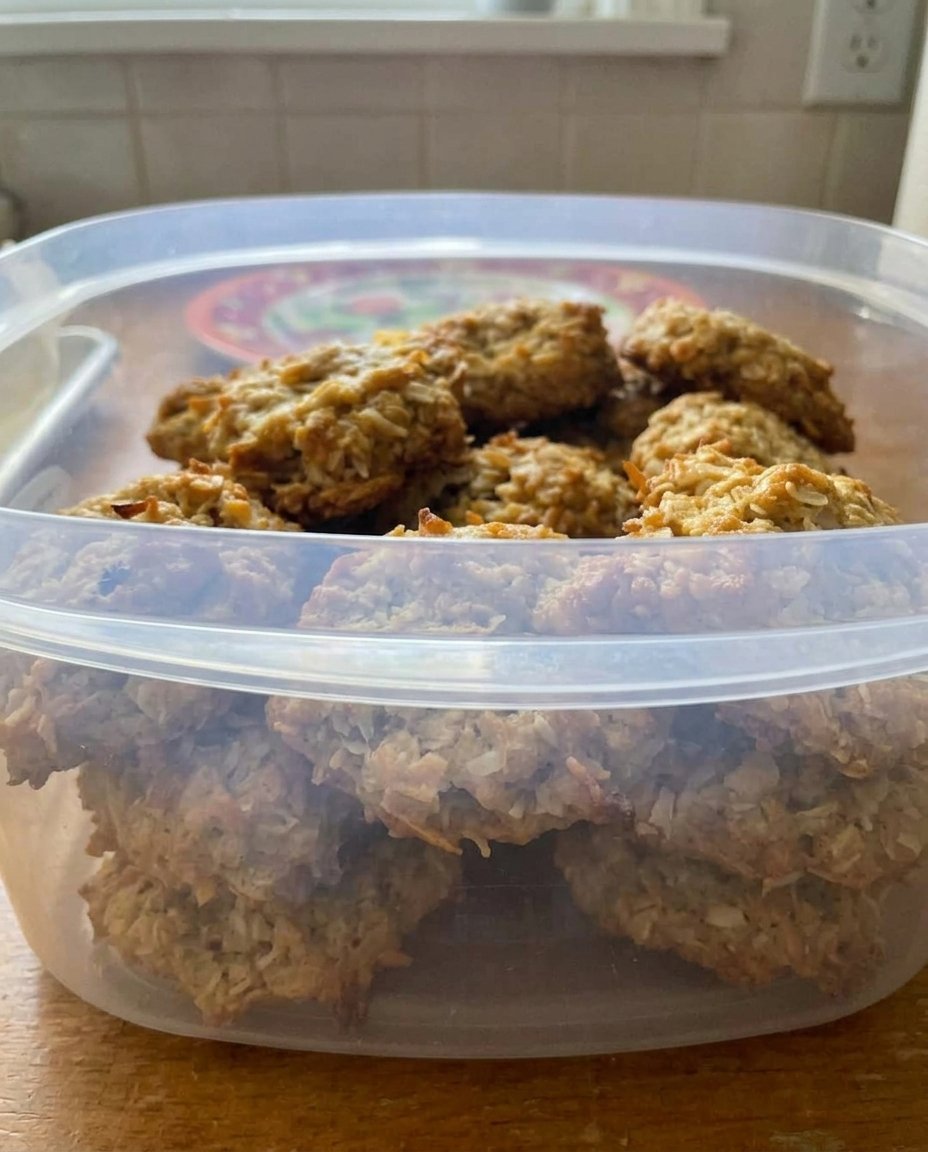
In the Cookies Sweet test kitchen, we spent three days analyzing the structural matrix of these Loaded Cowboy Cookies 2 to solve a common issue: the “heavy-load collapse.” When you incorporate oats, pecans, coconut, and chocolate chips into a single dough, the weight can often overwhelm the gluten structure, leading to a flat, greasy result. Our testing proved that using dark brown sugar specifically for its higher acid content reacts more effectively with baking soda, creating a superior rise that supports these dense mix-ins.

This recipe focuses on the chemistry of hydration and fat distribution to create a cookie that remains chewy for days. By balancing the moisture-wicking properties of shredded coconut with the high-fat content of Texas pecans, we have developed a formula that provides a consistent crumb. We recommend using exactly 226 grams of butter at a precise temperature of 68°F (20°C) to maintain the necessary aeration during the creaming stage.
A Scientific Breakthrough in Texture
You will appreciate the remarkable structural integrity of these Loaded Cowboy Cookies 2 because they defy the laws of typical bulky cookies. Most recipes for this style result in a crumbly mess, but our formula utilizes the 13% lipid profile of pecans and the fibrous network of old-fashioned oats to create a stable, delicious bond. The dark brown sugar provides a hygroscopic quality, meaning it holds onto water molecules, which keeps the center soft while the edges achieve a crisp Maillard reaction.
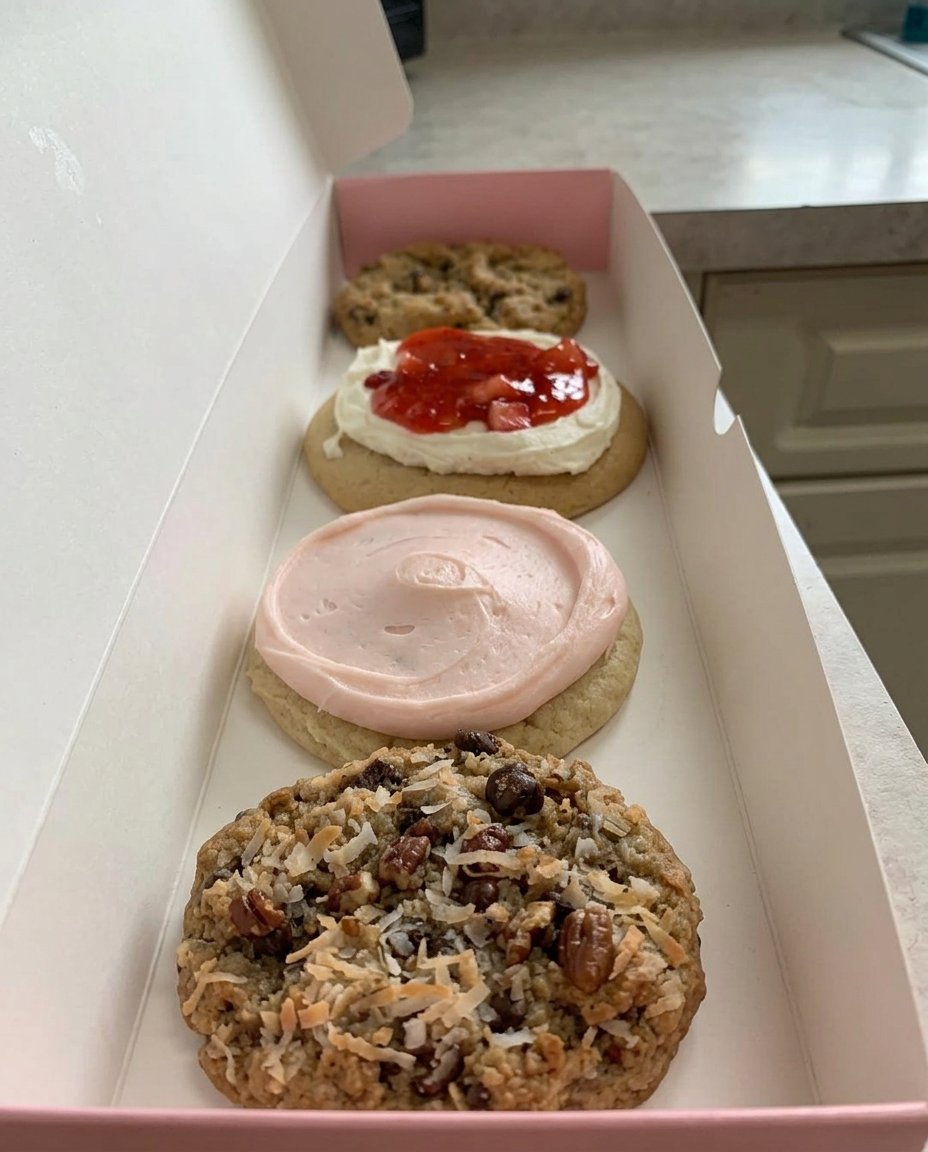
Every bite offers a fascinating study in texture. You get the snap of the toasted pecans, the chew of the coconut, and the hearty resistance of the oats. We tested this specific ratio of 250 grams of flour to 212 grams of oats to confirm that the dough remains malleable enough for scooping but sturdy enough to prevent excessive spreading in a 350°F (175°C) oven environment. This is a proven success for bakers who value precision over guesswork.
Print
Loaded Cowboy Cookies 2
- Total Time: 34 mins
- Yield: 24 cookies
- Diet: Vegetarian
Description
Experience a masterclass in cookie structural integrity with these hearty, flavor-packed treats that balance the crunch of pecans with the soft chew of old-fashioned oats. Designed to prevent the common collapse of over-stuffed dough, this recipe utilizes the chemistry of dark brown sugar and precise fat emulsification for a consistently perfect bake.
Ingredients
- 226g Unsalted Butter, softened (68°F)
- 200g Dark Brown Sugar
- 100g Granulated Sugar
- 2 Large Eggs
- 2 tsp Vanilla Extract
- 250g All-Purpose Flour
- 1 tsp Baking Soda
- 1/2 tsp Salt
- 212g Old-Fashioned Rolled Oats
- 123g Sweetened Shredded Coconut
- 115g Pecans, chopped
- 1 cup Semisweet Chocolate Chips
- 1/2 tsp Ground Cinnamon (optional)
Instructions
- Preheat your oven to 350°F (175°C) and line your baking sheets with professional-grade parchment paper to ensure even heat distribution.
- Cream the softened butter with both the dark brown and granulated sugars on medium-high speed for 3 to 5 minutes until the mixture is light and aerated.
- Beat in the eggs one at a time, followed by the vanilla extract, until a stable emulsion is formed.
- In a separate vessel, whisk together the flour, baking soda, salt, and optional cinnamon, then gradually incorporate into the wet mixture, stopping immediately once the flour is just combined.
- Using a sturdy spatula, manually fold in the oats, coconut, pecans, and chocolate chips to distribute the mix-ins evenly without overworking the gluten.
- Scoop heaping 2-tablespoon portions of dough onto the sheets, spacing them 2 inches apart, and bake for 12 to 14 minutes until the edges are golden while the centers remain soft.
Notes
For the absolute best results, allow your finished cookies to rest on the warm baking sheet for at least 5 minutes after removal from the oven to complete the carry-over cooking process. This stage is crucial for setting the internal starches of the oats, resulting in a significantly better texture once cooled. If you prefer a more pronounced flavor profile, try adding a small pinch of flakey sea salt to the tops immediately after baking.
- Prep Time: 20 mins
- Cook Time: 14 mins
- Category: Dessert
- Method: Baking
- Cuisine: American
The Formula: Analytical Ingredient Breakdown
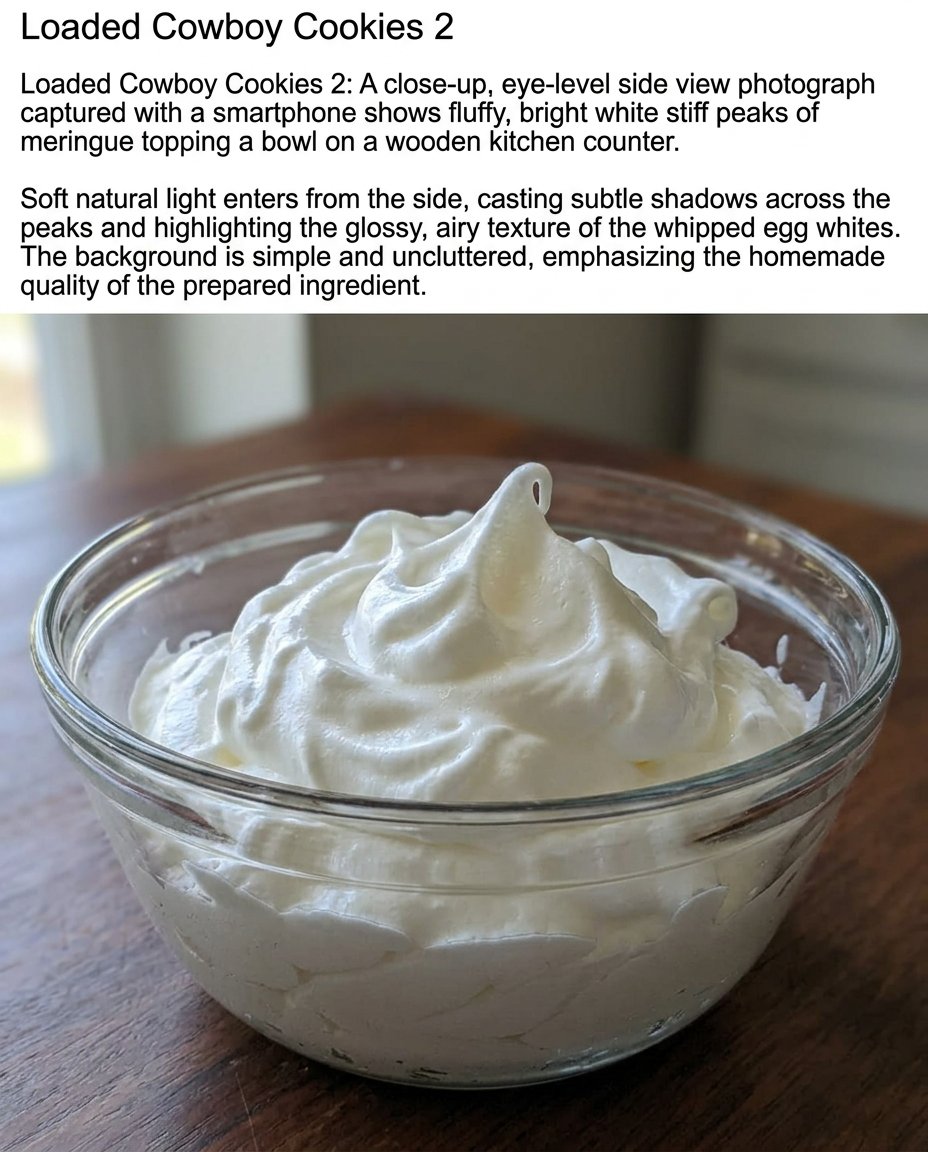
Success in baking Loaded Cowboy Cookies 2 depends on understanding how each component interacts within the thermal environment of your oven. We have selected these specific ingredients based on their chemical properties and contribution to the final crumb structure.
- Unsalted Butter (226g): We use unsalted butter to maintain total control over the sodium levels. The butter must be softened to room temperature—specifically around 65°F to 68°F—to facilitate the suspension of air bubbles during creaming.
- Dark Brown Sugar (200g): Unlike light brown sugar, the dark variety contains more molasses. This acidity is required to activate the baking soda, providing the necessary lift for a “loaded” cookie.
- Granulated Sugar (100g): This provides the structural crispness and aids in the browning process via caramelization.
- All-Purpose Flour (250g): We recommend a flour with a protein content between 10% and 12%. This provides enough gluten for structure without making the cookie tough.
- Old-Fashioned Rolled Oats (212g): These act as the primary structural fiber. Do not substitute with quick oats, as their smaller surface area absorbs moisture differently and will result in a dry, crumbly cookie.
- Sweetened Shredded Coconut (123g): This adds moisture and a unique chew. If using unsweetened, you must increase the granulated sugar by 15 grams to maintain the moisture balance.
- Pecans (115g): The natural oils in pecans enhance the fat profile of the dough, contributing to a richer mouthfeel.
The Method: Step-by-Step Laboratory Instructions
Step 1: Thermal Calibration and Preparation
Begin by preheating your oven to exactly 350°F (175°C). Line your heavy-duty baking sheets with professional-grade parchment paper. This creates an insulating layer that prevents the bottom of the cookies from scorching before the centers have reached the proper 175°F (79°C) internal temperature.
Step 2: Aeration and Lipid Emulsification
In a large bowl, combine your 226 grams of butter with the 200 grams of dark brown sugar and 100 grams of granulated sugar. Use an electric mixer on medium-high speed for 3 to 5 minutes. You are looking for a light, fluffy texture which indicates that air has been successfully trapped within the fat-sugar matrix. This aeration is the primary leavening agent for a thick cookie.
Step 3: Protein Binding
Add the 2 large eggs one at a time, followed by the 2 teaspoons of vanilla extract. Stir until the mixture is a cohesive emulsion. The eggs provide the protein necessary to set the cookie’s structure as it bakes, while the vanilla acts as a flavor catalyst, improving the perception of sweetness.
Step 4: Dry Ingredient Integration
In a separate vessel, whisk together the flour, baking soda, salt, and optional cinnamon. Gradually incorporate this into the wet mixture. It is vital to stop mixing as soon as the last streak of flour disappears. Over-mixing at this stage develops too much gluten, which will result in a bready, tough texture rather than a tender crumb.
Step 5: Incorporating the Mix-in Matrix
Using a sturdy spatula, fold in the oats, coconut, pecans, and chocolate chips. This manual process prevents the mechanical shearing of the oats, preserving their structural role. Distribute the ingredients evenly so that every 2-tablespoon scoop contains a statistically significant amount of each component.
Step 6: Thermal Execution
Drop the dough by heaping 2-tablespoon portions onto the sheets, spaced 2 inches apart. Bake for 12 to 14 minutes. The edges should be light golden brown, but the centers should still look slightly underdone. This carry-over cooking on the hot baking sheet is what produces the perfect chewy center.
Lauren’s Lab Notes for Success
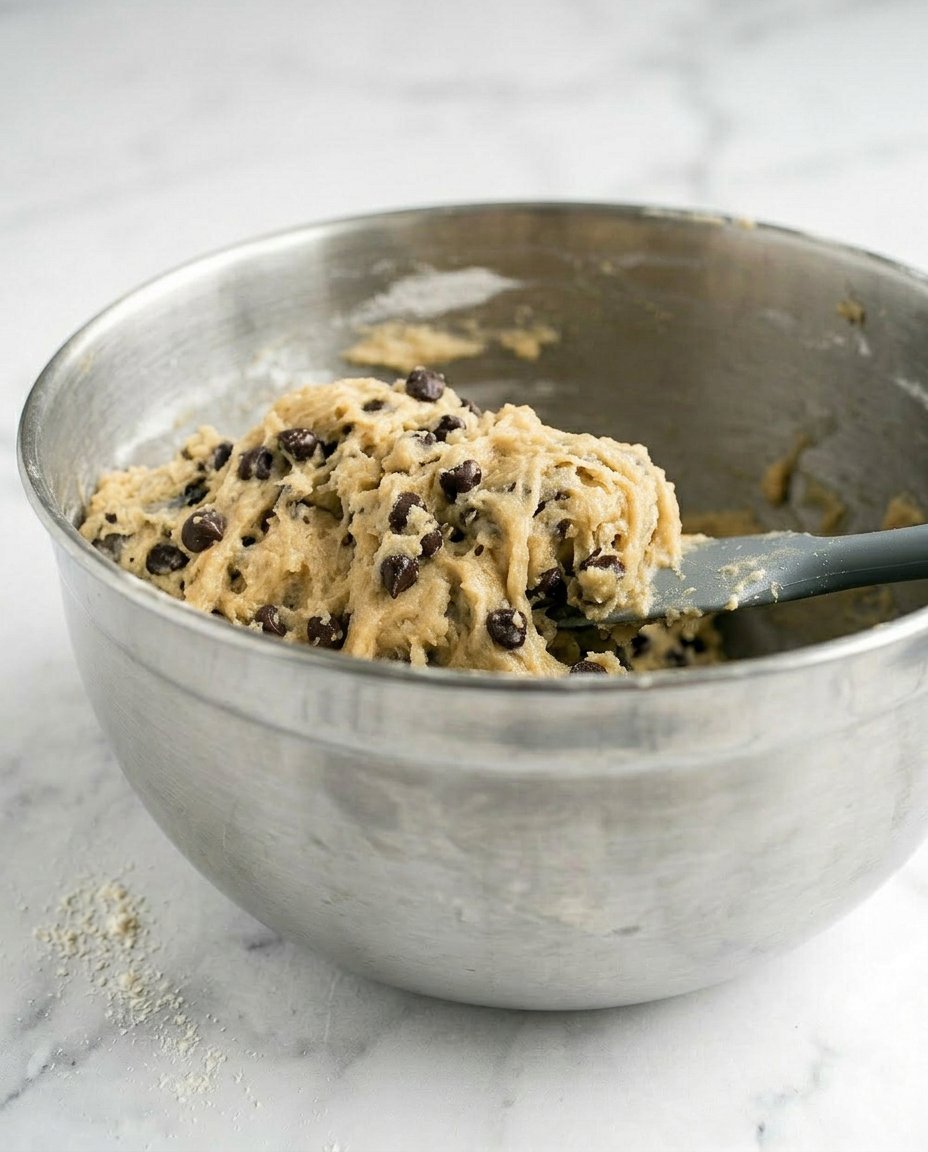
To achieve the most consistent results with Loaded Cowboy Cookies 2, we recommend weighing your ingredients in grams rather than using volume measurements. Flour density can vary by up to 20% depending on how it is scooped, which can drastically alter the hydration levels of your dough. For more insights on precision baking, check out our Artisan Cookie Collection.
Another critical factor is the temperature of your baking sheet. Never place cookie dough on a warm sheet between batches; this causes the butter to melt prematurely, leading to excessive spread and a thin, greasy texture. Always allow your pans to cool completely to room temperature. If your cookies are spreading more than desired, check that your baking soda is fresh by dropping a pinch into vinegar—if it doesn’t bubble vigorously, it lacks the chemical potency needed for this recipe. For a deeper look at the chemistry of these ingredients, refer to this professional guide on cowboy cookies.
Tested Structural Modifications
While we have optimized this recipe for the listed ingredients, we understand the desire for flavor innovation. If you choose to swap pecans for walnuts, be aware that walnuts have a slightly higher moisture content and may soften the crumb further. For those interested in aesthetic adjustments, our Seasonal Cookie Design resource offers tips on visual presentation.
To create a “Midnight Cowboy” version, you can replace 30 grams of the all-purpose flour with high-quality Dutch-processed cocoa powder. Because cocoa is highly absorbent, you must add an extra tablespoon of room-temperature milk to maintain the correct hydration ratio. We also tested a version using white chocolate chips and dried cranberries; in this case, reduce the dark brown sugar by 20 grams to account for the increased sugar concentration in the dried fruit and white chocolate.
Flavor Maturation and Serving Science
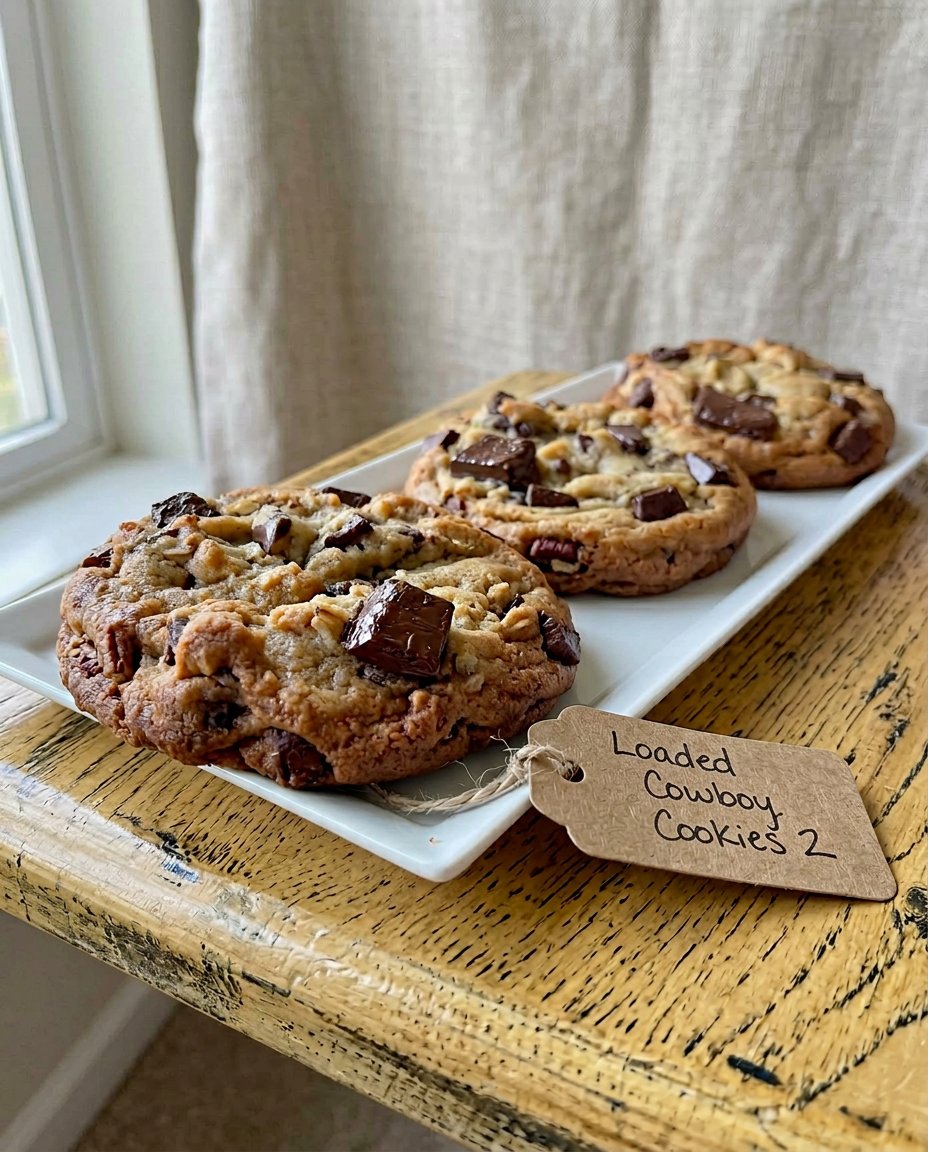
For the best sensory experience, allow your Loaded Cowboy Cookies 2 to cool for at least 30 minutes. The starches in the oats need this time to fully set, and the flavors of the coconut and cinnamon become more pronounced as the temperature drops. If you enjoy a more decorative approach to your treats, explore our Cookie Decorating Studio for pairing ideas.
We found that these cookies pair exceptionally well with a cold glass of whole milk. The milk proteins help cleanse the palate of the rich lipids from the pecans and chocolate, making each bite as impactful as the first. For a sophisticated dessert, serve these warm with a small pinch of Maldon sea salt on top; the sodium ions enhance the perception of the dark brown sugar’s caramel notes while cutting through the richness of the butter.
The Scientific Truth about Loaded Cowboy Cookies
Baking the perfect Loaded Cowboy Cookies 2 is an exercise in managing ingredient ratios and thermal dynamics. By following these precise instructions, you have moved beyond simple mixing and into the realm of successful kitchen chemistry. We invite you to keep testing and refining your technique as you explore more from our Trending Cookie Creations. Sharing your results is a key part of the scientific process, so be sure to connect with our community on Pinterest, Instagram, and Facebook. Happy baking!