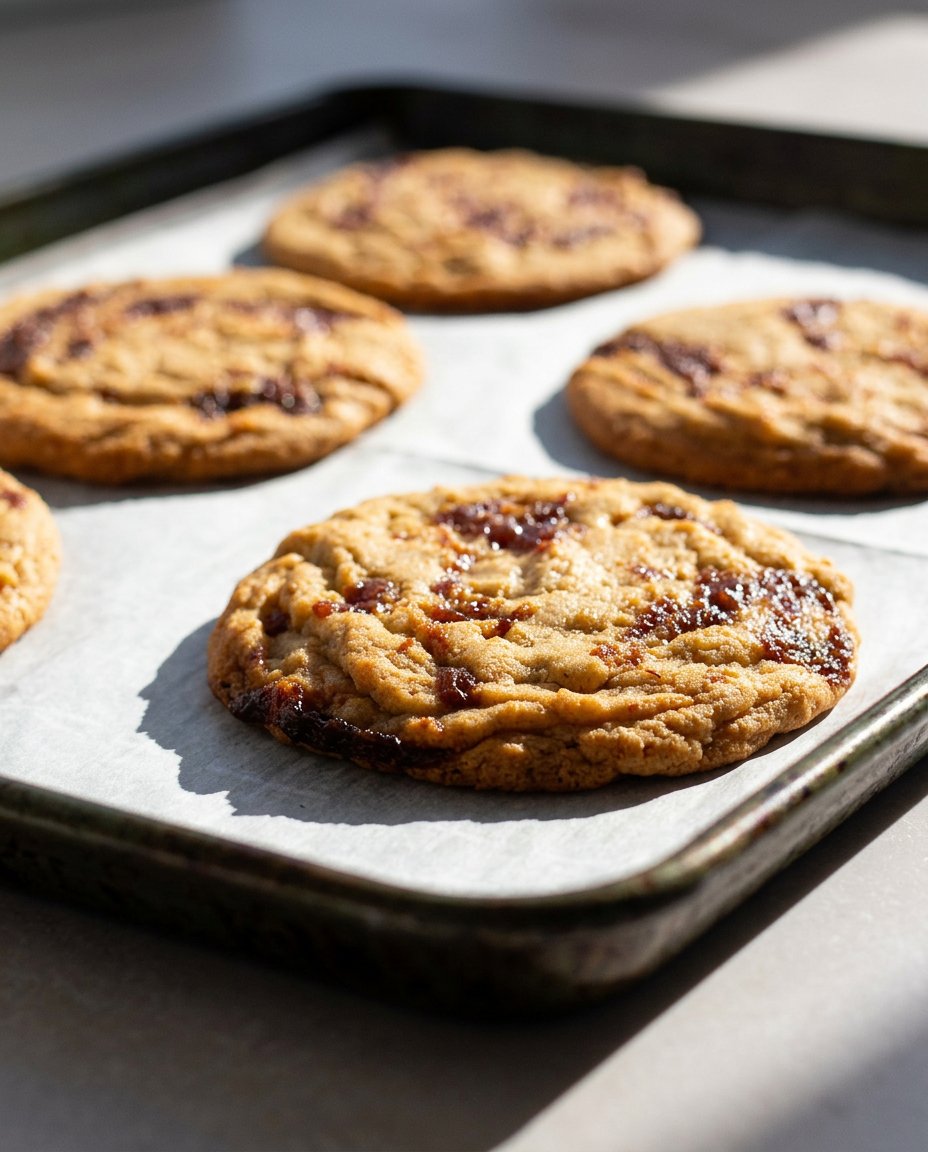
In our test kitchen, we discovered that the secret to the perfect snap and chew lies in the surface area of the grain. After testing several ratios of whole versus processed oats, we found that pulsing the grain exactly 10-12 times creates the ideal structural matrix. This precision allows the oats to absorb moisture from the eggs and molasses without losing their distinct identity, resulting in a cookie that is both sturdy and tender.

These Iced Oatmeal Cookies are a study in spice chemistry and moisture management. We use a high concentration of brown sugar and a specific amount of molasses to trigger the baking soda, while the vanilla icing provides a moisture barrier that preserves the cookie’s texture for days. By following these exact measurements, you will produce a professional-grade cookie that honors tradition through modern baking science.
The Perfect Balance of Texture and Spice
You will appreciate this recipe because it solves the common structural failures found in standard oatmeal cookies. Many recipes result in cookies that are either too crumbly or excessively flat, but our formula uses pulsed oats to create a dense, uniform crumb. This scientific approach creates a reliable base for the heavy vanilla icing, making sure the cookie doesn’t sag under the weight of the topping.
The inclusion of 15ml of molasses provides a necessary acidic component that reacts with the baking soda to create a subtle lift. This chemical reaction, combined with the 226g of unsalted butter, produces a rich mouthfeel and a complex flavor profile. The edges remain crisp due to the caramelization of the granulated sugar, while the centers stay soft thanks to the hygroscopic nature of the brown sugar. This is not just a treat; it is a precisely engineered baked good that delivers a consistent result every time you preheat your oven.
Print
Iced Oatmeal Cookies
- Total Time: 1 hour 17 mins
- Yield: 24 cookies
- Diet: Vegetarian
Description
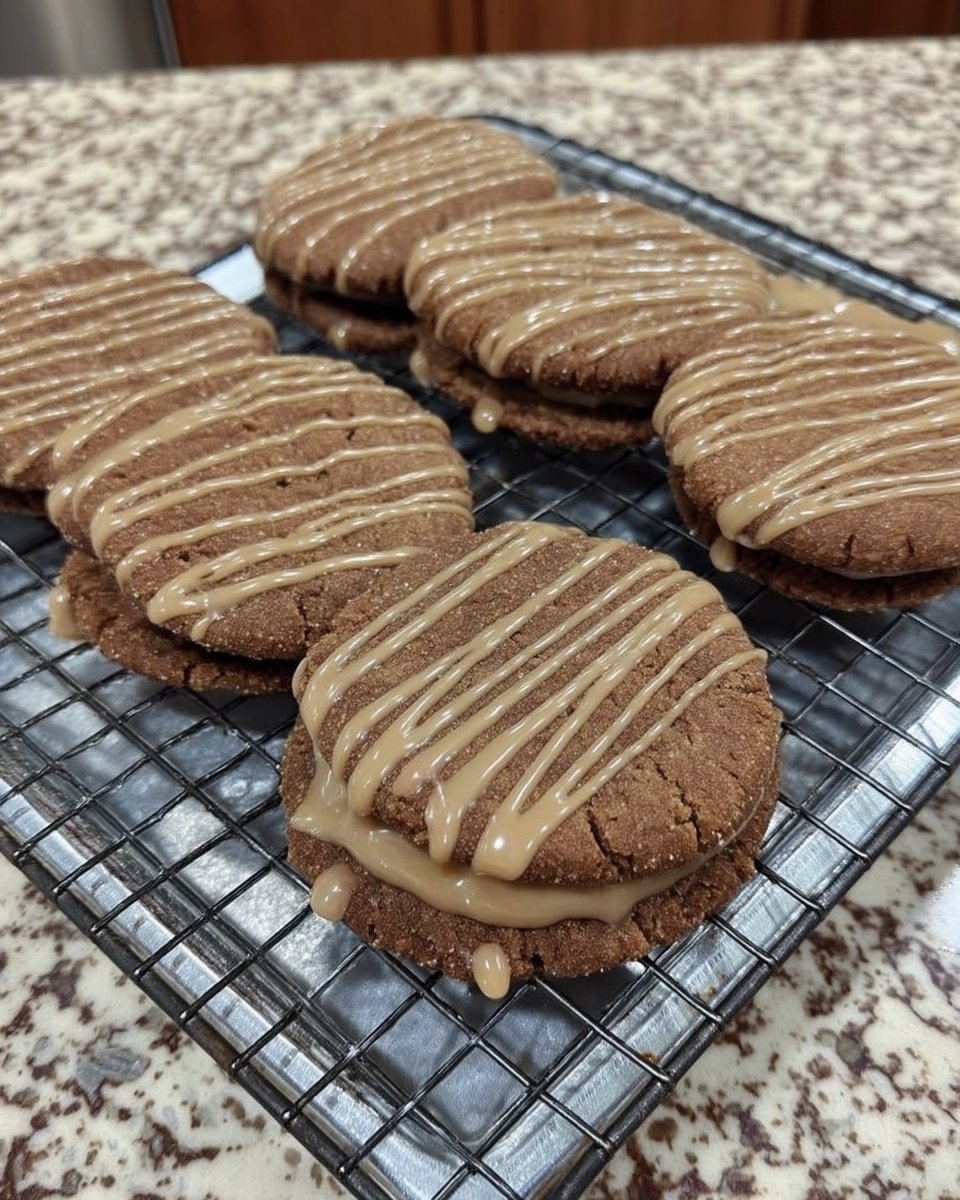
These scientifically-perfected iced oatmeal cookies feature a chewy, spiced center and a crisp edge, achieved by pulsing oats for the ideal texture. Finished with a thick vanilla glaze, they offer a professional-grade balance of sweetness and warmth.
Ingredients
- 170g (2 cups) Old-Fashioned Whole Rolled Oats
- 250g (2 cups) All-Purpose Flour
- 226g (1 cup) Unsalted Butter, softened
- 200g (1 cup) Brown Sugar
- 100g (1/2 cup) Granulated Sugar
- 2 Large Eggs, room temperature
- 15ml (1 Tablespoon) Unsulphured Molasses
- 2 teaspoons Vanilla Extract
- 1.5 teaspoons Ground Cinnamon
- 0.5 teaspoon Ground Nutmeg
- 1 teaspoon Baking Soda
- 1 teaspoon Salt
- 180g Confectioners’ Sugar, sifted
- 1–2 tablespoons Milk
Instructions
- Pulse the oats in a food processor 10-12 times until you have a mixture containing both fine oat flour and small oat pieces.
- In a medium bowl, whisk together the pulsed oats, flour, baking soda, salt, cinnamon, and nutmeg until evenly distributed.
- Using a mixer, cream the butter with the brown and granulated sugars on medium-high for 2 minutes until pale and fluffy.
- Add the eggs, molasses, and 2 teaspoons of vanilla to the butter mixture and beat on high for 1 minute to emulsify.
- Mix in the dry ingredients on the lowest setting just until combined, then cover and refrigerate the dough for 45 minutes.
- Preheat oven to 350°F (177°C) and scoop 1.5-tablespoon portions of dough onto parchment-lined baking sheets spaced 3 inches apart.
- Bake for 11 to 12 minutes until edges are lightly browned, then cool on the pan for 5 minutes before moving to a wire rack.
- Whisk the sifted confectioners’ sugar with the remaining vanilla and milk to create a thick glaze, then dip the tops of the cooled cookies into the icing.
Notes
To ensure your cookies do not spread too thin, avoid over-softening the butter; it should be cool to the touch but yield to slight pressure. Always use room temperature eggs to maintain a stable emulsion for the most consistent, tender crumb.
- Prep Time: 20 mins
- Cook Time: 12 mins
- Category: Dessert
- Method: Baking
- Cuisine: American
Analyzing the Formula Ratios
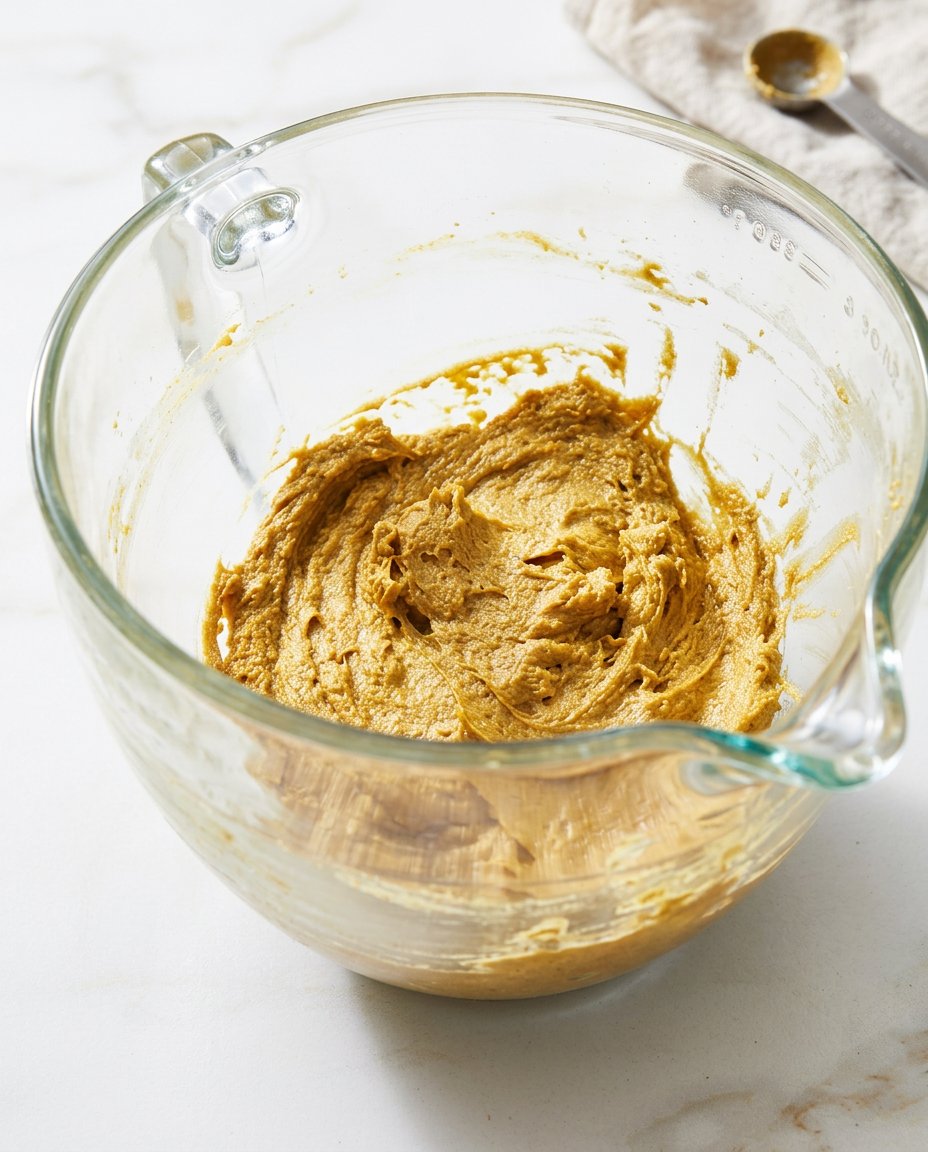
Success in the kitchen depends on understanding how each component contributes to the final structure. We have calculated these ratios to balance fat, moisture, and flavor intensity.
- Old-Fashioned Whole Rolled Oats (170g / 2 cups): These provide the primary structure. We pulse them to create a variety of particle sizes, which fills the gaps in the dough and creates a more cohesive bite.
- All-Purpose Flour (250g / 2 cups): This provides the gluten framework. It is vital to spoon and level your flour to avoid over-packing the measuring cup, which would lead to a dry, tough cookie.
- Unsalted Butter (226g / 1 cup): Softened to room temperature (65°F to 68°F), the butter emulsifies with the sugars to trap air, providing the initial lift.
- Brown Sugar (200g / 1 cup): The molasses content in brown sugar adds moisture and acidity, contributing to the soft, chewy center.
- Granulated Sugar (100g / 1/2 cup): This sugar encourages spreading and creates the crisp, golden edges that define a classic cookie.
- Large Eggs (2): At room temperature, eggs act as the primary binder and provide the liquid necessary to hydrate the oat starch.
- Molasses (15ml / 1 Tablespoon): We use unsulphured molasses for its flavor depth and its ability to activate the baking soda. Do not use blackstrap, as the high mineral content will alter the flavor chemistry.
- Ground Cinnamon and Nutmeg: These spices contain volatile oils that are activated by the heat of the oven, providing the signature ‘cozy’ aroma.
- Baking Soda and Salt: The leavening agent provides lift, while the salt balances the sweetness and improves the overall flavor perception.
The Scientific Process
Step 1: Process the Oats for Structural Integrity
Place the 170g of old-fashioned oats into a food processor. Pulse exactly 10 to 12 times. You are looking for a mixture that contains both fine oat flour and small pieces of chopped oats. This variegated texture is what allows the cookies to be compact yet chewy. If you do not have a food processor, a blender can work, but watch the consistency carefully to avoid turning the oats into a uniform powder.
Step 2: Combine the Dry Matrix
In a medium mixing bowl, whisk together the pulsed oats, 250g of all-purpose flour, 1 teaspoon of baking soda, 1 teaspoon of salt, 1.5 teaspoons of cinnamon, and 1/2 teaspoon of nutmeg. Use a balloon whisk to make sure the leavening agent and spices are distributed evenly through the flour and oat mixture. Set this dry base aside.
Step 3: Emulsify Fats and Sugars
Using a stand mixer fitted with the paddle attachment, or a hand mixer, beat the 226g of softened butter with the 200g of brown sugar and 100g of granulated sugar. Process on medium-high speed for about 2 minutes. You are looking for a pale, fluffy texture, which indicates that air has been successfully trapped within the fat. Add the 2 room-temperature eggs, 15ml of molasses, and 2 teaspoons of vanilla extract. Beat on high speed for another minute until the mixture is a cohesive emulsion.
Step 4: Integrate and Hydrate
Turn the mixer to the lowest setting and add the dry ingredients to the wet mixture. Mix only until no streaks of flour remain. The dough will be thick and quite sticky due to the high sugar and oat content. Cover the bowl tightly and refrigerate for at least 45 minutes. This chilling period is crucial for starch hydration and allows the fats to solidify, preventing excessive spreading during the bake.
Step 5: Calibrate the Bake
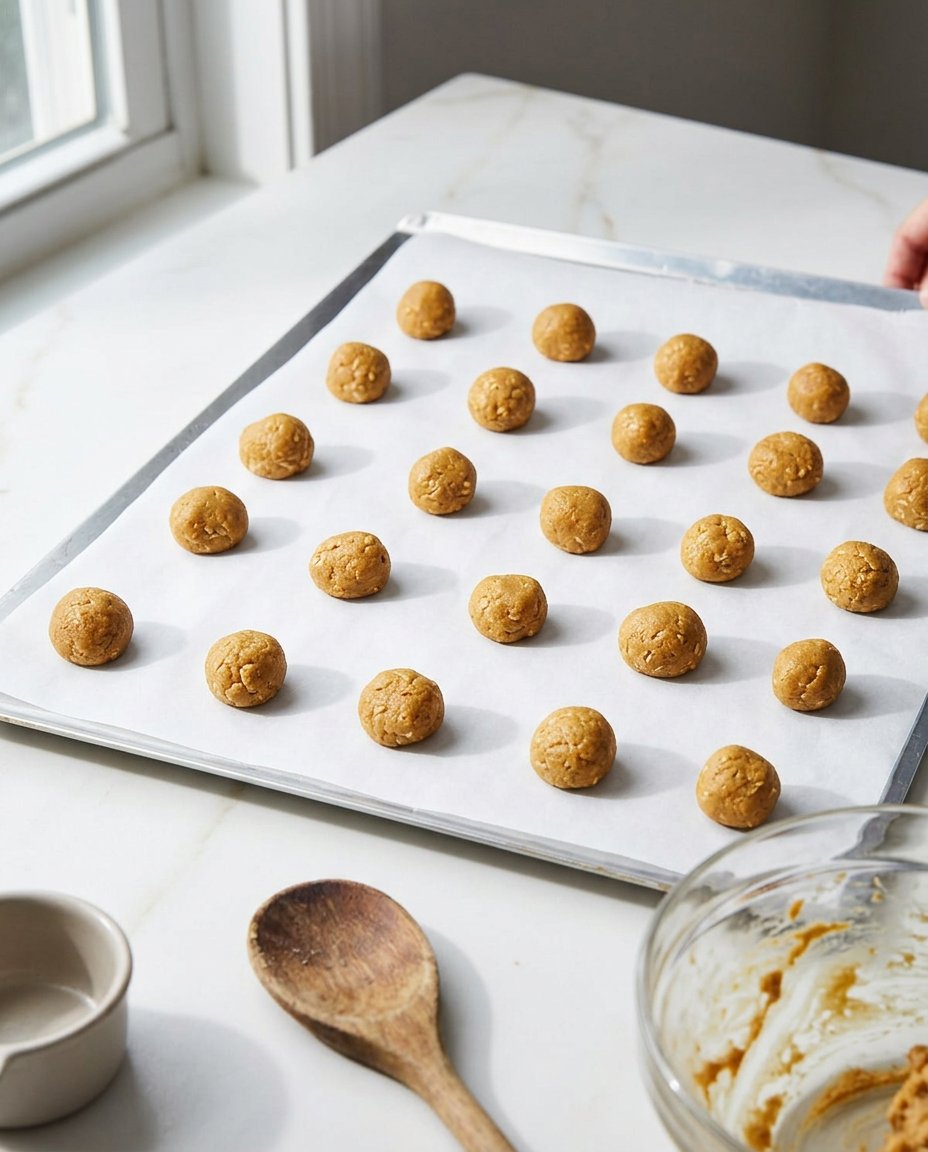
Preheat your oven to 350°F (177°C) and line your baking sheets with parchment paper or silicone mats. Use a medium cookie scoop to portion out 1.5 tablespoons of dough (approximately 30g) per cookie. Space them 3 inches apart to allow for heat circulation. Bake for 11 to 12 minutes. The edges should be lightly browned, but the centers must still look soft. They will finish setting on the hot pan.
Step 6: Cool and Apply the Icing
Allow the cookies to rest on the baking sheet for 5 minutes before moving them to a wire rack to cool completely. For the icing, whisk 180g of sifted confectioners’ sugar with 1/4 teaspoon of vanilla and 1 tablespoon of milk. Add the remaining milk very slowly—only enough to create a thick, viscous glaze. Dip the tops of the cooled cookies into the icing, allowing the excess to drip off. Let the icing set for 2 hours before stacking.
Technical Lab Notes
To achieve the professional ‘crackle’ on the surface of your cookies, make sure your eggs are truly at room temperature. Cold eggs will cause the creamed butter to seize, breaking the emulsion and leading to an uneven bake. If you find your cookies are spreading more than desired, it is likely that the dough temperature has risen too high; return the portioned dough to the fridge for 10 minutes before sliding the tray into the oven. For those interested in achieving even more flavor depth, consider looking at our guide on Effortless Cookie Elegance to master the art of temperature control. Also, always sift your confectioners’ sugar for the icing; even small clumps of sugar can disrupt the surface tension of the glaze, preventing it from setting with a smooth, professional finish.
Tested Structural Modifications
If you prefer a more robust spice profile, you can increase the cinnamon to 2 teaspoons without compromising the chemical balance of the dough. For those who enjoy a fruit-forward profile, you can add 1/2 cup of finely chopped raisins. However, you must soak the raisins in warm water for 10 minutes and pat them completely dry before adding them to the dough; this prevents the dried fruit from leaching moisture away from the cookie crumb. You can see how we apply similar techniques in our Artisan Cookie Collection. If you do not have molasses, you can substitute it with an equal amount of dark maple syrup, though the resulting cookie will have a slightly thinner structure due to the lower acidity levels in the syrup.
Thermodynamics and Flavor Pairing
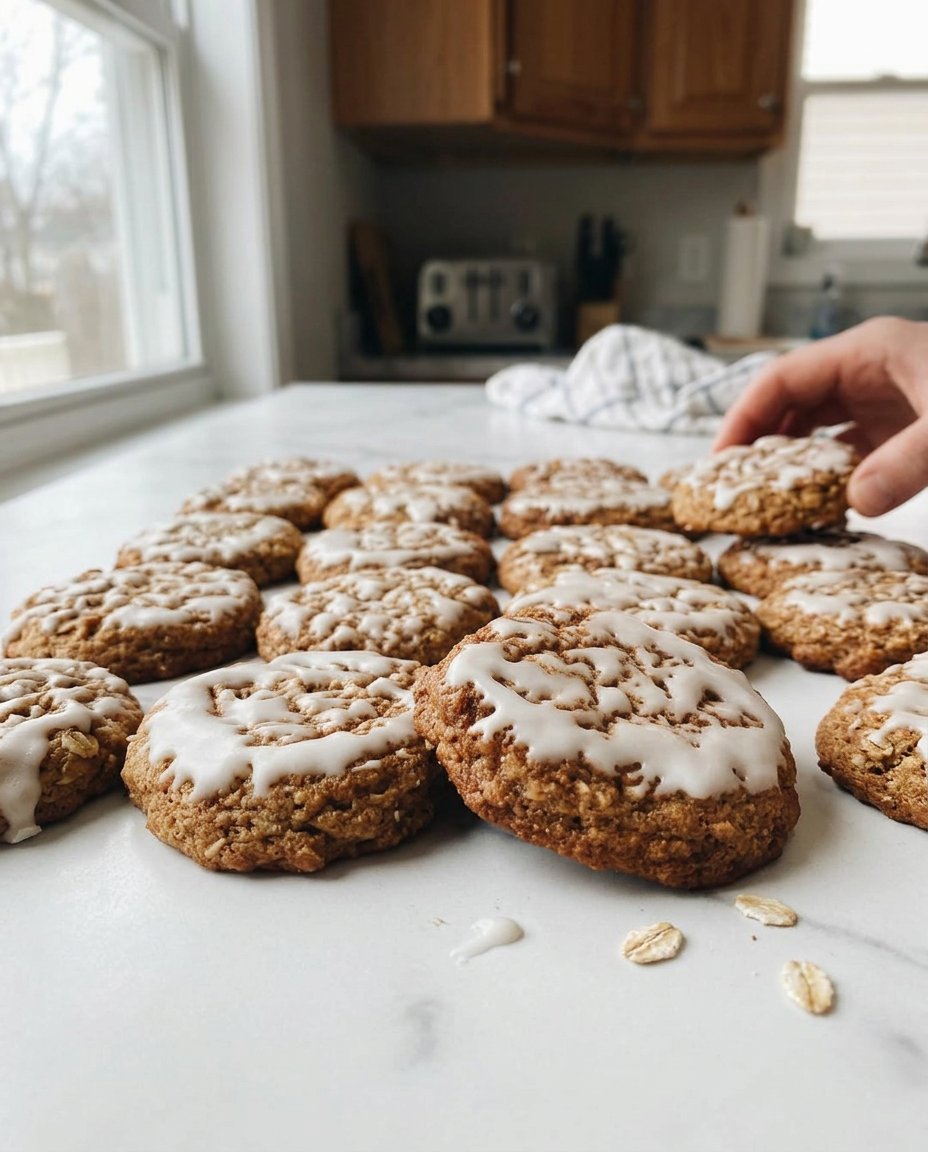
For the best sensory experience, serve these cookies at room temperature once the icing has fully crystallized. The hardening of the sugar creates a protective seal that keeps the interior moist. If you are serving these as part of a larger display, they pair exceptionally well with a cold glass of whole milk or a dark roast coffee; the bitterness of the coffee creates a chemical bridge with the molasses and nutmeg in the cookie. For more creative ways to display your bakes, check out our Cookie Decorating Studio for visual inspiration. To maintain the crisp edges, store the cookies in a single layer or with parchment paper between them in an airtight container.
The Final Breakthrough
Mastering the iced oatmeal cookie is a victory for any home baker who values the intersection of tradition and precision. By understanding the role of oat surface area and the chemical reaction between molasses and baking soda, you have moved beyond simple mixing into true baking science. We encourage you to continue testing these ratios and exploring our Seasonal Cookie Design for more ways to use these techniques throughout the year. If you found this technical breakdown helpful, please share your results with our community on Facebook or Instagram. Your successful batches are a testament to the power of precise, science-based baking. Keep testing, keep measuring, and enjoy the remarkable results of your kitchen laboratory.