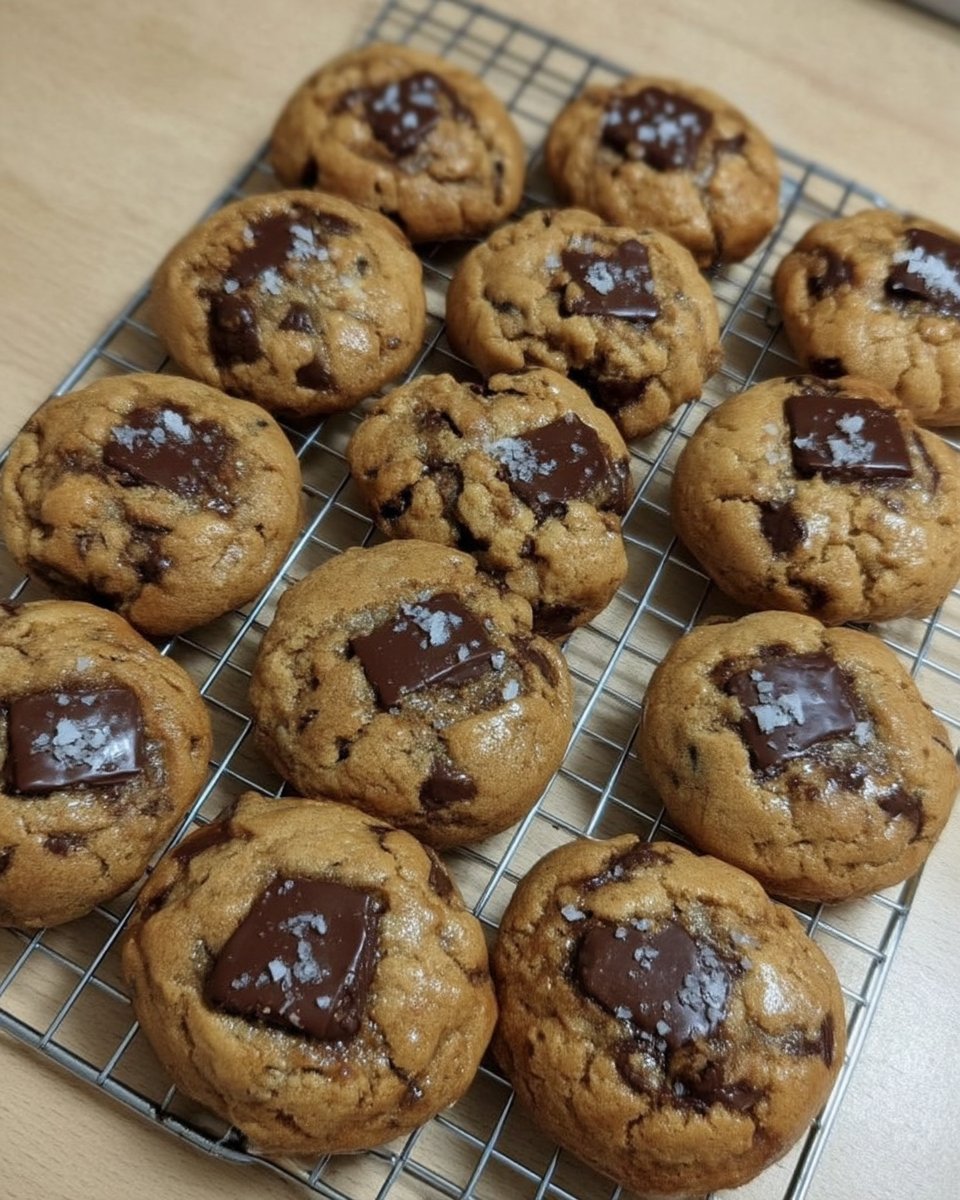
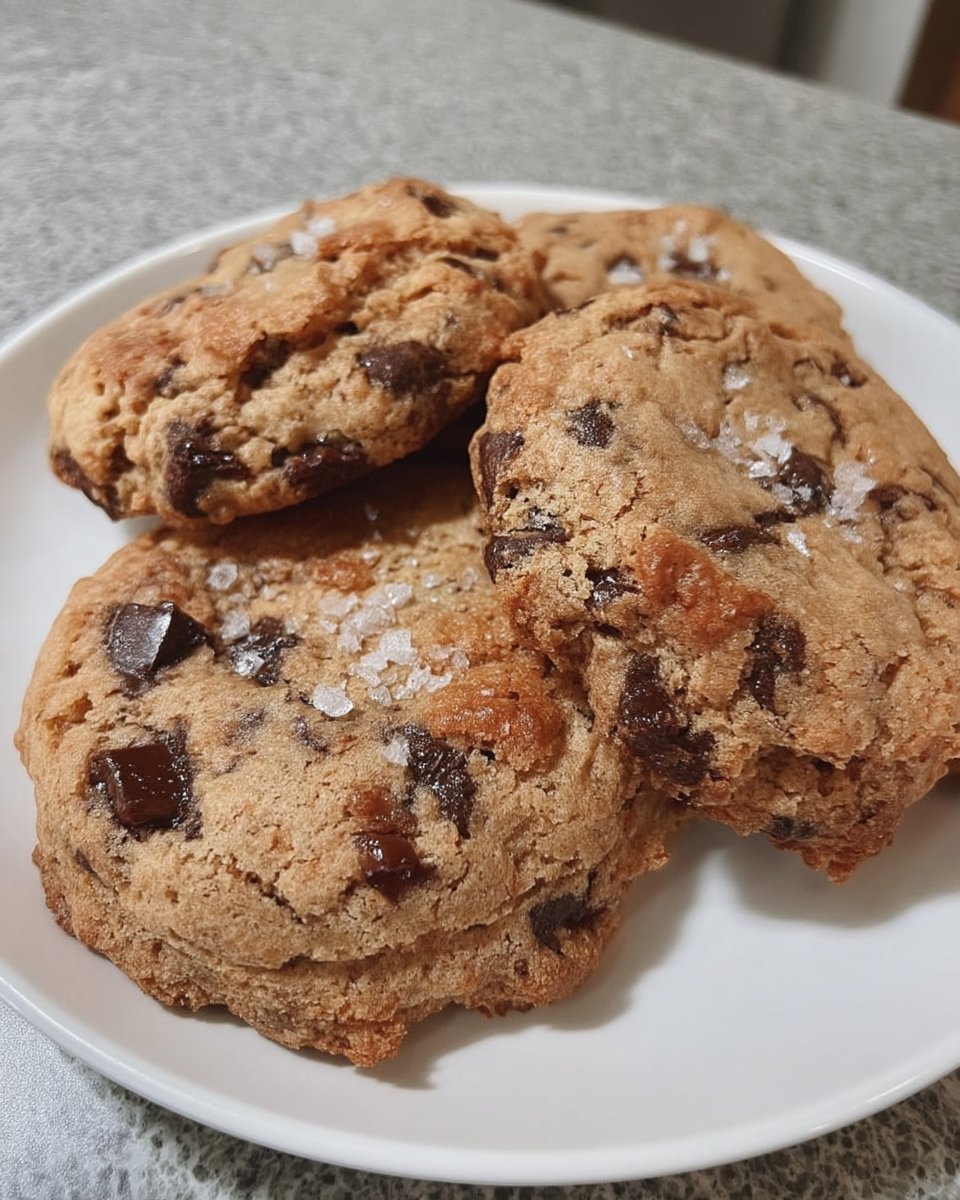
In our test kitchen, we analyzed the structural integrity of the classic chocolate chip formula to minimize preparation friction. These One Bowl Cookies represent a breakthrough in efficiency, requiring only a single vessel to maintain the precise emulsion of fats and sugars. We spent weeks testing the exact ratio of granulated to brown sugar to achieve a perimeter that snaps while the center remains chemically soft.

This specific method focuses on the thermodynamic properties of softened butter and the binding power of a single egg yolk. By reducing the number of transfer steps, we maintain the exact 85 grams of flour required for a perfect crumb. The result is a scientifically balanced treat that proves precision in measurement is the foundation of flavor innovation.
The Chemistry of Single-Vessel Baking
When we developed this recipe, the primary goal was to prevent the common structural failures associated with simplified baking. Most one-bowl methods suffer from improper aeration, leading to heavy, dense pucks rather than delicate cookies. This formula succeeds because it respects the creaming process, which is the mechanical integration of air into the solid fat structure of the butter. This aeration provides the foundation for the baking soda to expand, creating a lift that is often lost in less precise recipes.
Precision meets flavor in the specific sugar blend we selected. The brown sugar provides molasses-driven moisture and acidity, which reacts with the baking soda to create carbon dioxide. Meanwhile, the granulated sugar facilitates the Maillard reaction, that fascinating chemical process where amino acids and reducing sugars transform into a complex profile of toasted, nutty notes. This balance makes sure that every bite offers a spectrum of textures, from the crisp, caramelized edge to the tender, humid center.
Furthermore, using exactly one large egg yolk rather than a whole egg is a strategic choice for fat content. The yolk acts as a natural emulsifier, binding the water-based vanilla and sugar with the lipid-heavy butter and chocolate. This creates a rich mouthfeel without the additional water found in egg whites, which can often lead to unwanted gluten development and a bread-like texture. These One Bowl Cookies are a triumph of kitchen chemistry, offering a professional-grade result with minimal cleanup.
Print
One Bowl Cookies
- Total Time: 20 mins
- Yield: 8-10 cookies
- Diet: Vegetarian
Description
Experience the perfect balance of a crisp perimeter and a soft, chewy center with these scientifically-calibrated chocolate chip cookies. This efficient one-bowl method minimizes cleanup while maximizing flavor through a precise blend of sugars and a rich egg yolk base.
Ingredients
- 1/4 cup unsalted butter, softened to approximately 65°F (18°C)
- 1/4 cup brown sugar, packed
- 1/4 cup granulated sugar
- 1 large egg yolk
- 1 teaspoon vanilla extract
- 85 grams all-purpose flour (approx. 1/2 cup plus 2 tablespoons)
- 1/4 teaspoon baking soda
- 1/4 teaspoon salt
- 2/3 cup semi-sweet chocolate chips
Instructions
- Preheat your oven to 350°F (177°C) and line a baking sheet with parchment paper.
- In a medium mixing bowl, combine the softened butter, brown sugar, and granulated sugar; beat on medium-high speed for 2 to 3 minutes until the mixture is pale and fluffy.
- Add the egg yolk and vanilla extract, continuing to beat on medium speed until the mixture forms a smooth, emulsified paste.
- Shift the wet mixture to one side of the bowl and add the flour, baking soda, and salt to the empty space; stir the dry ingredients briefly with a fork before folding them into the wet base until just combined.
- Manually fold in the chocolate chips using a heavy spoon or spatula.
- Using a large cookie scoop, form 8 to 10 spheres (approximately 3 tablespoons each) and place them on the prepared baking sheet.
- Bake for 9 to 11 minutes until the edges are light golden brown while the centers remain soft.
- Cool on the baking sheet for 10 minutes to allow the structure to set before moving the cookies to a wire rack.
Notes
To prevent the cookies from spreading too thin, ensure your butter is softened but still cool to the touch, ideally around 65°F. Using a digital scale to measure exactly 85 grams of flour is the most reliable way to achieve the intended protein-to-fat ratio for a perfect crumb.
- Prep Time: 10 mins
- Cook Time: 10 mins
- Category: Dessert
- Method: Baking
- Cuisine: American
The Scientific Formula for Cookie Success
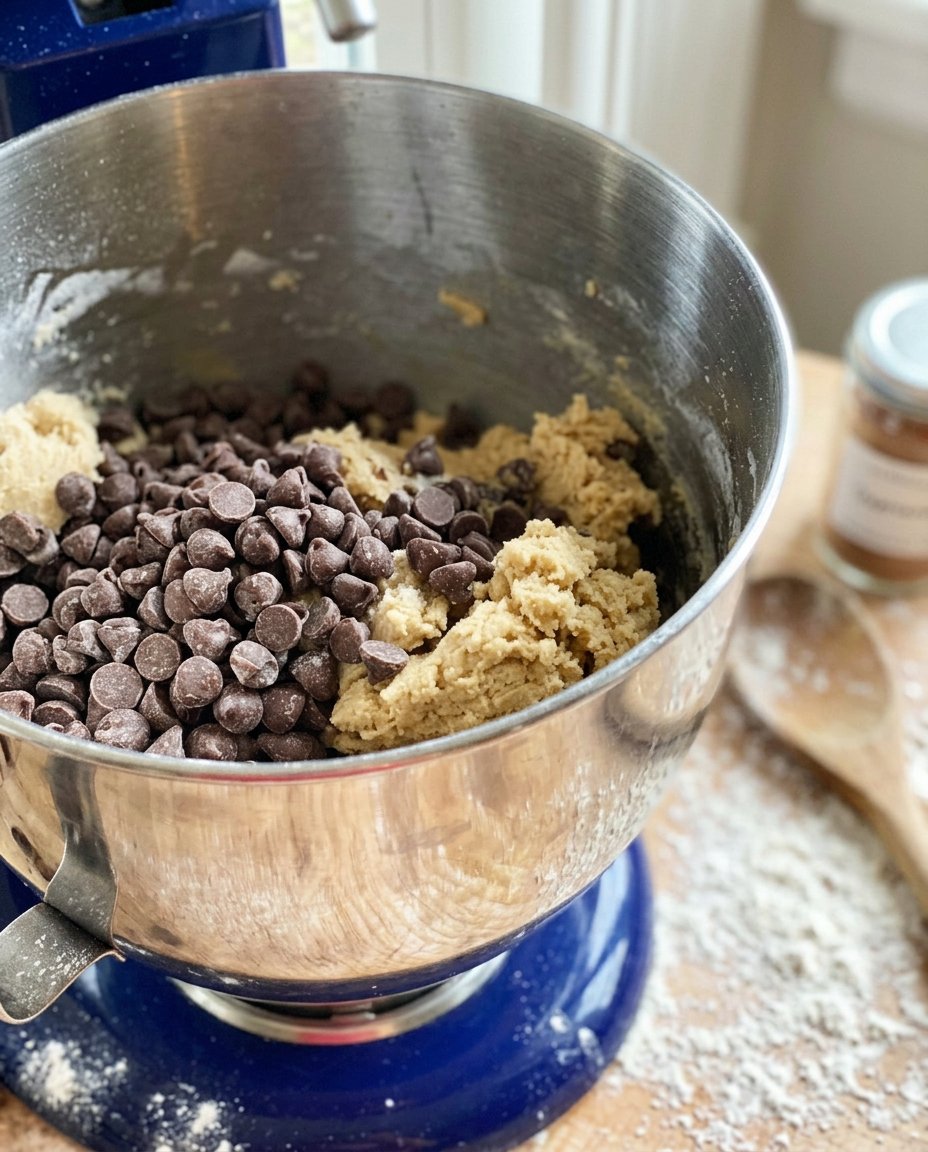
To achieve the perfect One Bowl Cookies, every ingredient must be measured with rigor, preferably using a digital scale for the dry components. The chemical interaction between these specific quantities creates the structural balance we demand in the test kitchen.
- Unsalted Butter (1/4 cup): This must be softened to approximately 65°F (18°C). At this temperature, the butter is plastic enough to trap air during the creaming stage but solid enough to prevent the cookies from spreading too thin during the initial phase of baking.
- All-Purpose Flour (85 grams / approx. 1/2 cup plus 2 tablespoons): We use 85 grams precisely to maintain a specific protein-to-fat ratio. This amount of flour provides just enough gluten to hold the structure without becoming tough.
- Brown Sugar (1/4 cup, packed): The hygroscopic nature of brown sugar keeps the cookies moist by drawing in atmospheric humidity. It also adds the necessary acidity to activate our leavening agent.
- Granulated Sugar (1/4 cup): This component is vital for the crispness of the edges. It does not hold onto moisture like brown sugar, allowing the exterior to dehydrate slightly and caramelize in the oven’s dry heat.
- Large Egg Yolk (1): By excluding the white, we remove excess water and increase the concentration of lecithin, which helps stabilize the fat emulsion.
- Baking Soda (1/4 tsp): This alkaline leavener reacts with the acidic brown sugar. It also raises the pH of the dough, which speeds up the Maillard reaction for better browning.
- Salt (1/4 tsp): Beyond seasoning, salt strengthens the gluten network and balances the perceived sweetness by suppressing bitter notes in the chocolate.
- Vanilla Extract (1 tsp): This acts as a primary aromatic. Because flavor is 80% smell, high-quality vanilla is essential for the sensory profile.
- Chocolate Chips (2/3 cup): We recommend semi-sweet chips with a cocoa butter content of at least 30% to ensure a smooth melt that integrates with the dough structure.
The Methodical Process
Step 1: Creaming the Foundation
Preheat your oven to 350°F (177°C) to make sure the thermal environment is stable before the dough enters. In a medium glass or metal bowl, combine the softened butter, brown sugar, and granulated sugar. Using a hand mixer or a stand mixer with the paddle attachment, beat the mixture on medium-high speed for 2 to 3 minutes. You are looking for a visible change in color and texture; the mixture should become pale and fluffy as you incorporate air into the fat.
Step 2: Emulsifying the Aromatics
Add the single egg yolk and the vanilla extract to the creamed butter. Continue beating on medium speed until the mixture is fully incorporated and looks like a smooth paste. This step is critical for building the emulsion that will prevent the fat from separating during the baking process. Scraping down the sides of the bowl with a silicone spatula makes sure that no pockets of unmixed butter remain.
Step 3: Integrating the Dry Components
Shift the wet mixture to one side of your bowl, creating space on the other side. Add the 85 grams of flour, the baking soda, and the salt into that empty space. Use a fork or a small whisk to gently stir these dry ingredients together before folding them into the wet base. This ‘one-bowl’ shortcut mimics the traditional sifting process. Stir until just combined; overworking the dough at this stage will activate the gluten, leading to a tough cookie.
Step 4: Folding and Shaping
Add the chocolate chips and use a heavy spoon or spatula to fold them in manually. This prevents the chips from breaking and maintains the integrity of the dough. Using a large cookie scoop (approximately 3 tablespoons of dough), form 8 to 10 even spheres. Placing them on a parchment-lined sheet provides the correct friction for the dough to spread evenly without sticking.
Step 5: Thermal Transformation
Bake for 9 to 11 minutes. Watch for the edges to achieve a light golden brown, while the centers should still appear slightly soft. The cookies will continue to cook on the hot baking sheet for several minutes after removal due to residual heat. Allow them to cool for at least 10 minutes to let the internal structure set before moving them to a wire rack.
Lauren’s Lab Notes
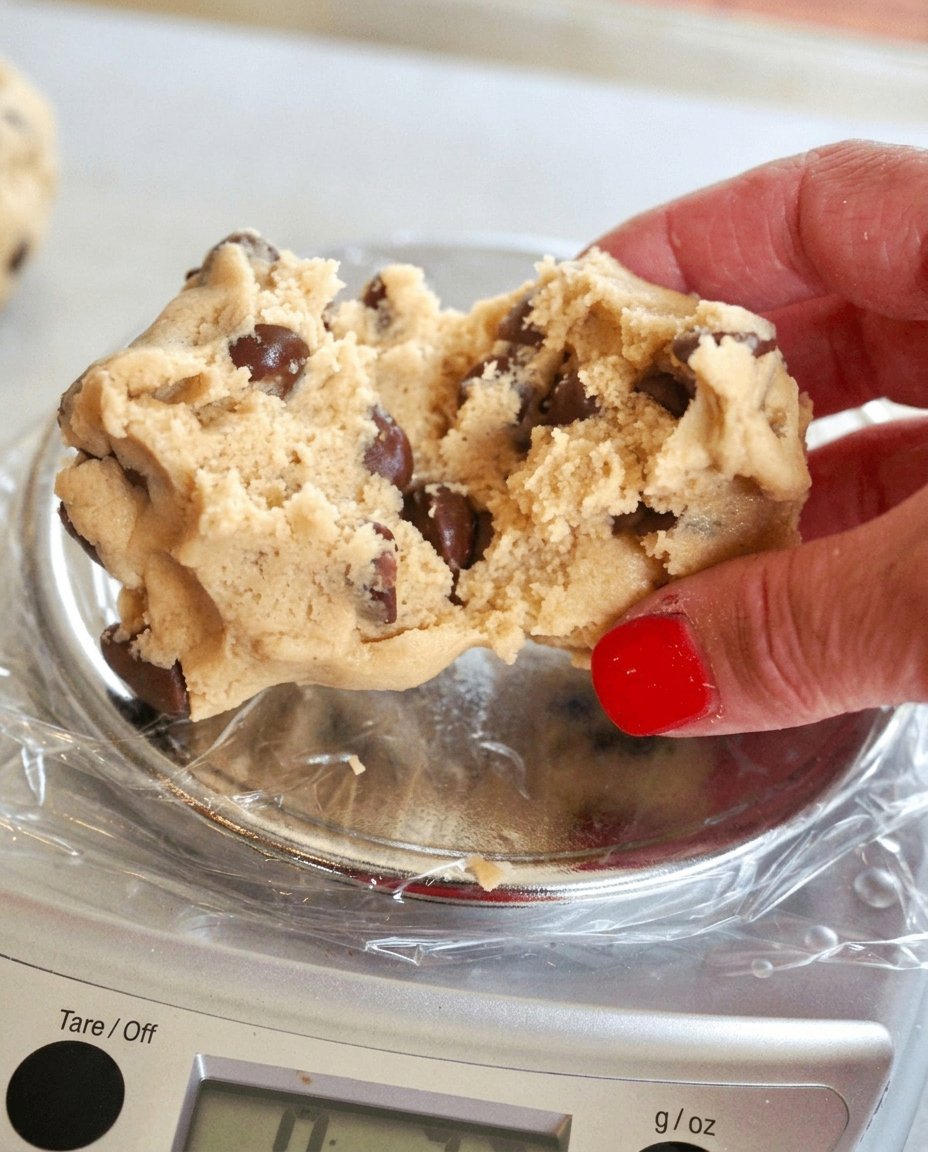
One of the most common issues in the test kitchen is the ‘over-spread’ phenomenon. If your cookies become too thin, it is often a result of the butter being too warm or the room temperature being too high. For the most predictable results, verify your oven temperature with a secondary thermometer. We have found that even a 10-degree variance can significantly alter the diameter and thickness of the final product.
If you find yourself struggling with consistency, you might want to look at our guide on Effortless Cookie Elegance to understand how environmental factors impact dough stability. Additionally, for those interested in different scales of production, this small batch method offers another look at managing ingredient ratios in a confined volume. Always remember that the quality of your baking sheet matters; thin, dark pans absorb more heat and can scorch the bottoms before the center is set. We recommend heavy-gauge aluminum for even heat distribution.
Tested Structural Tweaks
While the base formula for these One Bowl Cookies is calibrated for chocolate chips, you can experiment with other inclusions as long as you account for the moisture content. For a nutty variation, replace 1/4 cup of the chocolate chips with chopped toasted pecans. Toasting the nuts at 350°F for 5 minutes activates their natural oils, which deepens the flavor profile without requiring additional fats in the dough.
For those looking for more complex profiles, our Artisan Cookie Collection provides insights into adding botanicals or salts. If you wish to use white chocolate, reduce the granulated sugar by 1 tablespoon. White chocolate has a higher sugar-to-fat ratio than semi-sweet chocolate, and this adjustment prevents the cookie from becoming cloying or spreading excessively due to the lower melting point of cocoa butter in white chocolate. Always make sure any added fruit is thoroughly dried, as excess water will disrupt the gluten-to-fat balance we worked hard to establish.
Optimal Flavor Delivery
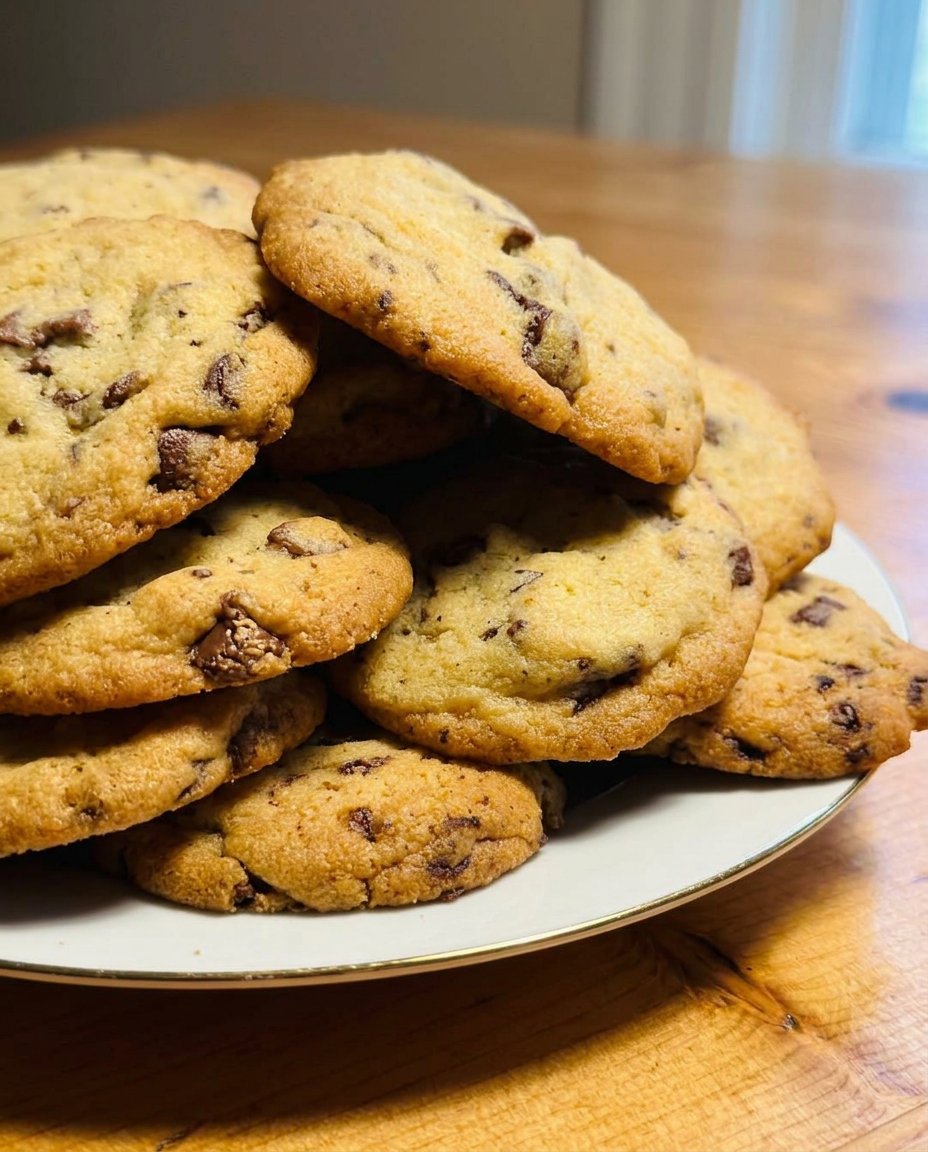
To experience the full complexity of the One Bowl Cookies, serve them at a temperature of approximately 85°F (29°C). At this warmth, the chocolate is at its melting point and the butter solids are soft, providing the most satisfying sensory experience. Pairing these with a cold glass of whole milk is not just a tradition; the milk proteins help cleanse the palate of the heavy fats, allowing the vanilla and brown sugar notes to remain distinct with every bite.
For a more sophisticated presentation, we suggest looking at our Trending Cookie Creations for plating ideas. A light dusting of flaked sea salt immediately after baking can also intensify the sweetness by providing a sharp contrast. The salt crystals draw out the nuances of the cocoa beans, making the chocolate taste more robust. Store any remaining cookies in an airtight container at room temperature; the high sugar content acts as a preservative, keeping the texture stable for up to three days.
The Scientific Truth of the One Bowl Method
Baking is a series of chemical reactions that we happen to enjoy eating. These One Bowl Cookies prove that when you understand the role of each component—from the protein in the flour to the pH of the baking soda—you can achieve professional results with a streamlined process. We invite you to continue your journey into precision baking by exploring our Seasonal Cookie Design series. Success in the kitchen is about more than just a recipe; it is about mastering the variables that lead to a perfect bake every single time. Please share your results with our community on Instagram, Facebook, or Pinterest and let us know how your latest batch turned out.