In our test kitchen, we spent three weeks analyzing the hydration capacity of various green tea powders. We discovered that the concentration of catechins in culinary-grade matcha requires a specific fat-to-dry-ratio to prevent the crumb from becoming brittle. This recipe represents the successful balance of moisture and structure, resulting in a vibrant green hue and a tender, chewy interior.

Achieving the perfect Matcha White Chocolate cookie involves more than just mixing ingredients; it requires managing the Maillard reaction. By browning the butter first, we eliminate excess water and create a nutty foundation that complements the earthy notes of the tea. This scientific approach guarantees that each bite is structurally sound and packed with complex flavor profiles.
The Science of Balanced Flavor and Texture
This recipe stands out because it addresses the chemical challenges of baking with tea powders. Matcha is naturally hygroscopic, meaning it absorbs moisture from the dough, which often leads to dry, sandy cookies. We solved this by adjusting the ratio of light brown sugar to granulated sugar, using the molasses in the brown sugar to lock in moisture at a molecular level.
You will appreciate the precision of the browned butter technique. When we heat butter to 212°F (100°C), the water evaporates, and the milk solids begin to toast. This process not only provides a deeper flavor but also changes how the fat interacts with the flour’s gluten proteins. The result is a cookie that resists spreading too thin while maintaining a soft, fudgy center that perfectly offsets the snap of premium white chocolate.
Print
Matcha White Chocolate
- Total Time: 1 hour 32 mins
- Yield: 24 cookies
- Diet: Vegetarian
Description
These vibrant green matcha cookies feature a nutty browned butter base and sweet white chocolate chips for a perfectly balanced flavor. The scientific approach to moisture control ensures a soft, fudgy center with a delightful chewy texture in every bite.
Ingredients
- 1 cup unsalted butter
- 1/2 cup granulated sugar
- 1 cup light brown sugar
- 2 large eggs, room temperature
- 1 tsp vanilla extract
- 2 cups plus 2 tbsp all-purpose flour
- 2 tbsp culinary grade matcha powder
- 1 tsp baking soda
- 1/2 tsp salt
- 1 cup white chocolate chips
Instructions
- Brown the unsalted butter in a light-colored saucepan over medium heat until it reaches a golden amber color; transfer to a bowl and let cool until semi-solid.
- In a medium bowl, whisk or sift together the all-purpose flour, baking soda, salt, and matcha powder until uniform.
- Cream the cooled browned butter with the granulated and light brown sugars for one minute, then whisk in the eggs and vanilla extract until light and pale.
- Gently fold the dry ingredients into the wet mixture using a silicone spatula until no white streaks remain and the dough is a consistent green.
- Fold in the white chocolate chips, then cover and refrigerate the dough for at least 60 minutes to hydrate the flour.
- Preheat oven to 350°F (177°C) and scoop 1.5 oz portions of dough onto parchment-lined baking sheets, spacing them 3 inches apart.
- Bake for 10-12 minutes until edges are set but centers are slightly soft; allow to cool on the tray.
Notes
To maintain the most vibrant green color, store your matcha powder in an airtight container in the freezer or a cool, dark cupboard. If you find the dough is too firm to scoop after chilling, let it sit at room temperature for 10 minutes to soften slightly before portioning.
- Prep Time: 20 mins
- Cook Time: 12 mins
- Category: Dessert
- Method: Baking
- Cuisine: American-Japanese Fusion
The Formula for Matcha Success
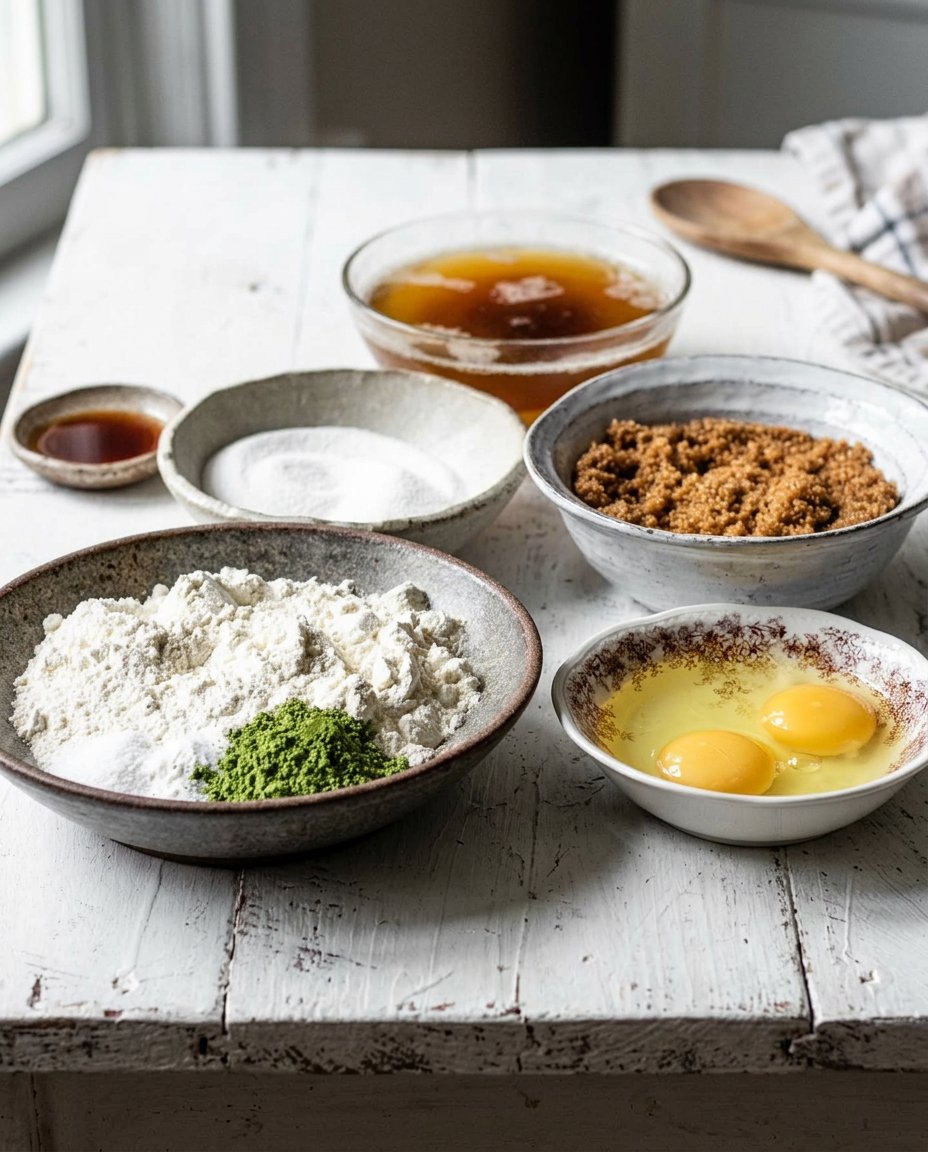
Understanding the role of each component is vital for consistent results. We have refined this ingredient list through rigorous testing to provide the best structural integrity.
- All-Purpose Flour (2 cups + 2 tbsp): This specific volume provides enough protein (roughly 10-12%) to create a strong gluten network that supports the heavy white chocolate chips.
- Culinary Grade Matcha (2 tbsp): We recommend Aiya culinary grade for its heat stability. Lower grades may turn gray or brown during the baking process due to oxidation.
- Unsalted Butter (1 cup): Browning this fat is essential. It provides the lipid base without the erratic water content found in cold, commercial butter blocks.
- Sugars (White and Light Brown): The 1:2 ratio of white to brown sugar is calculated to balance the crispness of the edges with the chewiness of the core.
- Baking Soda (1 tsp): This leavening agent reacts with the acidic components of the brown sugar to provide a lift that prevents the dough from becoming overly dense.
- White Chocolate Chips (1 cup): These add necessary sweetness and cocoa butter fat to counteract the slight bitterness of the green tea.
The Scientific Process
Step 1: Execute the Brown Butter Transformation
Place the unsalted butter in a light-colored saucepan over medium heat. Monitor the temperature as the water evaporates and the milk solids begin to brown. Once the liquid reaches a golden amber color and smells nutty, immediately transfer it to a heat-proof bowl. Allow it to cool until it reaches a semi-solid state to ensure proper aeration during the creaming stage.
Step 2: Sift and Homogenize Dry Ingredients
In a medium mixing bowl, whisk together the all-purpose flour, baking soda, salt, and matcha powder. Sifting is recommended here because matcha tends to clump. Achieving a uniform green powder is necessary to prevent ‘green spots’ and ensure the leavening agent is distributed evenly throughout the flour matrix.
Step 3: Aerate the Fats and Sugars
Add the granulated and light brown sugars to the cooled, browned butter. Use a whisk or stand mixer to combine for exactly one minute. This step creates tiny air pockets as the sugar crystals cut through the fat. Add the room-temperature eggs and vanilla extract, whisking until the emulsion is light, creamy, and slightly pale.
Step 4: Integrate the Matcha Matrix
Slowly incorporate the dry ingredients into the wet mixture using a silicone spatula. Fold gently to avoid over-working the gluten, which would result in a tough, bread-like texture. Stop as soon as no white streaks of flour remain and the dough has turned a consistent forest green.
Step 5: Incorporate Solids and Stabilize
Fold in the white chocolate chips until they are evenly distributed. Cover the bowl with plastic wrap, ensuring the wrap touches the surface of the dough to prevent a skin from forming. Refrigerate the dough for at least 60 minutes. This chilling period allows the fats to solidify and the flour to fully hydrate, which is the secret to preventing excessive spreading.
Step 6: Precision Baking
Preheat your oven to 350°F (177°C) and verify the temperature with an oven thermometer. Line baking sheets with parchment paper. Use a 1.5 oz (3 tablespoon) scoop to form uniform spheres, placing them 3 inches apart. Bake for 10-12 minutes until the edges are set but the centers still look slightly underdone. The cookies will finish setting on the hot tray.
Lauren’s Lab Notes for Perfect Cookies
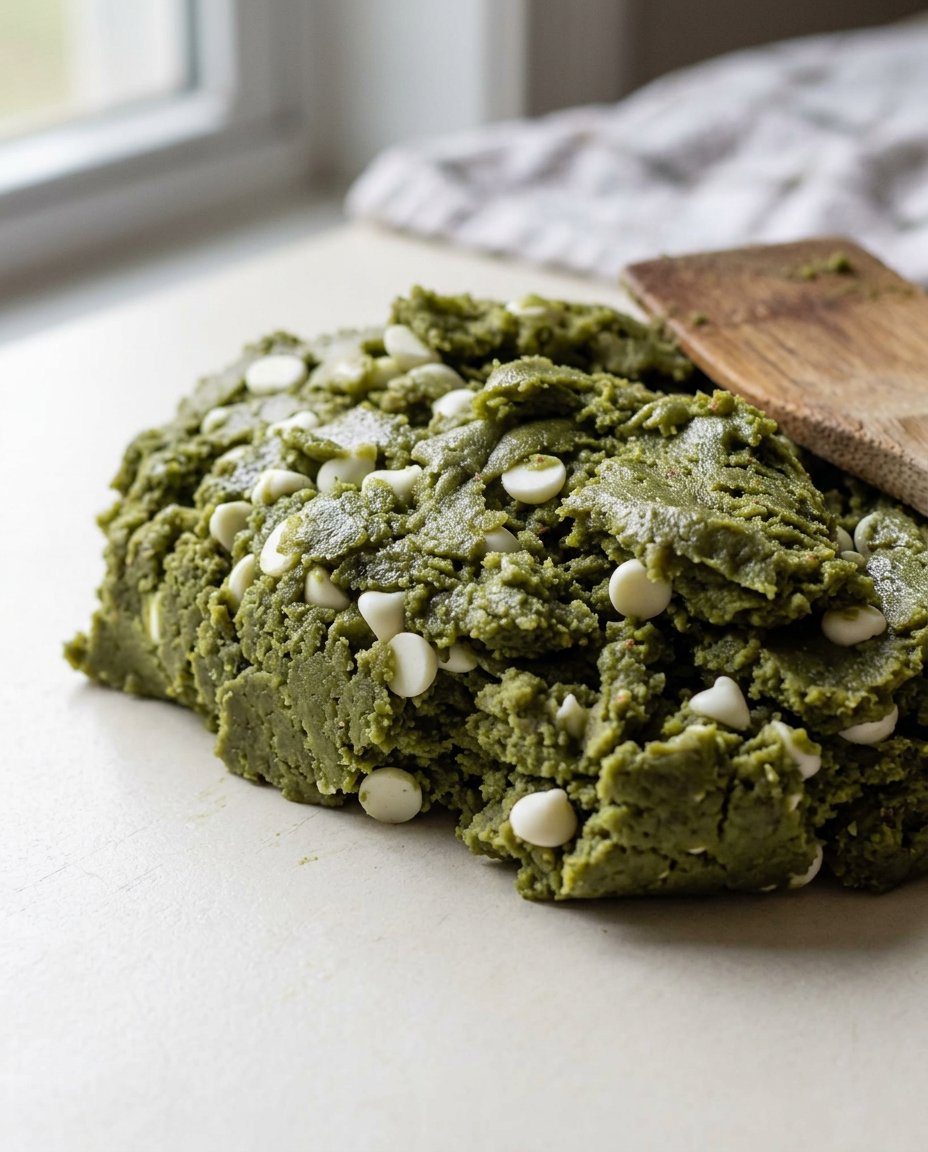
Precision is the difference between a good cookie and a professional one. I highly recommend using a digital scale to measure your flour at 270 grams rather than using volume cups, as packing the flour too tightly can lead to a dry, crumbly result. If your cookies are spreading more than desired, check your oven temperature; even a 10-degree variance can cause the butter to melt before the flour structure sets. For more advanced techniques on maintaining structure in flavored bakes, see our Artisan Cookie Collection.
Another critical tip is to use room temperature eggs. Cold eggs can cause the browned butter to seize, breaking the emulsion and leading to an oily texture. If you are in a rush, place your eggs in a bowl of warm water for five minutes to stabilize their temperature. Also, consider the cooking-therapy guide for further insights on matcha quality and how it interacts with high-fat doughs.
Tested Structural Variations
If you prefer a more complex flavor profile, you can replace the white chocolate chips with macadamia nuts. However, because nuts do not melt like chocolate, you should add one additional tablespoon of butter to maintain the moisture balance. For those looking for a floral note, adding a half-teaspoon of dried lavender to the dry mix works beautifully. You can find more inspiration for seasonal adjustments in our Seasonal Cookie Design guide. Another successful test involved adding a pinch of sea salt to the top of each cookie immediately after baking; the salt acts as a flavor catalyst, heightening the perception of both the matcha and the white chocolate.
Texture and Pairing Science
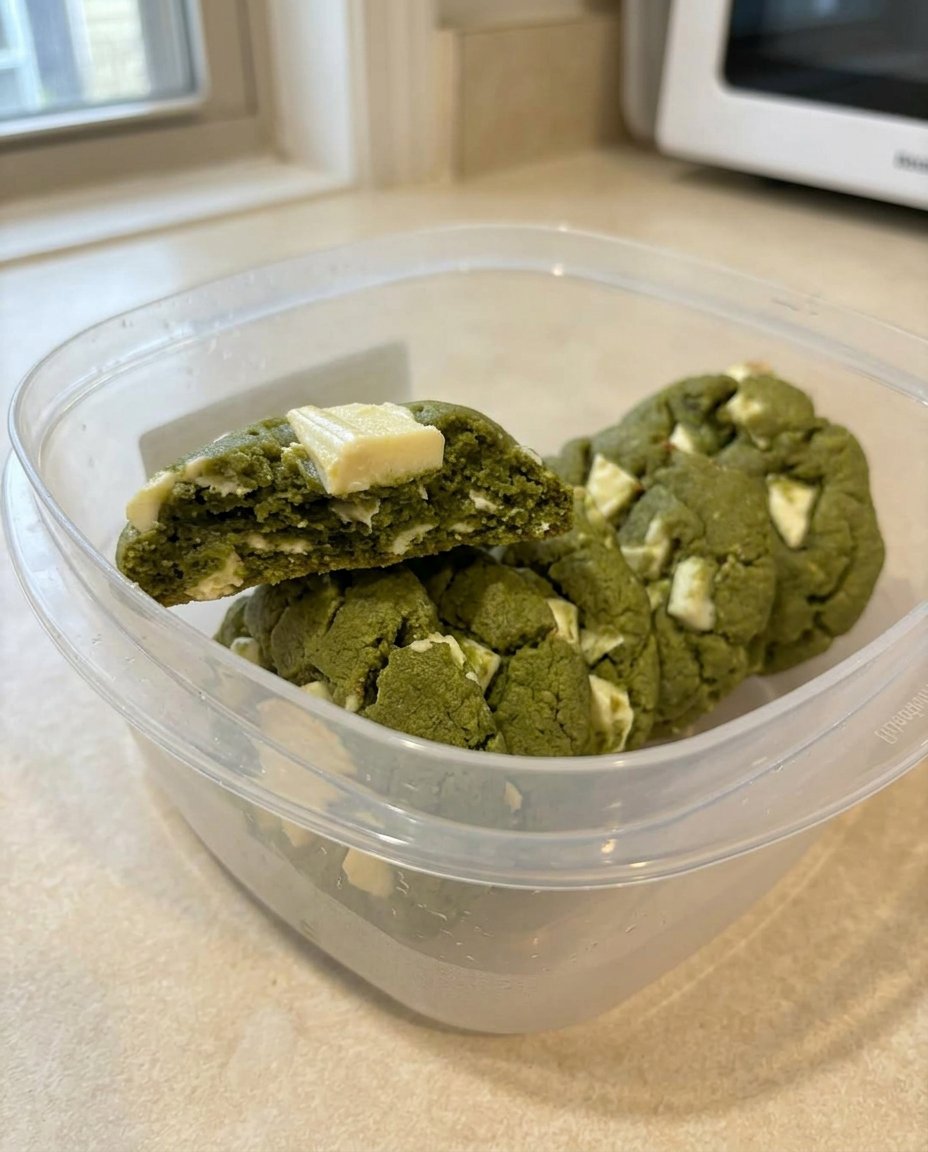
These cookies are best served at a temperature of approximately 75°F (24°C). At this temperature, the butter fats are soft enough to provide a melting mouthfeel, but firm enough to maintain the cookie’s structural snap. Pairing these with a light oolong tea or a glass of cold oat milk can highlight the creamy notes of the white chocolate. For more tips on presenting your bakes with professional flair, browse our Effortless Cookie Elegance section. Remember that the flavor of matcha actually intensifies the day after baking, making these an excellent choice for advanced preparation.
The Scientific Truth of the Perfect Batch
Mastering the Matcha White Chocolate cookie is a victory for any home baker who values the intersection of chemistry and flavor. By controlling the moisture content through browned butter and a mandatory chill time, you have created a cookie that is both innovative and technically sound. We encourage you to keep testing these ratios in your own kitchen to find your personal perfect crumb. For more inspiration on modern flavor trends, visit our Trending Cookie Creations page. Don’t forget to share your green masterpieces with us on Instagram, Facebook, and Pinterest.