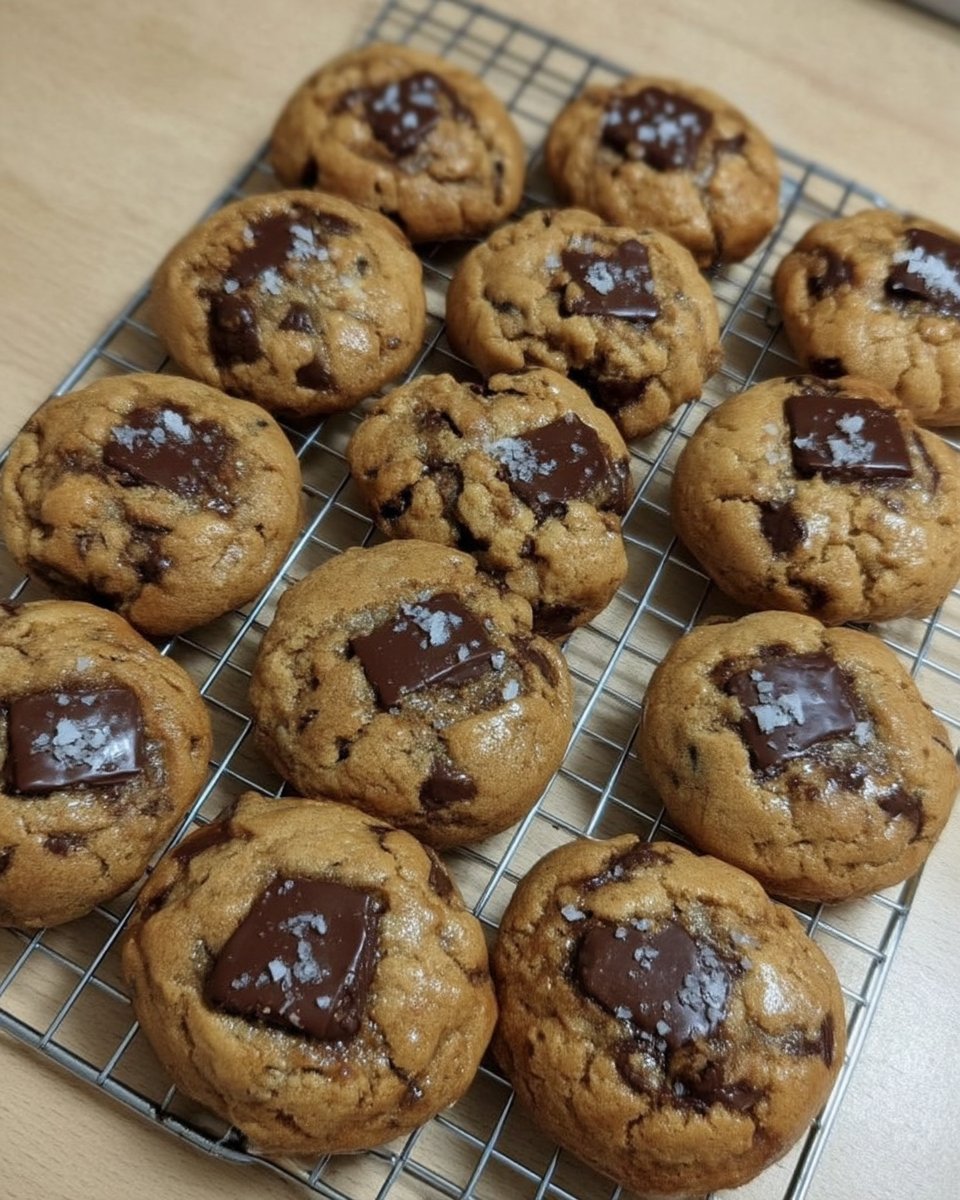
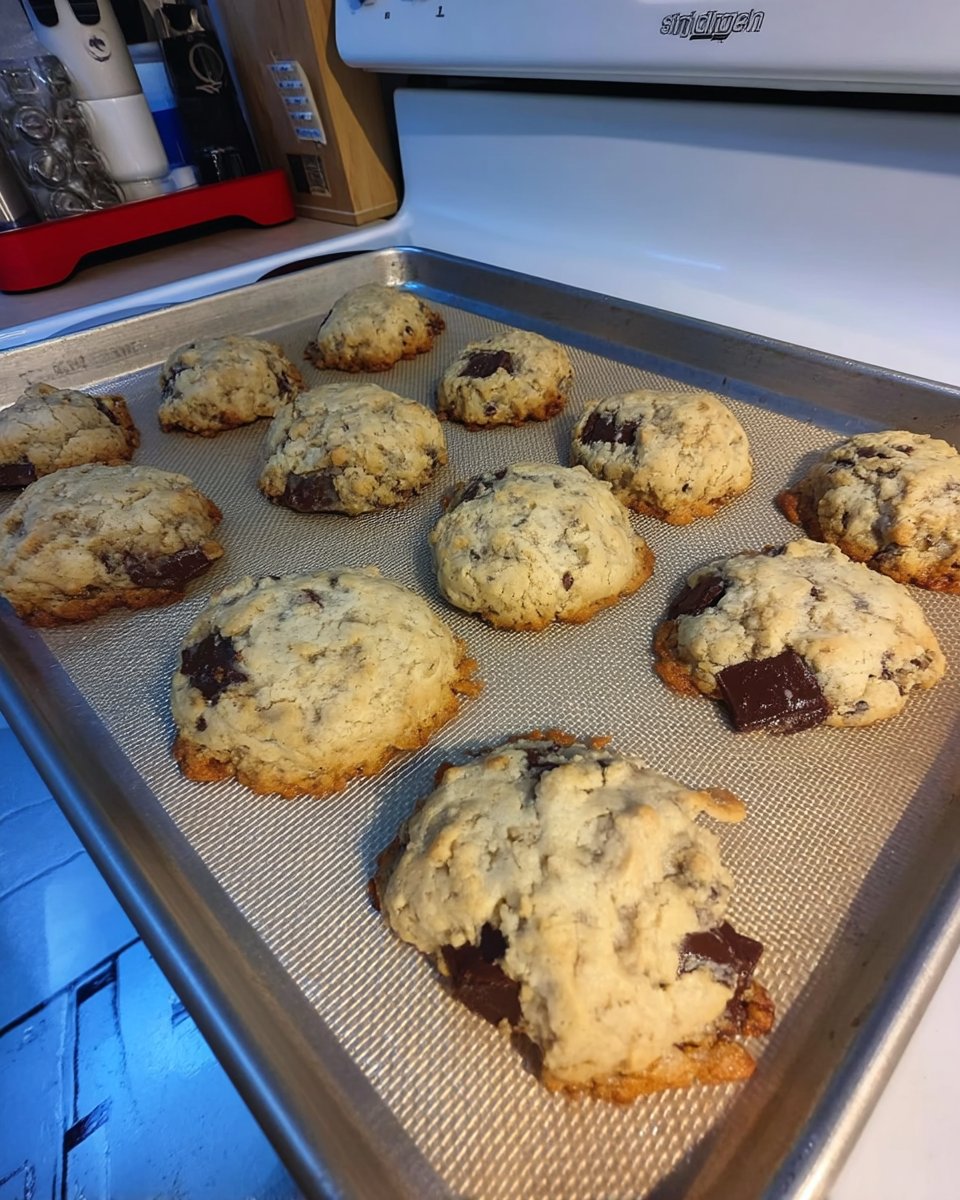
At the Cookies Sweet test kitchen, we performed multiple trials to find the ideal ratio of almond flour to molasses for a grain-free ginger cookie. We looked into how the high oil content in nut flours affects the spread during the baking cycle. This Paleo Gingerbread formula provides a reliable structure that avoids the common pitfall of greasy or crumbly grain-free desserts.

Our research confirmed that the combination of coconut sugar and molasses provides the necessary humectant properties for a chewy center. By managing the hydration of the dough through precise chilling, we can guarantee a cookie that holds its shape under heat. This method produces results that satisfy both the rigorous standards of our lab and the flavor expectations of holiday tradition.
The Chemistry of Spiced Grain-Free Baking
This recipe succeeds because it respects the scientific relationship between moisture and protein. Traditional gingerbread relies on gluten for its snap, but our grain-free version uses the albumin in a large egg and the fibrous nature of 220 grams (220 gr) of almond flour to create a resilient matrix. You will appreciate how the molasses acts as an invert sugar, preventing the coconut sugar from recrystallizing, which results in a remarkably tender crumb.
The flavor profile is achieved through a specific spice-to-fat ratio. When the ground ginger and allspice hit the 350°F (177°C) environment, the heat activates the essential oils in the spices, diffusing them through the coconut oil. This creates a deep, resonant warmth that persists from the first bite to the finish. Testing showed that using exactly 1/2 teaspoon of ground ginger provides the right amount of piquancy without overwhelming the delicate nutty notes of the almond base.
Print
Paleo Gingerbread
- Total Time: 52 mins
- Yield: 18 cookies
- Diet: Paleo, Gluten-Free, Grain-Free, Dairy-Free
Description
This scientifically-optimized Paleo Gingerbread recipe delivers a chewy, spice-forward cookie using a precise blend of almond flour and molasses. Perfect for holiday traditions, these grain-free treats maintain their structural integrity through a specific chilling and hydration process.
Ingredients
- 220 grams (2 cups) finely ground blanched almond flour
- 1/2 teaspoon baking soda
- 76 grams (1/2 cup) coconut sugar
- 1 teaspoon ground cinnamon
- 1/2 teaspoon ground ginger
- 1/4 teaspoon allspice
- 1 pinch salt
- 2 tablespoons coconut oil, melted and cooled
- 3 tablespoons molasses
- 1 large egg
- 1 teaspoon vanilla extract
Instructions
- Place the almond flour, baking soda, coconut sugar, cinnamon, ginger, allspice, and salt in a food processor and pulse 3 to 4 times to homogenize and remove clumps.
- Add the melted coconut oil, molasses, egg, and vanilla extract, then process for 15 to 20 seconds until a cohesive, sticky dough forms.
- Transfer the dough to a glass bowl, cover tightly, and refrigerate for 30 minutes to allow the flour to hydrate and the fats to stabilize.
- Preheat your oven to 350°F (177°C) and line a heavy-duty baking sheet with parchment paper.
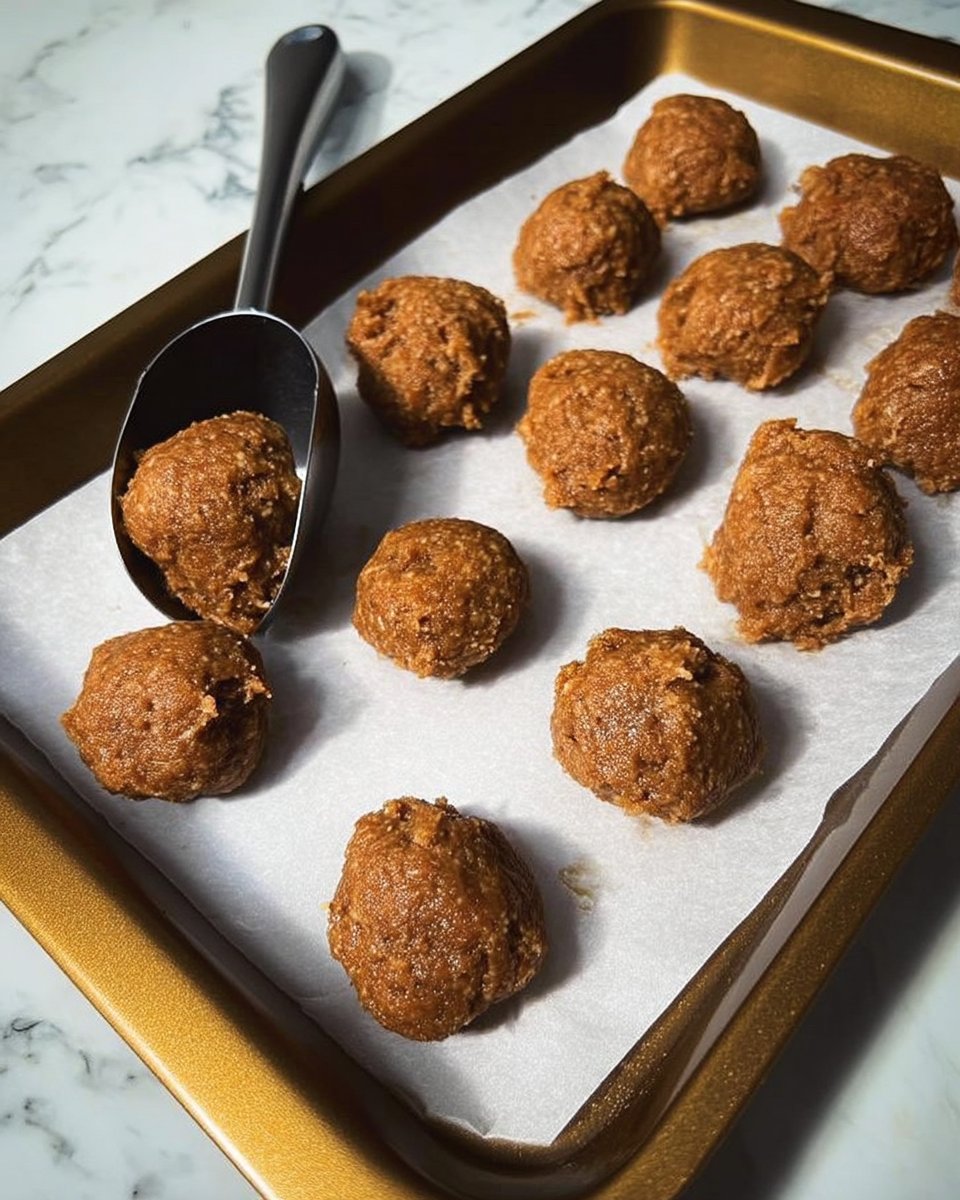
- Scoop 1.5-tablespoon portions of dough and place them 2 inches apart on the sheet, then gently flatten each ball with your palm.
- Bake for 10 to 12 minutes until the cookies have a matte finish, then cool on the pan for 5 minutes before moving them to a wire rack to firm up completely.
Notes
For the most consistent results, measure your almond flour by weight to ensure the moisture balance is correct. If you find the dough difficult to shape even after the required chilling time, lightly dampening your hands with water will prevent the dough from sticking to your skin. To experience the full depth of the ginger and molasses, let the cookies rest in an airtight container overnight before serving.
- Prep Time: 40 mins
- Cook Time: 12 mins
- Category: Dessert
- Method: Baking
- Cuisine: American
The Formula for Structural Integrity
Success in grain-free baking requires understanding how each component contributes to the final density and rise. Here is the scientific breakdown of our formula:
- Almond Flour (220 grams / 2 cups): This is our structural foundation. We use finely ground blanched almond flour to prevent a gritty mouthfeel. Its high fat content means we can use less added oil while still achieving a rich flavor.
- Coconut Sugar (76 grams / 1/2 cup): Unlike cane sugar, coconut sugar has a lower melting point and contributes a caramel-like depth. It works with the baking soda to help the cookies brown through the Maillard reaction.
- Molasses (3 tablespoons): This is our primary flavoring and humectant. It provides the acidity needed to react with the baking soda, creating the carbon dioxide bubbles that give the cookie its slight lift.
- Large Egg (1): In the absence of gluten, the egg protein is the most critical binder. It sets the structure as the temperature rises in the oven.
- Coconut Oil (2 tablespoons): This fat is solid at room temperature but liquid at 76°F (24°C). We melt and cool it to help it emulsify with the molasses and egg during the processing phase.
- Spices (Cinnamon, Ginger, Allspice, Salt): These provide the signature aroma. The salt is a flavor catalyst, sharpening the perception of the spices and the sweetness of the sugar.
The Scientific Process
Step 1: Homogenize the Dry Components
Place 220 grams of almond flour, 1/2 teaspoon baking soda, 76 grams of coconut sugar, 1 teaspoon ground cinnamon, 1/2 teaspoon ground ginger, 1/4 teaspoon allspice, and a pinch of salt into a food processor. Pulse 3 to 4 times. This step is vital to break up any almond flour clumps and to distribute the leavening agent evenly, which prevents uneven rising.
Step 2: Emulsify the Wet Ingredients
Add 2 tablespoons of melted and cooled coconut oil, 3 tablespoons of molasses, 1 large egg, and 1 teaspoon of vanilla extract. Process for 15 to 20 seconds until a cohesive dough forms. You will notice the dough is quite sticky; this is due to the high sugar and moisture content relative to the nut flour.
Step 3: Molecular Stabilization through Chilling
Transfer the dough to a glass bowl and wrap it tightly with plastic. Place it in the refrigerator for exactly 30 minutes. This chilling period is non-negotiable because it allows the coconut oil to solidify and the almond flour to hydrate. A chilled dough will resist spreading, maintaining a thickness that results in a soft center.
Step 4: Thermal Preparation
Preheat your oven to 350°F (177°C) and line a heavy-duty baking sheet with parchment paper. Using a professional-grade baking sheet helps with even heat distribution, preventing the bottoms from scorching before the centers are set.
Step 5: Precision Shaping
Remove the dough from the fridge. Use a small cookie scoop to measure 1 1/2 tablespoons of dough per cookie. Arrange them 2 inches apart on the prepared sheet. Use the palm of your hand to gently press down on each ball, flattening it slightly. Because these cookies do not contain gluten, they will not spread as much as traditional cookies, so this manual flattening determines the final shape.
Step 6: The Baking Cycle
Bake for 10 to 12 minutes. At the 10-minute mark, check for a matte finish on the surface. The internal temperature should reach approximately 175°F (79°C) for a perfect set. Allow the cookies to cool on the pan for 5 minutes to let the internal structure firm up before moving them to a wire rack.
Lauren’s Lab Notes for Perfect Texture
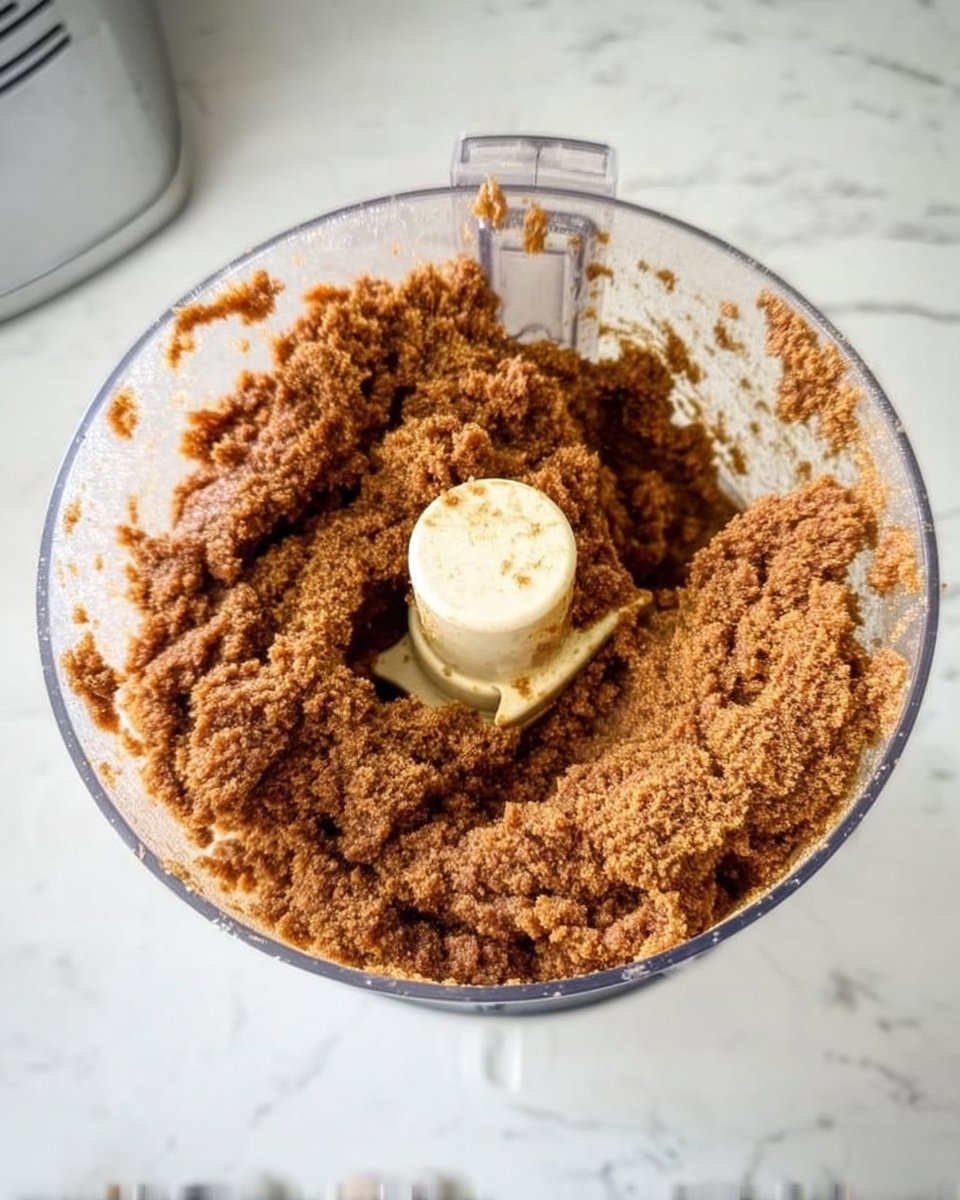
The stickiness of this dough is a sign of a high-quality Paleo Gingerbread result. Do not be tempted to add more flour, as this will lead to a dry, crumbly texture once the cookies cool. If the dough is too difficult to handle even after chilling, dampen your hands slightly with water to prevent sticking while shaping. For more techniques on managing grain-free doughs, see our Artisan Cookie Collection. Always measure your almond flour by weight (220 grams) rather than volume to account for the variable density of nut meals. This precision guarantees a consistent crumb every time you bake.
Tested Structural Modifications
We have tested several variations to find which ones maintain the integrity of the cookie. If you require a vegan option, you can substitute the egg with a flax egg (1 tablespoon ground flaxseed mixed with 3 tablespoons water). Note that this will result in a softer, more delicate cookie that requires an extra 2 minutes of baking time. For a different aesthetic, you can dip the tops in a small amount of extra coconut sugar before baking to create a crackled, crunchy exterior. For more inspiration on holiday variations, visit our Seasonal Cookie Design resource. We do not recommend using cookie cutters with this specific dough, as the lack of gluten makes it too fragile for rolling and intricate shapes.
Flavor Development and Pairing Science
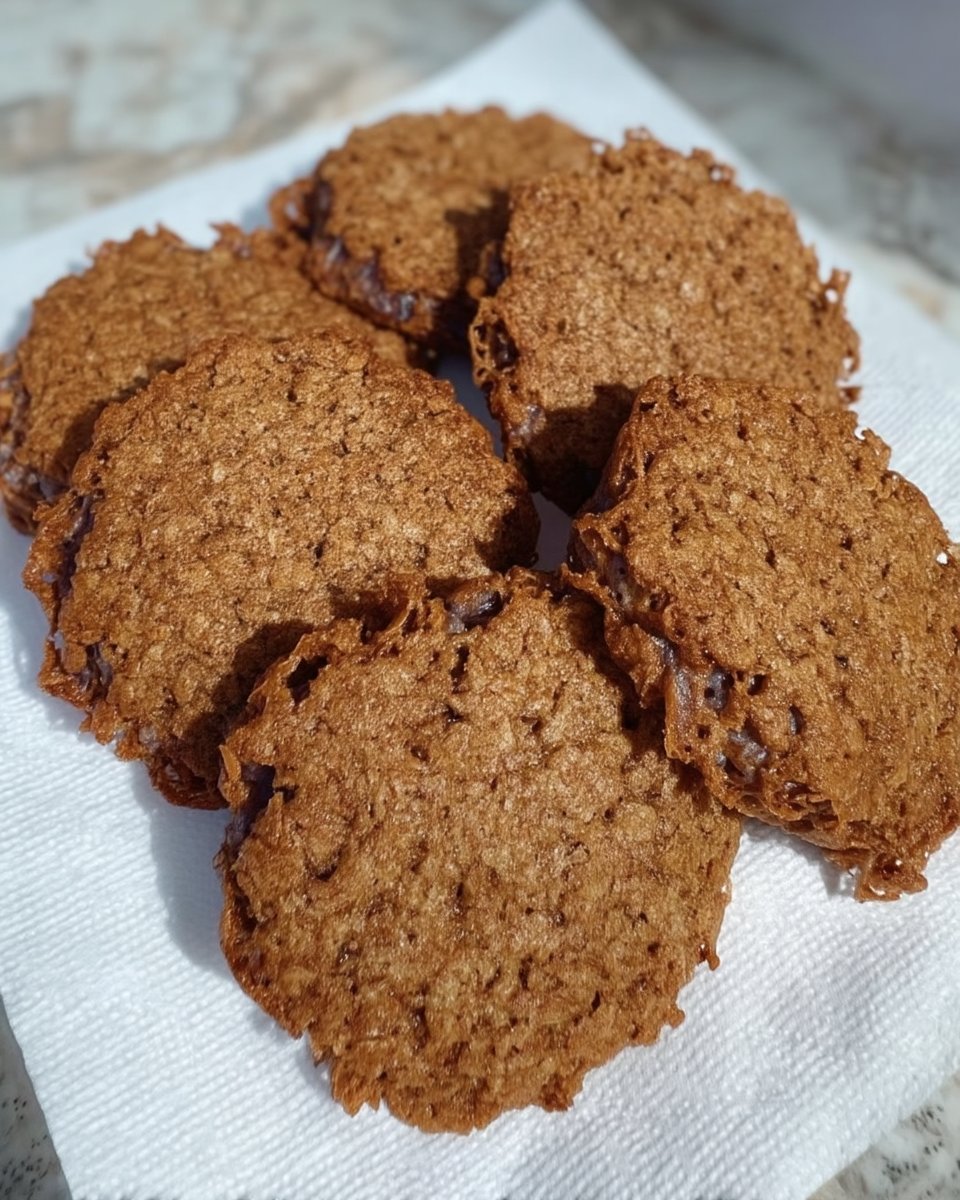
These cookies actually improve in flavor 24 hours after baking. As the moisture redistributes, the ginger and molasses notes become more integrated. Serve these at room temperature to fully experience the soft, chewy texture. If you prefer a crispier cookie, you can briefly reheat them in a 300°F (150°C) oven for 3 minutes. For professional presentation ideas, check out our Cookie Decorating Studio. These pair excellently with a hot cup of black tea, as the tannins in the tea balance the rich fats of the almond flour.
The Scientific Truth Behind Tradition
Successfully creating a Paleo Gingerbread cookie requires a balance of fat, sugar, and protein that honors the traditional snap while embracing grain-free ingredients. By following these precise measurements and the 30-minute chilling rule, you can achieve a holiday treat that is both innovative and classic. For more breakthroughs in cookie chemistry, visit our Trending Cookie Creations page. You can also see more of our testing process at Foolproof Living. We would love to see your results, so please share your bakes with us on Pinterest, Instagram, or Facebook.